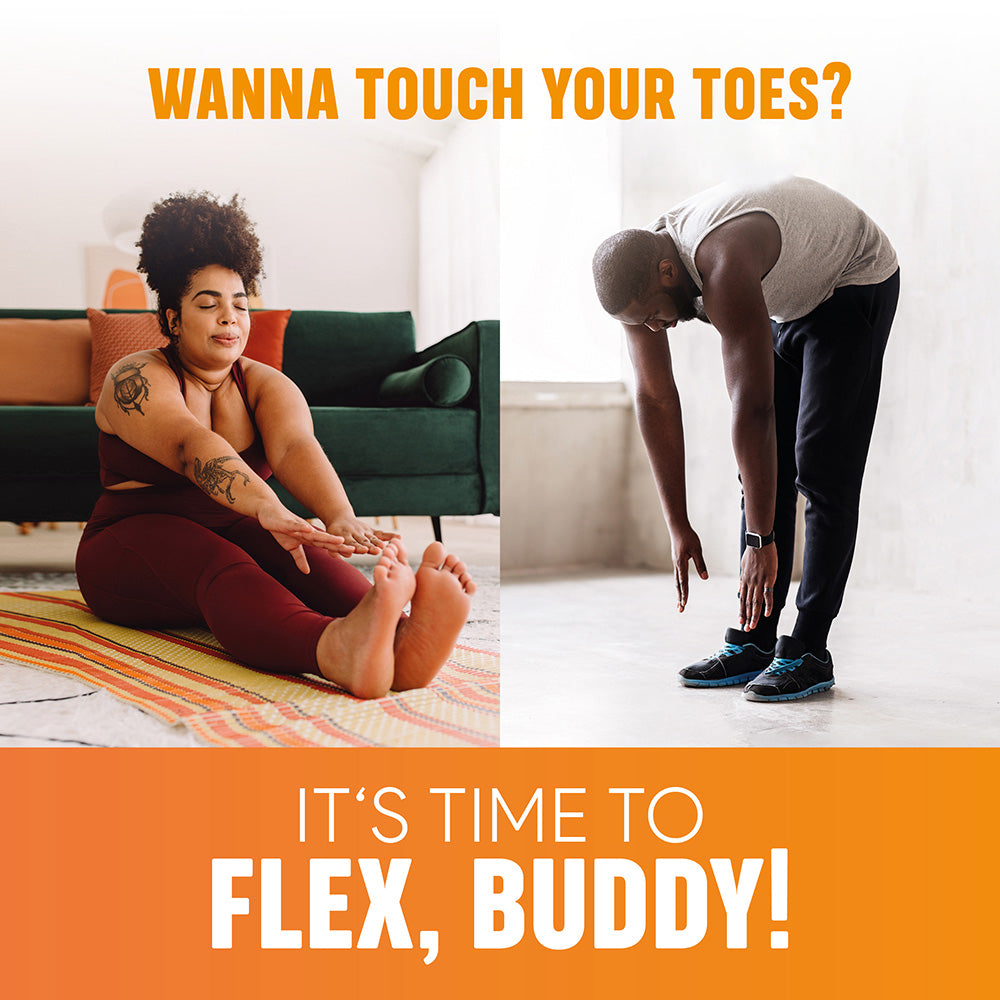
- Yes, stretching helps back pain. About nine in ten cases seen by a GP are "non-specific", with no fracture, tumour, infection or other structural cause [1][2]. That is the kind that responds to movement, and stretching is the easiest movement to start tonight.
- Movement works. A 2021 Cochrane review of 249 trials found that exercise reduces chronic low back pain by a clinically important amount [3].
- The hamstring stretch is the star. Across 14 trials, hamstring stretching reduced pain and disability [4]. Pair it with a little strength work: Pilates, resistance and stabilisation training rank highest for chronic back pain [5].
- It is gentle and safe. Where trials recorded harms, side effects were mostly minor muscle soreness [3]. Keep the spine long and never fold with a rounded lower back.
- Your back is built to recover. Most episodes improve within a few weeks [6]; a daily two-minute habit keeps the improvement and lowers the chance of the next episode.
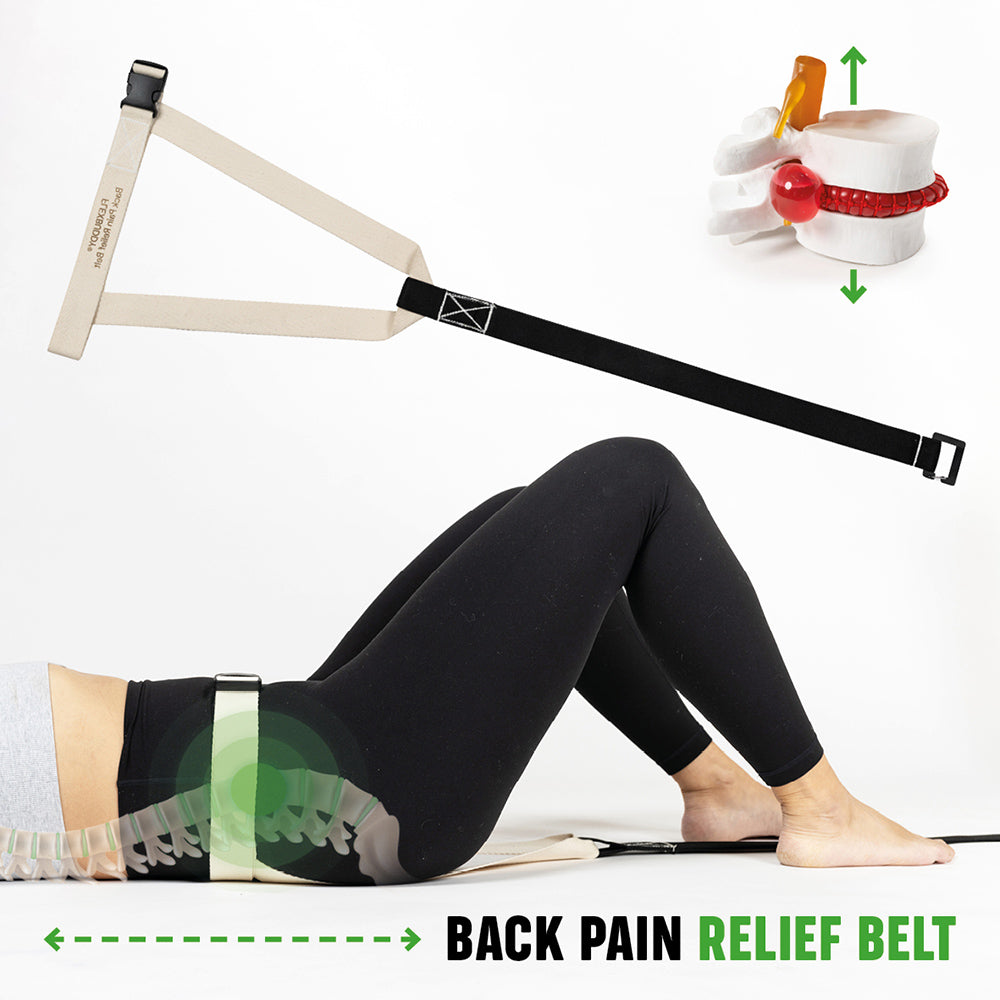
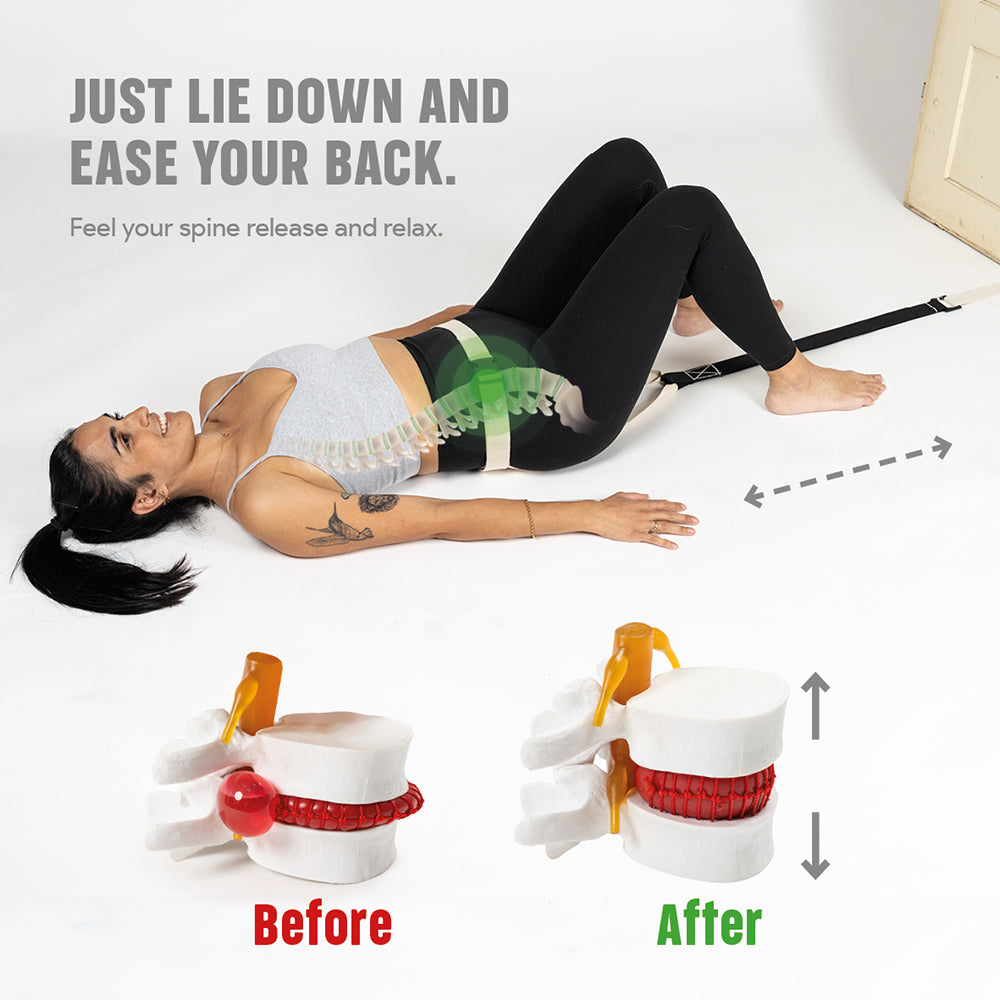
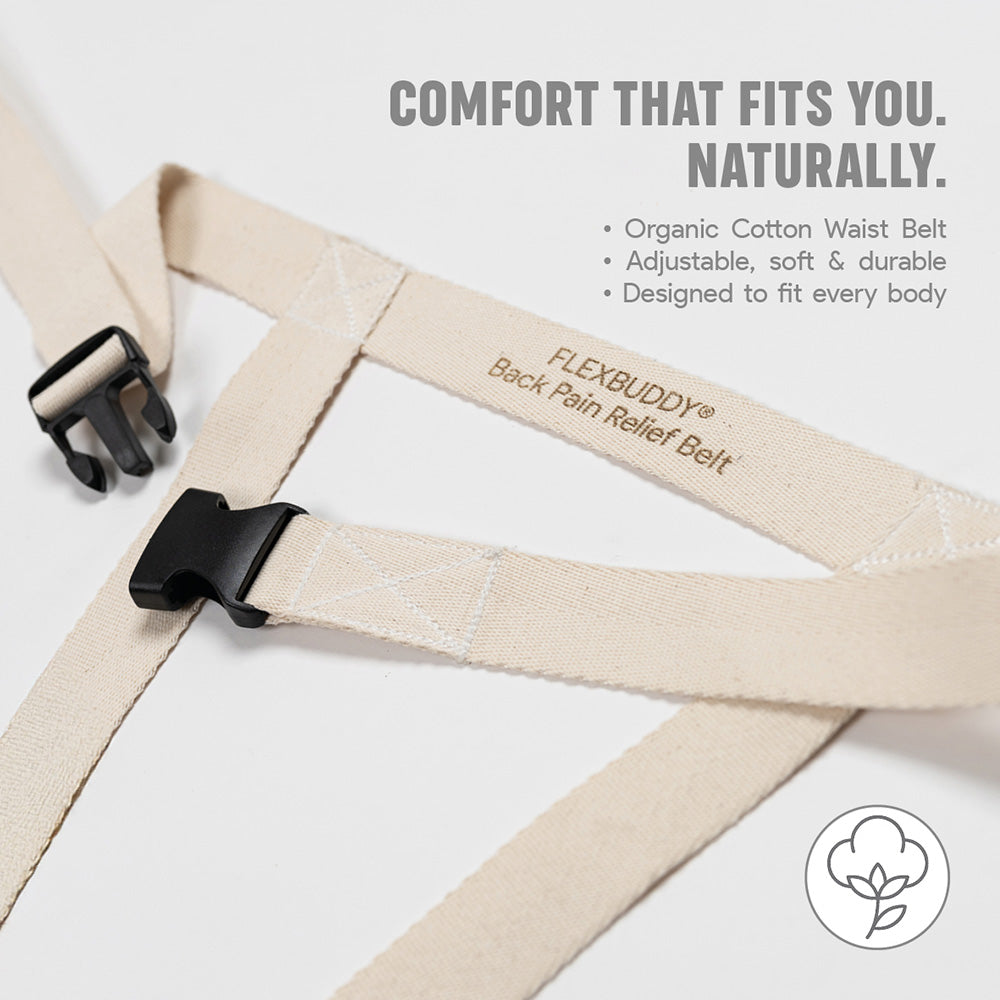
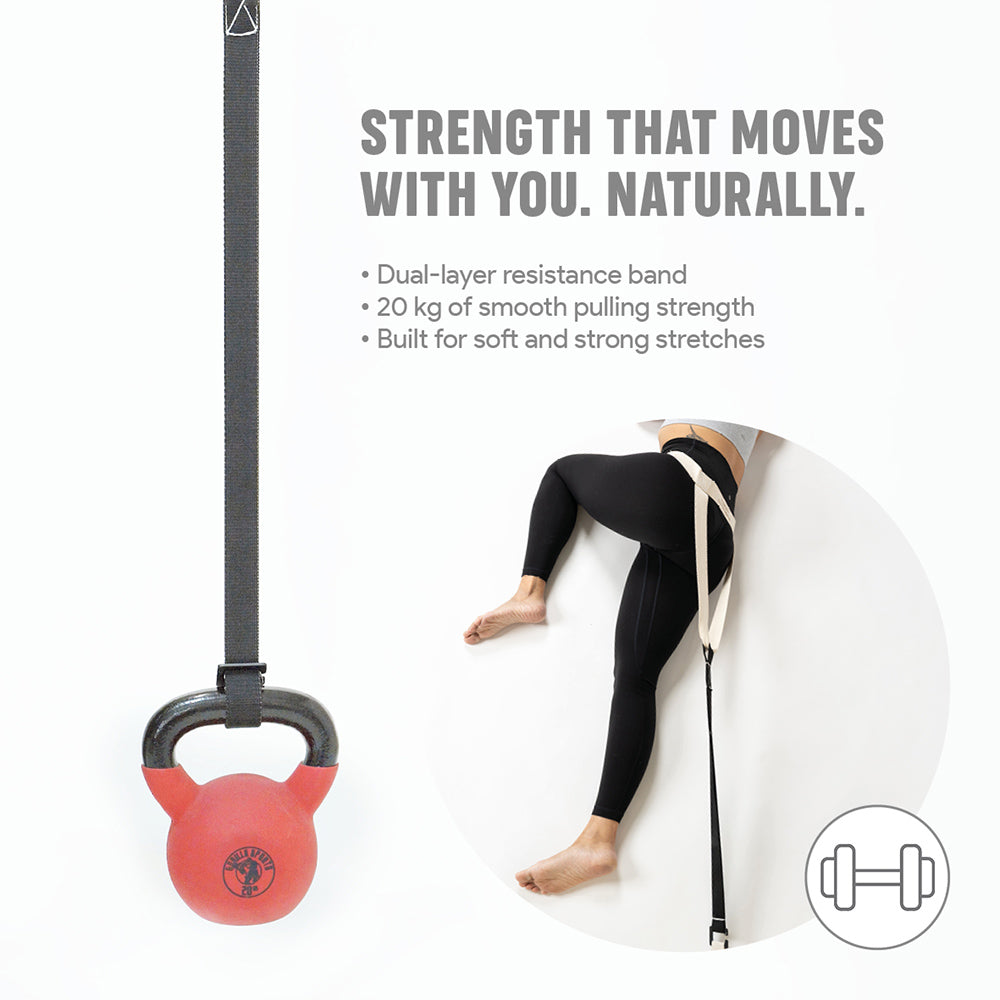
- FlexBuddy® makes the key stretch easy. It holds your spine tall while your hamstrings let go, so the stretch lands in your legs and not in your sore back.
The short answer: yes
Your back hurts and you want to know whether ten minutes on the floor are worth it. They are. For the common kind of back pain, stretching eases the ache, gets you moving again and takes the fear out of bending. You will feel the difference after the first session: a back that feels longer, looser and less guarded.
Three facts sit behind that. Most back pain has no structural cause a scan could find, so there is nothing broken to fix; what your back wants is movement, confidence and time [1][2]. Exercise is the best-studied treatment for persistent back pain, and it works [3]. And the stretch at the centre of this article, the hamstring stretch, reduced pain by a moderate amount across 14 trials [4], while a stretching class did as well as yoga head to head [7]. Stretching has earned its place in your day.
Red flags first: back pain that should not be stretched
A small minority of back pain needs a doctor before a stretch, and the NHS is specific about which [6]. Call 999 or go to A&E if back pain comes with pain, tingling, weakness or numbness in both legs, loss of feeling around the genitals or anus, difficulty passing urine or loss of bladder or bowel control, chest pain, or if it started after a serious accident [6]. Ask for an urgent GP appointment if the pain is severe and sudden, getting worse quickly, or you feel hot, shivery or unwell [6]. See a GP if it has not improved after a few weeks of self-care, you have lost weight without trying, it does not ease with rest or is worse at night, or it is worse when you cough, sneeze or strain [6].
Two more situations have their own guides. Pain running down one leg below the knee, especially with pins and needles, points to the sciatic nerve; read our guide to stretching with sciatica first. A diagnosed disc herniation needs different movements and limits, covered in stretching with a herniated disc. If none of this applies, you are in the large majority, and the rest of this page is for you.
What back pain usually is: good news
Low back pain is the leading cause of disability in the world [1], so you are in very large company. And for nearly all people who have it, no specific cause in the spine can be identified; only a small proportion have a well-understood pathology such as a vertebral fracture, cancer or infection [1]. In primary care the figures are precise: about 90% of patients have non-specific low back pain, around 4% have a compression fracture, 0.7% a tumour and 0.01% an infection [2].
"Non-specific" does not mean imaginary. It means the pain comes from how the back is used and protected: muscles, joints, discs and nerves responding to load, posture, lack of movement, stress and sleep. Nothing is broken. That is why movement helps so much.
It also settles fast. Most pain and related disability resolve within a couple of weeks, about 90% of patients have stopped consulting their doctor within three months, and only about 5% go on to chronic pain and disability [2]. Your back is built to recover. A stretching habit makes the bad days shorter, keeps you moving through them and makes the next episode less likely.
What the research shows
Movement reduces chronic back pain
The biggest study in this field is the 2021 Cochrane review of exercise therapy for chronic low back pain, which pooled 249 randomised trials. Compared with no treatment, usual care or placebo, exercise reduced pain by 15 points on a 0 to 100 scale, the mark the authors had set in advance for a clinically important difference, and improved function by about 7 points [3]. Participants had a mean age of 44: ordinary working-age adults, people like you [3].
This is why every major guideline says the same thing: self-management, a return to normal activities and exercise come first [8]. The NHS version: stay active, try exercises and stretches, use heat or cold, and do not stay in bed for long periods [6].
Hamstring stretching: less pain, better function
A 2024 systematic review pooled 14 randomised trials of hamstring stretching in people with low back pain. The stretchers ended with lower pain scores, a moderate effect, and their disability on the Oswestry index was lower by about 7 points [4]. In people whose pain radiated down the leg, straight-leg-raise range improved markedly [4]. One stretch, done regularly, moved pain, function and flexibility together.
A stretching class holds its own against yoga too. One trial gave adults with chronic low back pain 12 weekly yoga classes, 12 weekly stretching classes or a self-care book. Yoga was not superior to stretching at any time point, and the structured stretching class worked, with benefits lasting several months [7].
Strength makes it even better
A 2020 network meta-analysis compared types of exercise across 89 trials in people with chronic non-specific low back pain. Pilates ranked highest for pain, and resistance and stabilisation training ranked highest for physical function [5]. So give your back both: stretch every day to loosen the hamstrings and hips, and add two or three short strength sessions a week. The plan is further down.
Tight hamstrings and a sore back go together
A systematic review found reduced hamstring flexibility in people with low back pain [9]. The link runs both ways. Tight hamstrings hold the pelvis back, so the lower back rounds to make up the difference when you bend, and a sore back makes the hamstrings guard and tighten in return. Stretching the hamstrings is the easy way into that loop, and the trials above show it pays off. The anatomy, a self-test and the stretches are in our hamstrings and lower back guide.
Stretching helps keep back pain away
Prevention is where stretching shines. In a 12-month randomised trial of 563 healthy office workers with lower-than-normal trunk flexibility or endurance, daily stretching plus twice-weekly trunk endurance training cut new episodes of low back pain from 19.7% to 8.8% [10]. More than half of them, gone.
The reviews agree. A 2016 meta-analysis of 21 trials and 30,850 people found that exercise combined with education reduced the risk of an episode by 45% [11]. A 2018 meta-analysis found that exercise alone reduced the risk by 33% and recommended strengthening combined with stretching or aerobic exercise, two to three times a week [12]. If you sit for a living, see lower back pain from sitting.
Yoga, Pilates and McKenzie: more good news
Every form of gentle, regular movement points the same way. The 2022 Cochrane review of yoga for chronic back pain, covering 21 trials, found improvements compared with no exercise [13]. Pilates beats minimal intervention [14]. The McKenzie method was better than exercise alone for disability in chronic back pain [15]. The NHS suggests walking, swimming, yoga and Pilates [6]. Pick the one you enjoy and stretch alongside it.
Why stretching works
Three things happen when you stretch a sore back gently, and you will notice each of them.
Your nervous system lets go
A review of the stretching research concluded that the gains seen after a single session and after three-to-eight-week programmes are best explained by modified sensation: the nervous system allowing more stretch before it signals "stop" [16]. A muscle guarding a painful back has had its resting tension turned up by the nervous system. A slow, calm stretch tells it the movement is safe, and the guard drops. That is the freer, lighter back you feel as soon as you stand up.
It is movement, and movement is what backs want
Every guideline comes down to two words: stay active [6][8]. Advice to stay active speeds recovery and reduces chronic disability [2]. A stretching routine gets you on the floor every day, moving the hips, pelvis and spine through their ranges. It is the simplest way to start doing what the guidelines ask.
It takes the fear out of bending
The Lancet series notes that beliefs about pain play an important role in whether it becomes persistent and disabling [1]. People with back pain stop bending, and each avoided movement makes the next feel more dangerous. A stretch done with a long spine, where the hamstrings pull and the back feels nothing, is a daily rehearsal of a bend that does not hurt. Confidence comes back one session at a time, and for many people that is the biggest win of all.
What to stretch for back pain
Four targets cover it. The hamstrings, because they have the trial support [4]. The hip flexors, because sitting shortens them and they attach to the lumbar spine. The glutes, because a stiff hip makes the lower back do the rotating. And the spine itself, gently, to get it moving again. The numbers come from the American College of Sports Medicine's expert panel, summarised by Harvard Health: about 60 seconds of total stretch per exercise, for example 15 seconds four times, at least two to three times a week [17][18]. Stretch to mild tightness, never into pain. A sore back responds to calm, not force.
| Stretch | Position | Hold | Reps | Frequency |
|---|---|---|---|---|
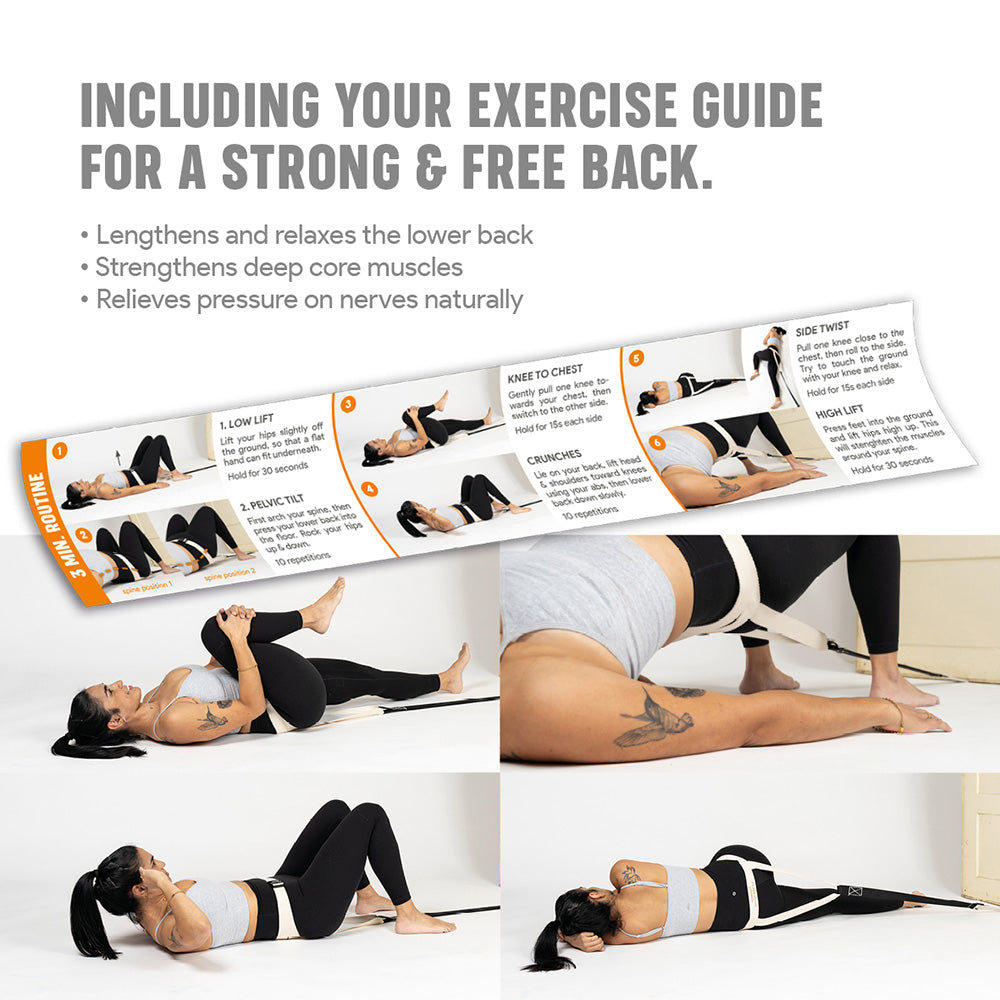
| Lying hamstring stretch with a strap | On your back, FlexBuddy foot bar or a strap under one foot, leg straight, lower back resting on the floor, other knee bent | 10 slow breaths (~30 s) | 2 per leg | Daily; the safest during a flare |
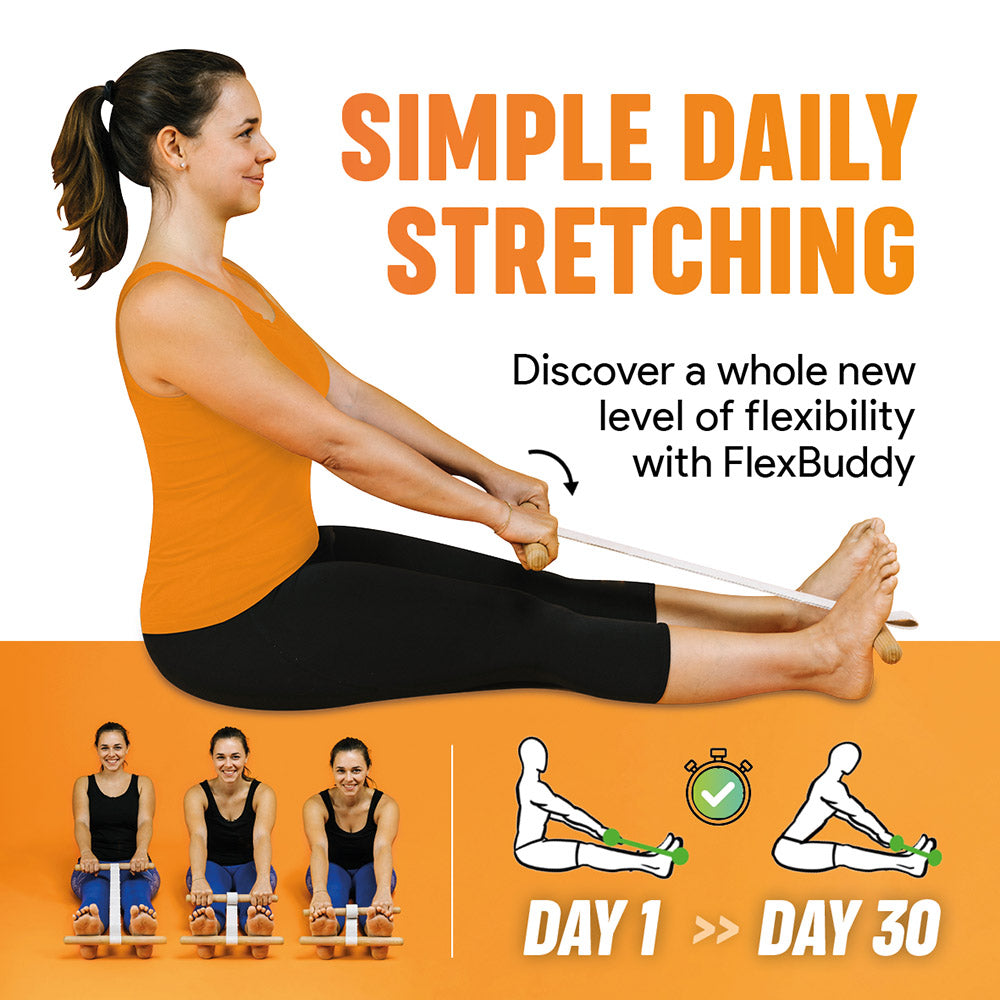
| Seated straight-back hamstring stretch | Sit tall, legs straight, FlexBuddy foot bar or a strap under both feet; lean back, then tip the pelvis forward with the chest lifted | 10 slow breaths | 3 | Daily; the one to keep if you only have two minutes |
| Half-kneeling hip-flexor stretch | One knee down, tailbone tucked, shift forward a few centimetres until the front of the hip pulls, trunk tall | 20–30 s | 2 per side | Daily, ideally after sitting |
| Figure-four glute stretch | On your back, ankle across the opposite knee, draw that thigh towards you | 20–30 s | 2 per side | Daily or most days |
| Knee-to-chest | On your back, one knee hugged in with hands behind the thigh, then both knees | 20–30 s | 2 per side + 1 both | Daily; also in bed, morning and night |
| Cat–cow | Hands and knees, slow arch and round with the breath, small range at first | no hold | 10 cycles | Daily; also mid-afternoon |
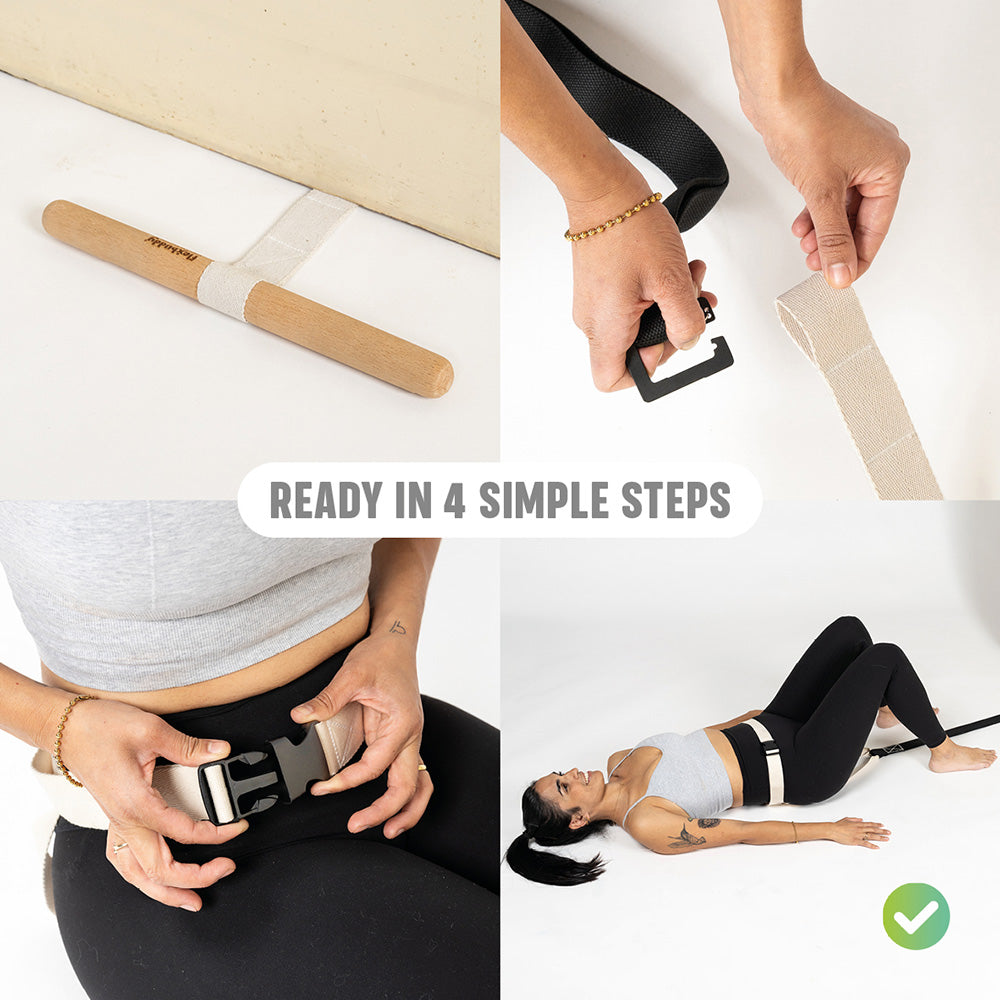
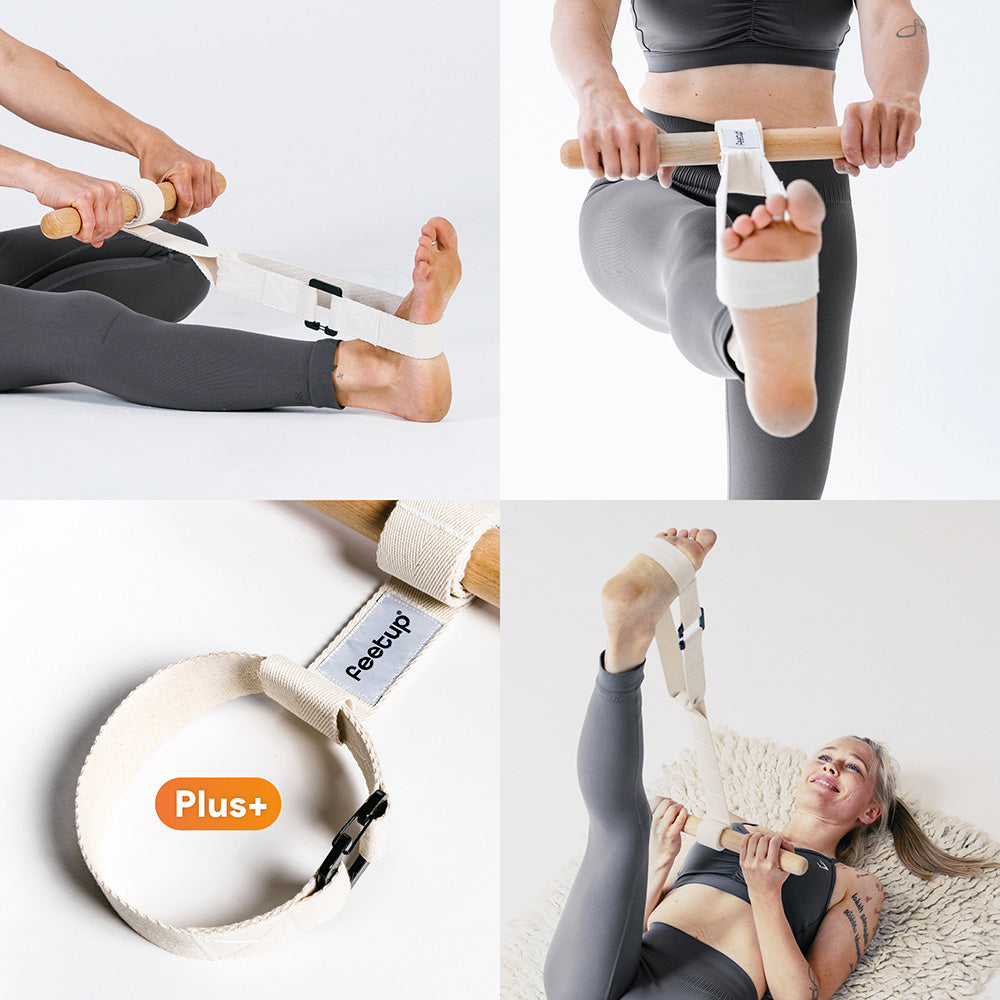
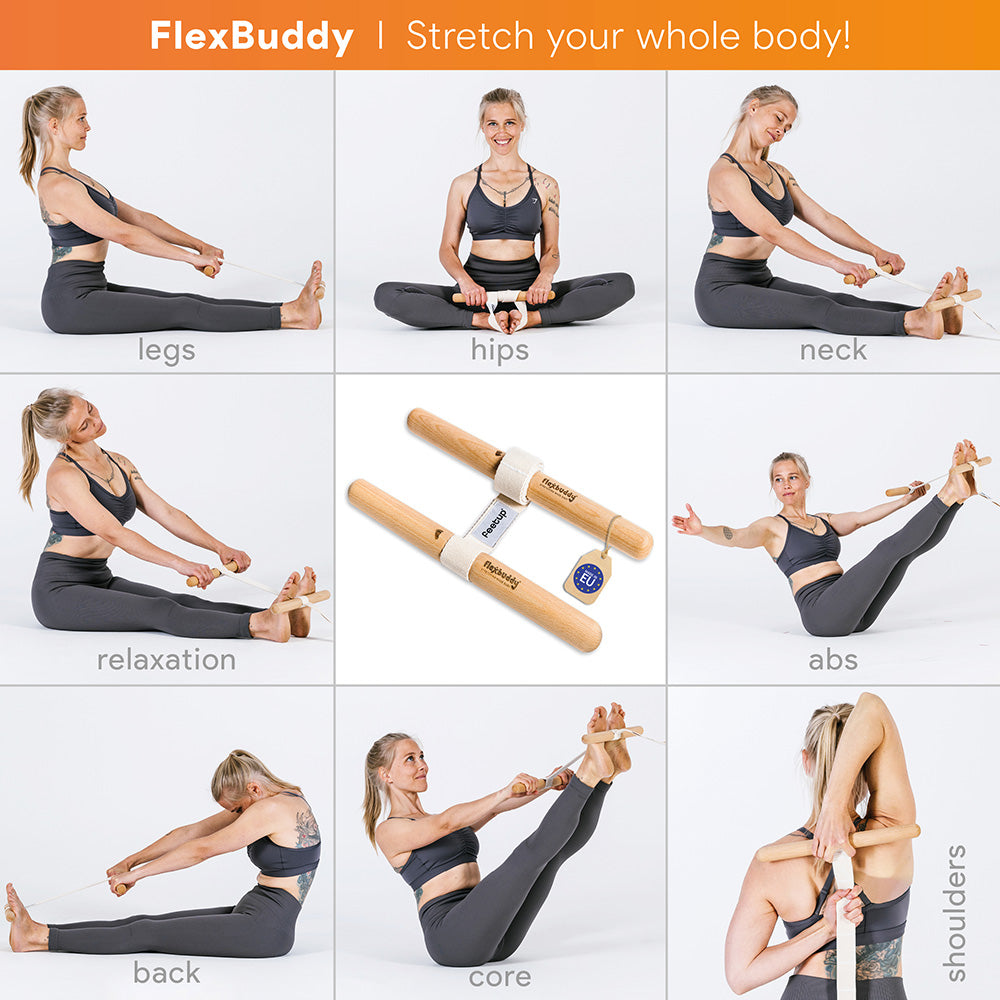
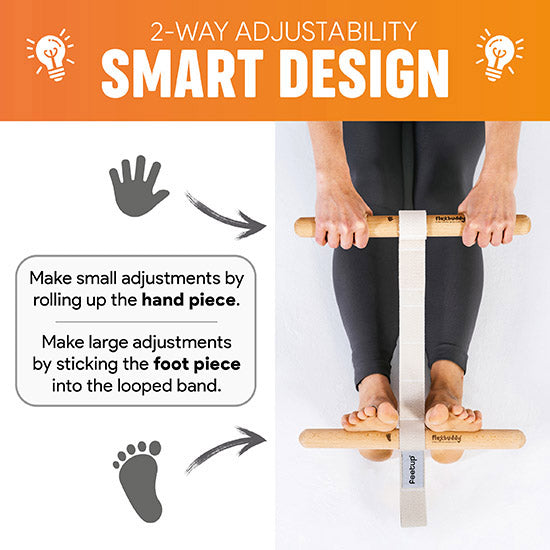
One rule makes the hamstring stretches work: the spine stays long and the fold comes from the pelvis tipping over the thighs. Fold with a rounded lower back and you load the part that hurts and miss the part you want. This is where FlexBuddy earns its keep. Put the foot bar under the soles of your feet, hold the other bar in both hands, lean back and tilt the hips forward. The strap carries the pull, so you sit tall without reaching and the stretch lands in the legs. A strap or towel round the feet is the stand-in. For a fuller floor routine, use lower back pain stretches to do at home.
Then add strength. Pilates, resistance and stabilisation training rank highest for persistent pain [5], and the prevention trials paired stretching with trunk endurance work [10][12]. Two or three short sessions a week of dead bugs, bird dogs, side planks and glute bridges complete the picture.
What to skip, and when to stop
Bed rest does not help [2][6]: staying active is what speeds recovery. Back belts and shoe insoles do not prevent back pain [11]; movement does. And you rarely need a scan: the Lancet series singles out imaging as something used far more than the evidence supports [8].
A few stretching habits are the ones to avoid, because they load a sore back: loaded forward bends with a rounded lumbar spine, toe touches with straight knees first thing in the morning, bouncing in a cold muscle, pushing into pain, and stretching a nerve as if it were a muscle, with long hard holds that send a burn down the leg. Stay gentle and you are on safe ground: where the trials recorded harms, side effects were mostly minor, such as muscle soreness, at a rate close to the comparison groups [3]. Any exercise can flare a back if done too hard, too soon, so start small and build.
Stop and get assessed if a stretch produces sharp pain rather than a pull, pain or tingling below the knee, numbness or weakness, or if your pain is clearly worse the day after each session for more than a week. Next-day soreness in the hamstrings or hips is normal; worsening back pain is not.
What to expect, week by week
Day one. Your back feels freer as soon as you stand up. That is your nervous system letting go [16].
Weeks one to three. Most episodes of non-specific back pain improve in this window [2][6], and the routine keeps you moving and comfortable through it.
Weeks three to eight. This is the range the hamstring trials and the stretching research used [4][16]. You reach further, you bend more easily and the evening ache eases noticeably.
Beyond. Back pain likes to come back: the estimated risk of at least one recurrence within 12 months is 73% [2]. The habit is your answer to that. Keep it up two to three times a week at a minimum [12], daily if you sit [10].
The easiest way to keep it up: leave FlexBuddy where you sit in the evening and do your ten slow breaths, three times, before the television goes on. Two minutes. Give it a fortnight and you will not want to skip it.

Do it properly with FlexBuddy
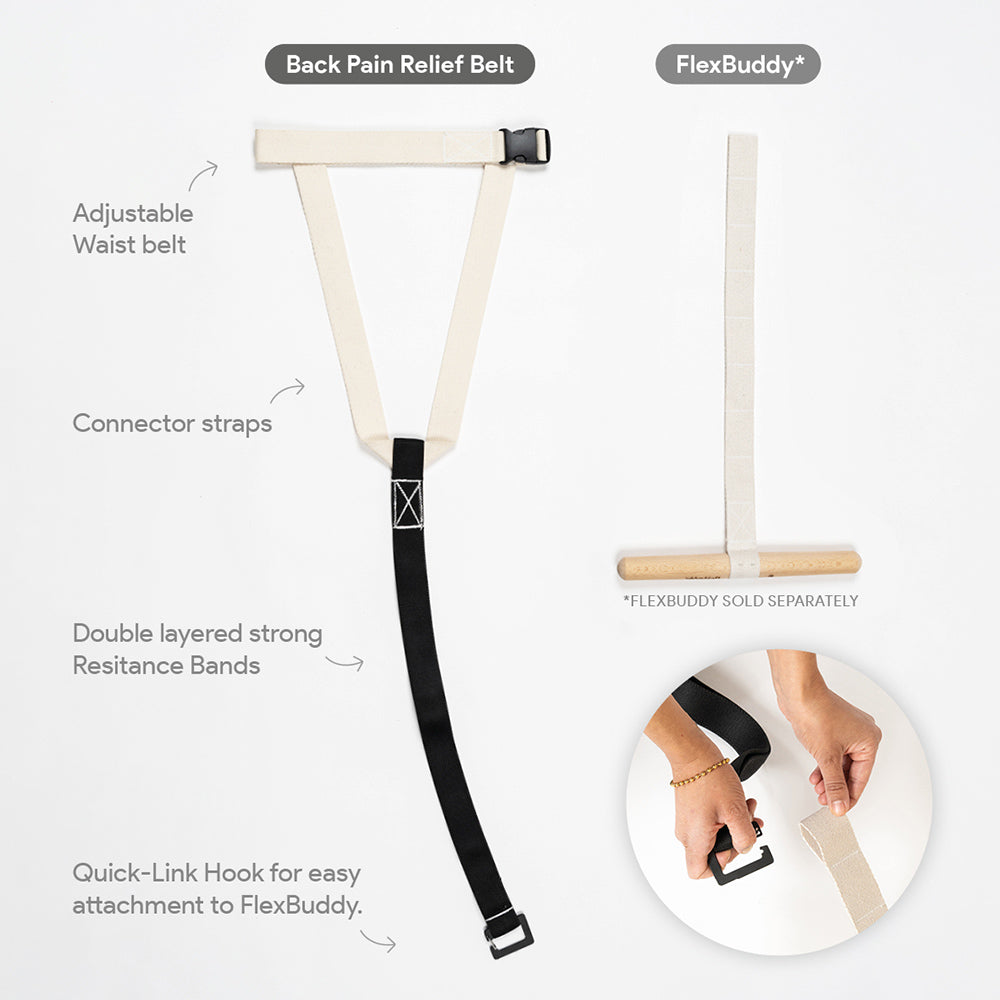
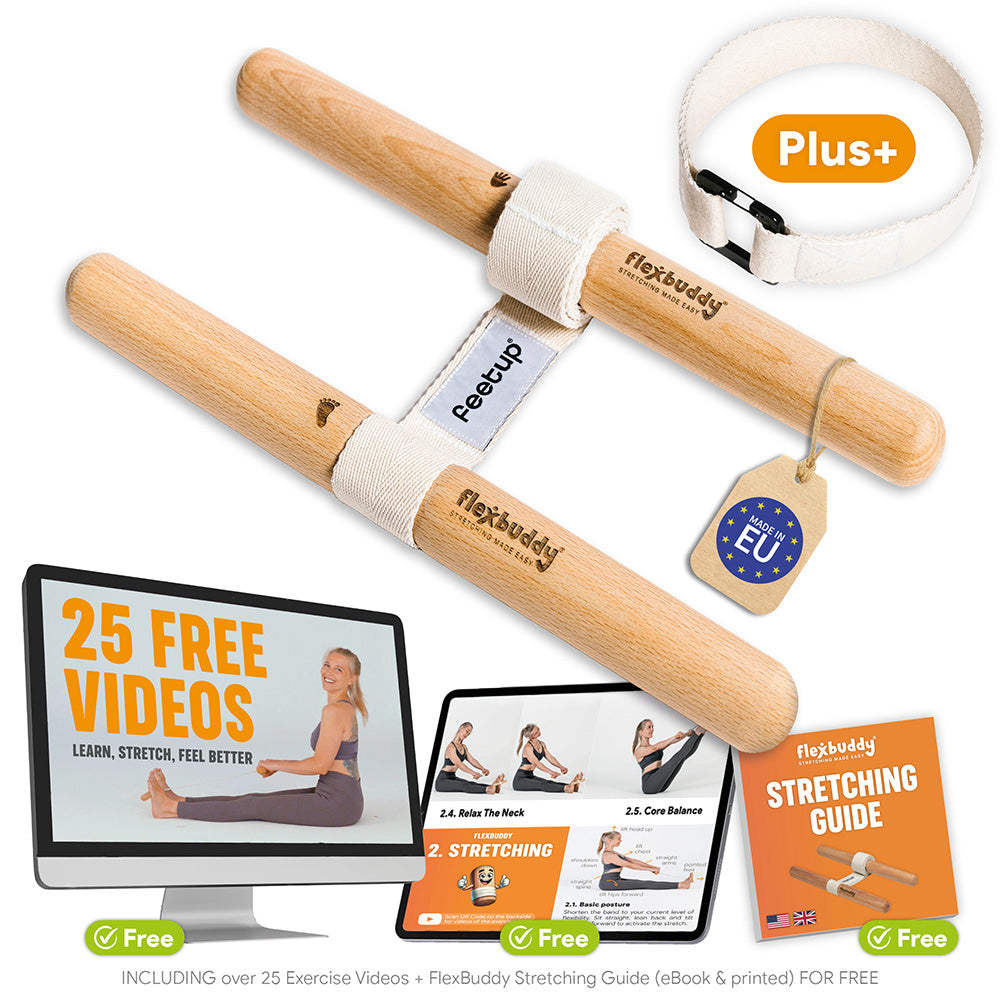
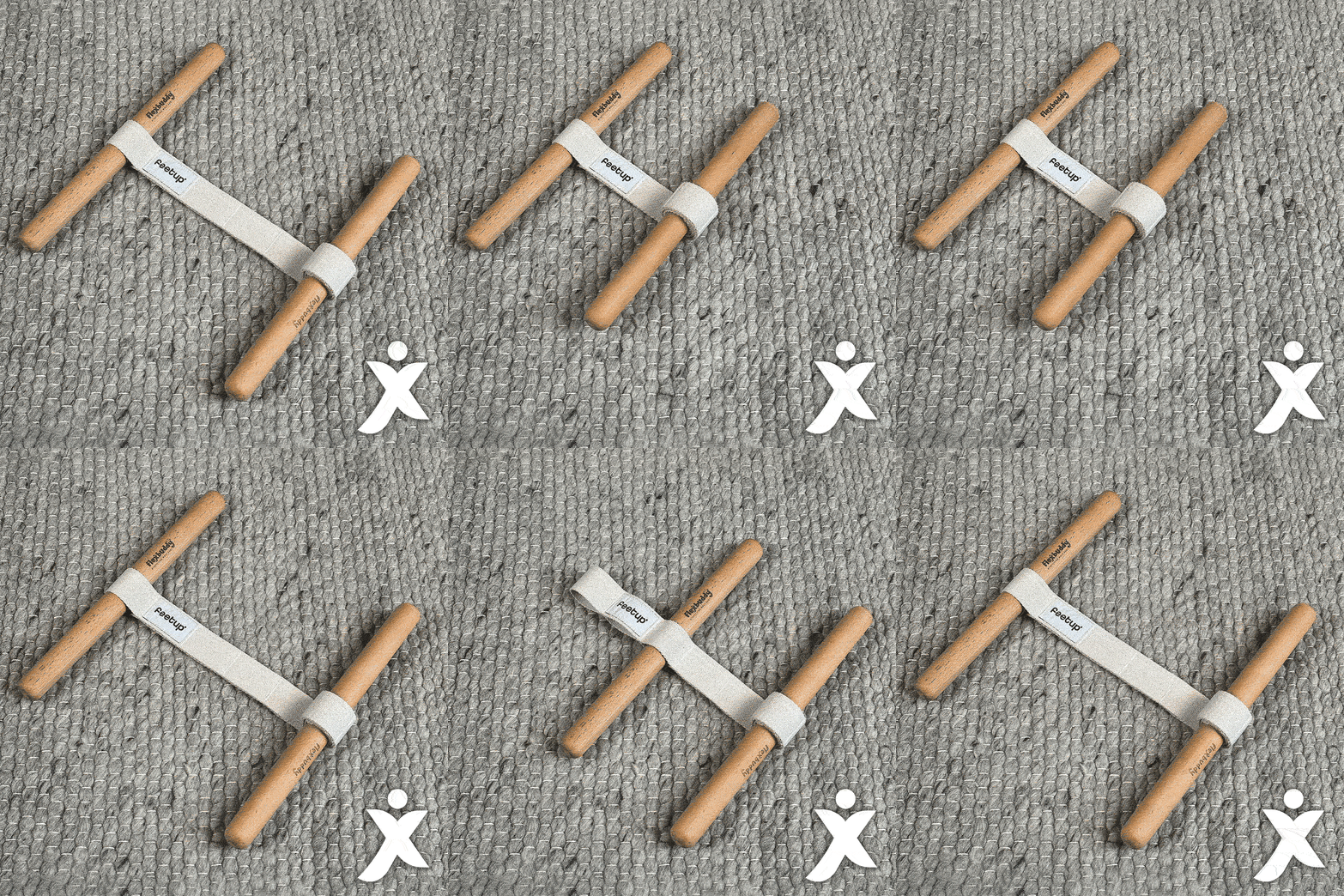
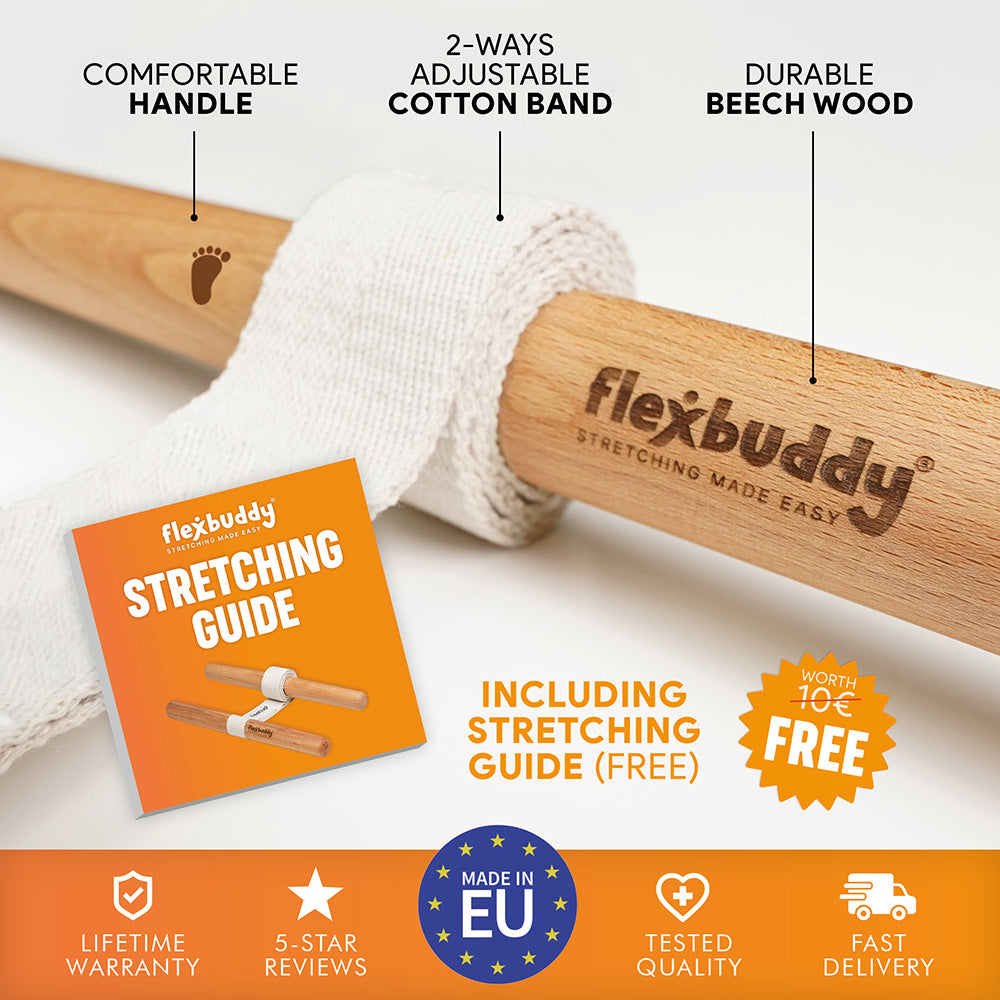
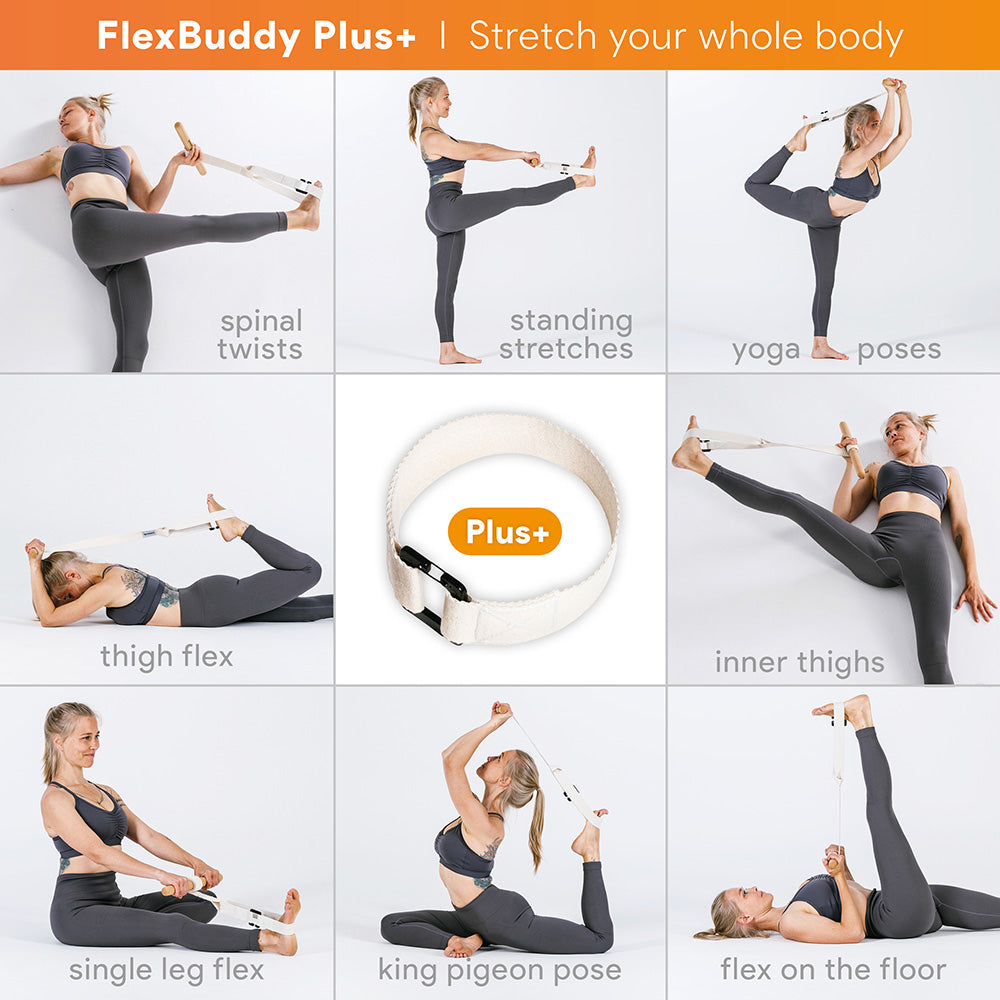
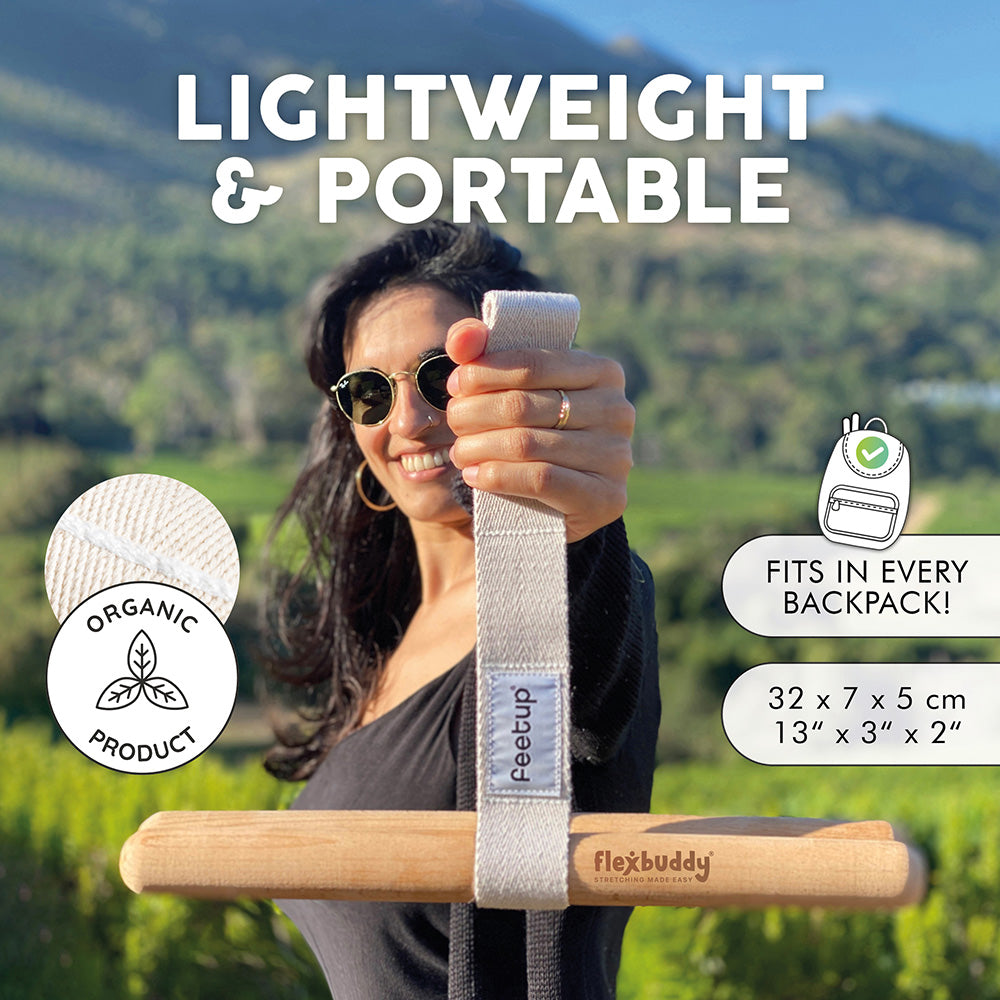
The stretch with the best evidence for back pain is the hamstring stretch, and most people do it the hard way: they round the back to reach the toes, which loads a sore back and misses the hamstrings. FlexBuddy® solves that. It is a patented stretching device made of two beech-wood bars joined by an adjustable cotton strap. One bar goes under the soles of your feet, the other in your hands. You sit tall, lean back and tilt the hips, and the strap carries the pull, so your spine stays long and the stretch lands in your hamstrings and calves. Move the foot bar between loops for big changes of length and roll the strap round the hand bar for small ones: a stiff back starts long and shortens a loop a week. Comfortable wooden handles, no rope burn, one size for every body.
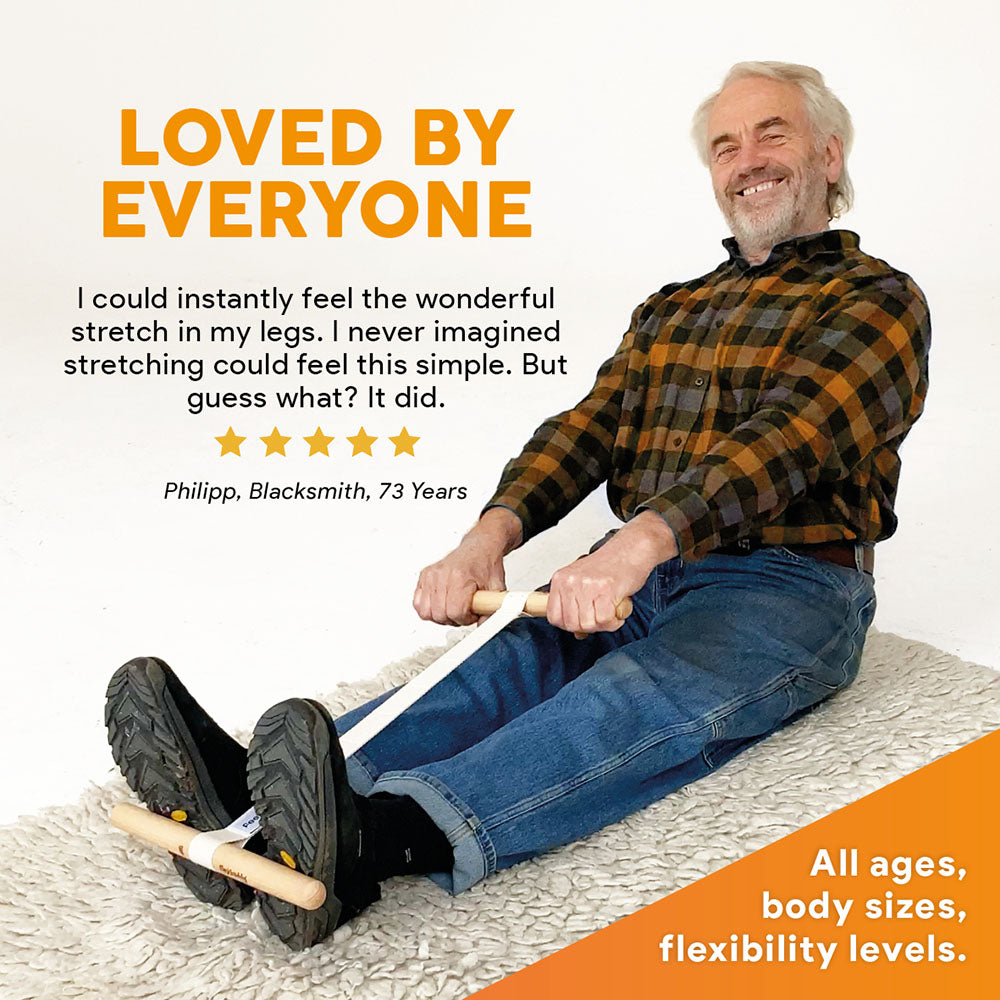
Ten slow breaths, three times, takes about two minutes. "Sit at a desk 9 hours a day. My lower back used to ache every evening. Two weeks in, that's basically gone," wrote one owner, Stephen W. A personal trainer calls it "a great tool to help your clients maintain a neutral spine while stretching calves, hamstrings and lower back." It is rated 4.5 by verified buyers and comes with a 30-day money-back guarantee and a lifetime warranty, so you can try it without risk. Get your FlexBuddy, or take the two-minute quiz to find the routine for your kind of stiffness.
Frequently asked questions
Does stretching help lower back pain?
Yes. Non-specific lower back pain, about nine in ten cases [2], responds to movement, and stretching is the easiest movement to start. A meta-analysis of 14 trials found hamstring stretching reduced pain and improved function [4], and a trial found a stretching class worked as well as yoga and better than a self-care book [7]. You will feel your back loosen from the first session.
Can stretching make back pain worse?
Not when you do it gently with a long spine: the harms recorded in trials are mostly minor muscle soreness [3]. The things to avoid are a rounded, loaded lower back, pushing into pain, and stretching a disc or nerve problem the wrong way. A stretch that sends pain, tingling or numbness down a leg is the sign to stop and get checked.
Should I stretch my back every day?
Yes. Daily is ideal, and it is what the prevention trial in office workers used [10]. The guideline minimum is about 60 seconds per muscle group on at least two to three days a week, to mild tightness and never pain [17]. Two minutes a day covers the hamstrings and hip flexors.
How long does it take for stretching to help back pain?
You feel it straight away: a single session leaves the back freer [16]. Most episodes improve within a few weeks [6]. Expect a noticeable change in two to four weeks of near-daily practice, and a measurable one in six to eight weeks, the length of the programmes the research used [4][16].
Stretching vs strengthening for back pain: which is better?
Do both: together they give your back the most. A network meta-analysis of 89 trials ranked Pilates, resistance and stabilisation training highest for chronic back pain [5], and prevention reviews recommend strengthening combined with stretching or aerobic exercise two to three times a week [12]. Stretch daily for the hamstrings and hips, and strengthen the trunk two or three times a week.
Does stretching your hamstrings help back pain?
Yes. It is the best-supported single stretch. Across 14 randomised trials, hamstring stretching reduced pain and disability scores, with the largest gains in leg-raise range in people whose pain radiated down the leg [4]. Research also links tight hamstrings to low back pain [9]. FlexBuddy keeps your spine long while you do it, so the stretch reaches the hamstrings.
This article is general information, not medical advice. Tight muscles usually respond well to regular stretching. If your pain is sharp, radiates down a leg, comes with numbness, weakness, fever, bladder or bowel changes, follows an injury, or keeps getting worse, see a doctor or physiotherapist before you stretch.
References
- Hartvigsen J, Hancock MJ, Kongsted A, et al.; Lancet Low Back Pain Series Working Group. What low back pain is and why we need to pay attention. Lancet. 2018;391(10137):2356–2367. doi:10.1016/S0140-6736(18)30480-X. PMID 29573870 (abstract accessed 4 Nov 2026).
- Koes BW, van Tulder MW, Thomas S. Diagnosis and treatment of low back pain. BMJ. 2006;332(7555):1430–1434. doi:10.1136/bmj.332.7555.1430. https://pmc.ncbi.nlm.nih.gov/articles/PMC1479671/ (accessed 4 Nov 2026).
- Hayden JA, Ellis J, Ogilvie R, Malmivaara A, van Tulder MW. Exercise therapy for chronic low back pain. Cochrane Database Syst Rev. 2021;9(9):CD009790. doi:10.1002/14651858.CD009790.pub2. PMID 34580864 / PMC8477273 (abstract accessed 4 Nov 2026).
- Gou Y, Lei H, Chen X, Wang X. The effects of hamstring stretching exercises on pain intensity and function in low back pain patients: a systematic review with meta-analysis of randomized controlled trials. SAGE Open Med. 2024;12:20503121241252251. doi:10.1177/20503121241252251. PMID 39086556 / PMC11289822 (accessed 4 Nov 2026).
- Owen PJ, Miller CT, Mundell NL, et al. Which specific modes of exercise training are most effective for treating low back pain? Network meta-analysis. Br J Sports Med. 2020;54(21):1279–1287. doi:10.1136/bjsports-2019-100886. PMID 31666220 / PMC7588406 (abstract accessed 4 Nov 2026).
- NHS. Back pain. Page last reviewed 5 March 2026. https://www.nhs.uk/conditions/back-pain/ (accessed 4 Nov 2026).
- Sherman KJ, Cherkin DC, Wellman RD, et al. A randomized trial comparing yoga, stretching, and a self-care book for chronic low back pain. Arch Intern Med. 2011;171(22):2019–2026. doi:10.1001/archinternmed.2011.524. PMID 22025101 / PMC3279296 (abstract accessed 4 Nov 2026).
- Foster NE, Anema JR, Cherkin D, et al.; Lancet Low Back Pain Series Working Group. Prevention and treatment of low back pain: evidence, challenges, and promising directions. Lancet. 2018;391(10137):2368–2383. doi:10.1016/S0140-6736(18)30489-6. PMID 29573872 (abstract accessed 4 Nov 2026).
- Hori M, Hasegawa H, Takasaki H. Comparisons of hamstring flexibility between individuals with and without low back pain: systematic review with meta-analysis. Physiother Theory Pract. 2021;37(5):559–582. doi:10.1080/09593985.2019.1639868. PMID 31317831 (abstract accessed 4 Nov 2026).
- Sihawong R, Janwantanakul P, Jiamjarasrangsi W. A prospective, cluster-randomized controlled trial of exercise program to prevent low back pain in office workers. Eur Spine J. 2014;23(4):786–793. doi:10.1007/s00586-014-3212-3. PMID 24492949 / PMC3960439 (abstract accessed 4 Nov 2026).
- Steffens D, Maher CG, Pereira LS, et al. Prevention of low back pain: a systematic review and meta-analysis. JAMA Intern Med. 2016;176(2):199–208. doi:10.1001/jamainternmed.2015.7431. PMID 26752509 (abstract accessed 4 Nov 2026).
- Shiri R, Coggon D, Falah-Hassani K. Exercise for the prevention of low back pain: systematic review and meta-analysis of controlled trials. Am J Epidemiol. 2018;187(5):1093–1101. doi:10.1093/aje/kwx337. PMID 29053873 (abstract accessed 4 Nov 2026).
- Wieland LS, Skoetz N, Pilkington K, Harbin S, Vempati R, Berman BM. Yoga for chronic non-specific low back pain. Cochrane Database Syst Rev. 2022;11(11):CD010671. doi:10.1002/14651858.CD010671.pub3. PMID 36398843 / PMC9673466 (abstract accessed 4 Nov 2026).
- Yamato TP, Maher CG, Saragiotto BT, et al. Pilates for low back pain. Cochrane Database Syst Rev. 2015;(7):CD010265. doi:10.1002/14651858.CD010265.pub2. PMID 26133923 / PMC8078578 (abstract accessed 4 Nov 2026).
- Lam OT, Strenger DM, Chan-Fee M, Pham PT, Preuss RA, Robbins SM. Effectiveness of the McKenzie Method of Mechanical Diagnosis and Therapy for treating low back pain: literature review with meta-analysis. J Orthop Sports Phys Ther. 2018;48(6):476–490. doi:10.2519/jospt.2018.7562. PMID 29602304 (abstract accessed 4 Nov 2026).
- Weppler CH, Magnusson SP. Increasing muscle extensibility: a matter of increasing length or modifying sensation? Phys Ther. 2010;90(3):438–449. doi:10.2522/ptj.20090012. PMID 20075147 (abstract accessed 4 Nov 2026).
- Harvard Health Publishing. The ideal stretching routine. Harvard Medical School, 16 Mar 2026 (reviewed by H. E. LeWine, MD). https://www.health.harvard.edu/staying-healthy/the-ideal-stretching-routine (accessed 4 Nov 2026).
- Garber CE, Blissmer B, Deschenes MR, et al.; American College of Sports Medicine. Position stand: quantity and quality of exercise for developing and maintaining cardiorespiratory, musculoskeletal, and neuromotor fitness in apparently healthy adults. Med Sci Sports Exerc. 2011;43(7):1334–1359. doi:10.1249/MSS.0b013e318213fefb. PMID 21694556 (record accessed 4 Nov 2026).