- Your hamstrings will lengthen. Your posture decides it. With the pelvis tipped forward and the spine long, flexibility improved; with the back rounded it did not, whichever technique was used [1].
- Sitting or standing, it works. Both positions gave equal gains in hamstring length within four weeks [2].
- Thirty seconds a day is enough. A 30-second hold was as effective as 60, and once a day as effective as three times [3]. Guidelines ask for about 60 seconds per muscle group on at least two to three days a week [4][5].
- A tool closes the gap between your hands and your feet. Towel, yoga strap, doorway or device: each one lets you hold your feet while you sit tall, so the stretch finally lands in your legs.
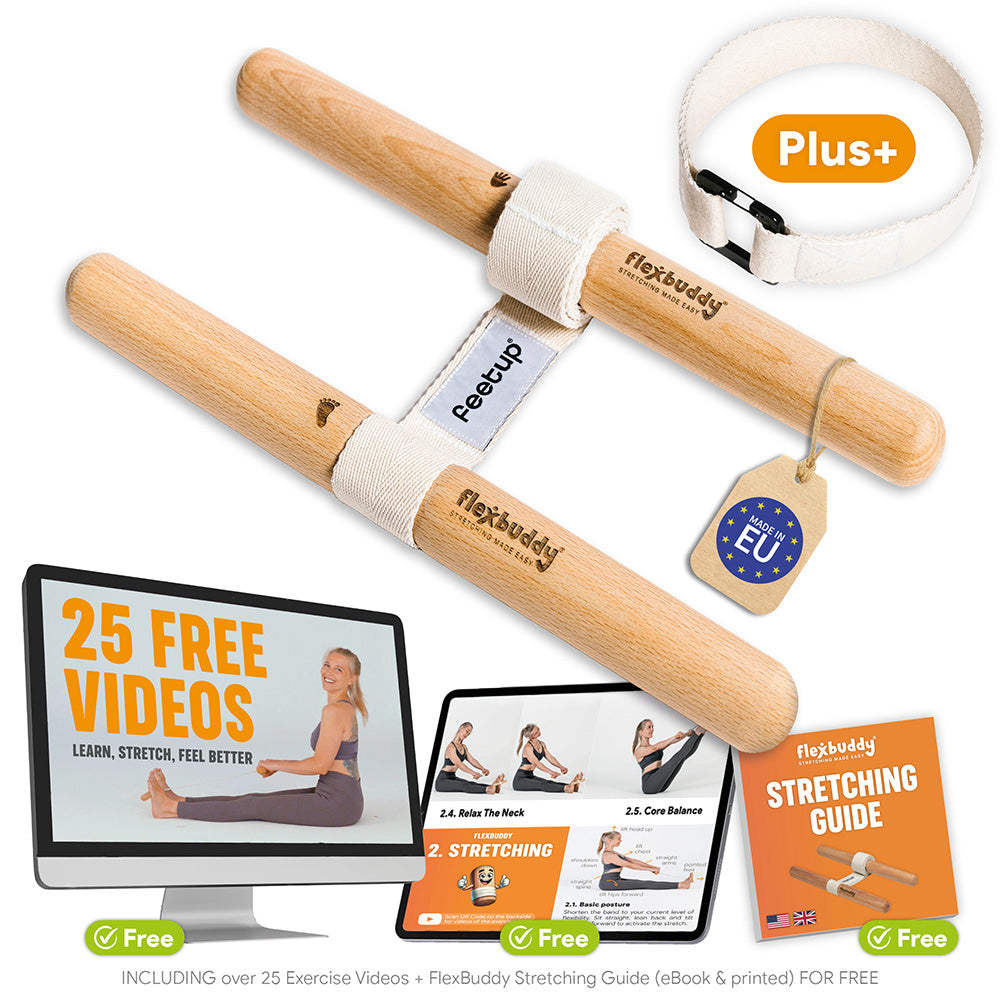
- FlexBuddy® builds the posture in. A bar under both feet, wooden handles in your hands and a strap you shorten one notch at a time. You lean back, tilt the hips, and feel the stretch exactly where it belongs.
Why you need a tool at all: the reach problem
Good news first: tight hamstrings respond to stretching, and quickly. If yours have not, the reason is mechanical, and one simple tool fixes it. Your hamstrings are the three muscles on the back of each thigh, running from the sitting bone to just below the knee. To stretch them you move the sitting bone away from the knee, which means tipping the pelvis forward over straight legs. The only handle your body offers is your feet, and with tight hamstrings your hands stop well short of them. So you round the lower back, drop the chest and reach. The pelvis never tips, and the stretch lands in the lumbar spine instead of the thighs. Put a towel, a strap or FlexBuddy round the soles of your feet and your arms are suddenly long enough to hold them while you sit tall. The stretch moves out of your back and into your legs, and you feel it at once.
What a forward bend actually does to your spine
Forward bending is shared between the hips and the lumbar spine. In a motion-analysis study, a full forward bend averaged 111 degrees, about 42 from the lumbar spine and 69 from the hips, and in the first 30 degrees the spine moved almost twice as much as the hips [6]. People with a history of low back pain bent even more at the spine early on, and the authors' answer is the idea behind this article: teach them to use more hip motion, with hamstring stretching as one way to encourage it [6]. That early, spine-heavy part of the bend is the "stretch" most people give their hamstrings every day. Sit-and-reach and toe-touch scores reflect spine and pelvis movement as much as hamstring length [7], so the number that counts is how far you fold from the hips with a long back; why you cannot touch your toes has the full story.
Pelvic position matters more than the method
One experiment explains everything. Subjects stretched their hamstrings for eight sessions, one leg with a static stretch and the other with a contract-relax technique; half held the pelvis tipped forward, spine long, and half held it tucked, back rounded. The forward-tilt group gained flexibility. The rounded group did not gain significantly with either technique, and the authors concluded that pelvic position mattered more than the method [1].
It works fast, too. A later study found that a single session of hamstring stretching immediately increased forward pelvic tilt and straight-leg-raise range [8]. Stretching the hamstrings changes how the pelvis moves in a bend. Rounding the lower back only changes the lower back.
So ask one thing of any towel, strap or device: does it let you keep the pelvis tipped forward and the spine long while the legs straighten? That posture is what FlexBuddy is built around. Exercises are in our stretching strap guide.
What the research says about which stretching method works
Hamstring stretching works. A systematic review of 28 hamstring stretching trials with 1,338 healthy participants found that every single study reported improved range of motion, across a variety of techniques, positions and durations [9]. You can do it sitting or standing: in a four-week trial of adults with short hamstrings, two 30-second stretches four days a week increased hamstring length equally in both positions [2]. And the simplest technique wins. A 30-second static hold five days a week for six weeks gained about 11 degrees of knee extension, against 4 degrees for a slow active-movement method and under 1 degree for no stretching [10]. Even at one 30-second stretch three days a week, the plain static hold beat the control group [11].
The recipe is short: a still hold with the pelvis tipped forward, about 30 seconds, most days. The right tool puts you in the position those trials used, makes it comfortable, and keeps you coming back tomorrow.
The methods compared
Every method below works when it keeps your spine long. They differ in how much of the work they do for you. Cost is given in tiers because prices differ by country.
| Method | Spine position | Ease and adjustment | Cost | Best for |
|---|---|---|---|---|
| Hands only (reach for shins or toes) | Rounds unless you are already flexible | Nothing to set up; no adjustment | Free | People who can already reach their feet with a long spine |
| Towel round the foot | Can be kept long, lying or seated | Already in the house; adjust by moving the hands along it | Free | Trying the stretch tonight; the lying version |
| Yoga or stretching strap (buckle or loops) | Can be kept long, lying or seated | Loops give fixed lengths you can repeat; held in the hands | Low | Lying stretches with a setting you can repeat |
| Doorway or wall (lying, one leg up the frame) | Long by default: the floor holds the back flat | No grip, no effort; adjust by shuffling closer to the wall | Free | A relaxed single-leg stretch with nothing to hold |
| Lying with a strap (supine) | Long by default: the floor supports the lumbar spine | Safest version for sore backs and beginners; adjust by hand position | Free to low | Sore backs, first weeks, stretching in bed |
| Leg-stretching machines and boards | Depends on the model and on you | A crank or ratchet sets the angle; strong, passive stretch | Mid to high | Side splits, a different goal from the forward bend |
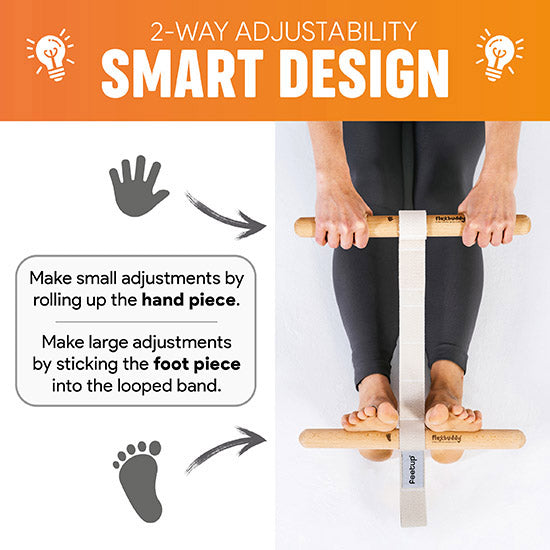
| FlexBuddy (two wooden bars and an adjustable strap) | Long by design: you sit tall, lean back and tilt the hips against the strap | Foot bar under both feet, wooden handles in the hands; big steps by loop, small steps by rolling the strap round the hand bar | Low to mid | The seated forward bend with a tall spine, both legs at once; a daily habit, sitting or lying |
Hands, towel and strap are the same idea at three levels. A towel is a fine way to start tonight, and a strap's loops add a length you can repeat. What both leave to you is the grip and the posture: the pull runs through your fingers, and when the hands tire the back rounds again. Lying down that hardly matters, because the floor holds your back. Sitting up, it is everything.
Leg stretchers and machines, where "hamstring stretch machine" searches lead, are mostly split trainers: a seat with two leg rests that a crank pushes apart. They are built for side splits, and if a split is your goal they have a place. Go slowly with any crank, because the mechanism sets the angle, not your muscle. To fold forward freely, you need something far simpler.
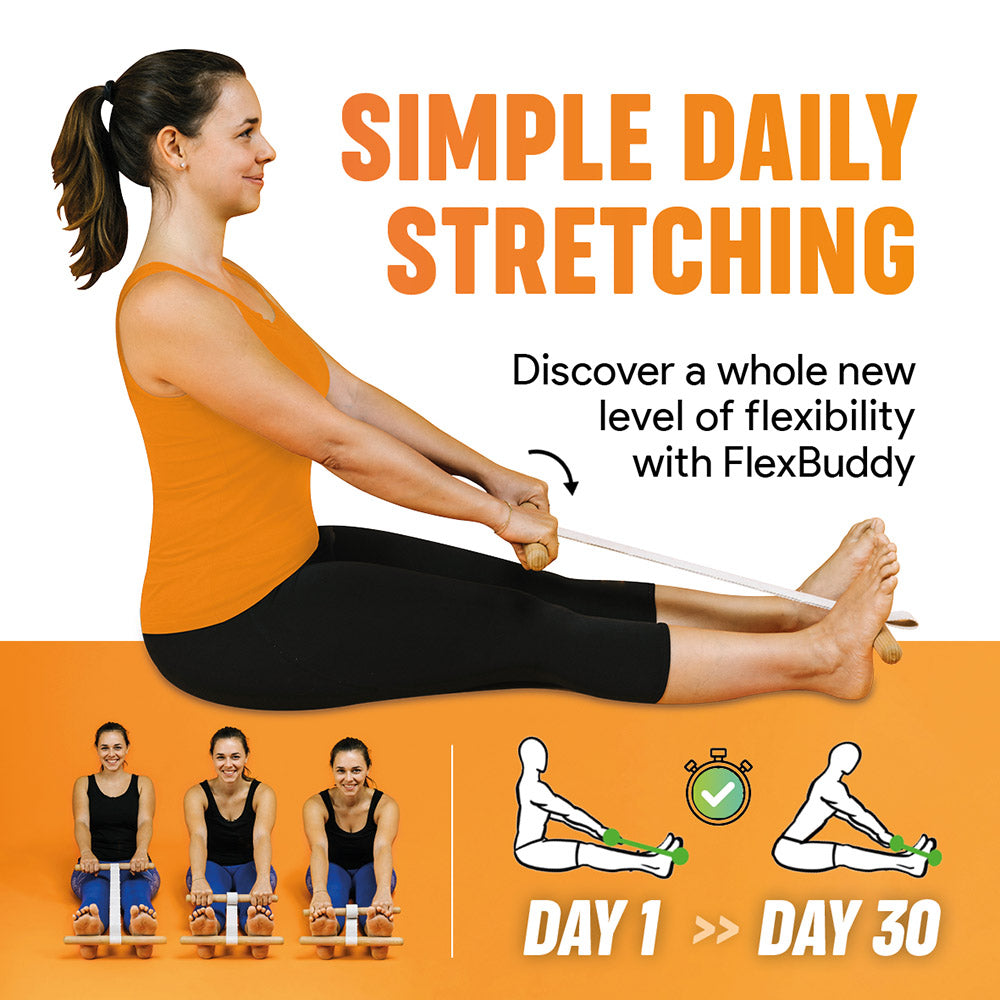
FlexBuddy is the bar-and-strap device made for exactly this stretch, sitting or lying down. The posture is built in: you sit tall, lean back against the strap and tilt the hips forward, so the pull comes from your leaning body and never from a bent back reaching for the feet. The comfortable wooden handles fill your palms, so there is no rope burn and nothing cutting into your fingers. The two-way adjustment gives you a setting to repeat and a notch to beat: start long and shorten a little each week. One trainer called it "a great tool to help your clients maintain a neutral spine while stretching calves, hamstrings and lower back."
How to do the lying hamstring stretch with a strap or towel
Learn this version first, whatever you own. The floor holds your back in position, so you can simply enjoy the stretch in your legs.
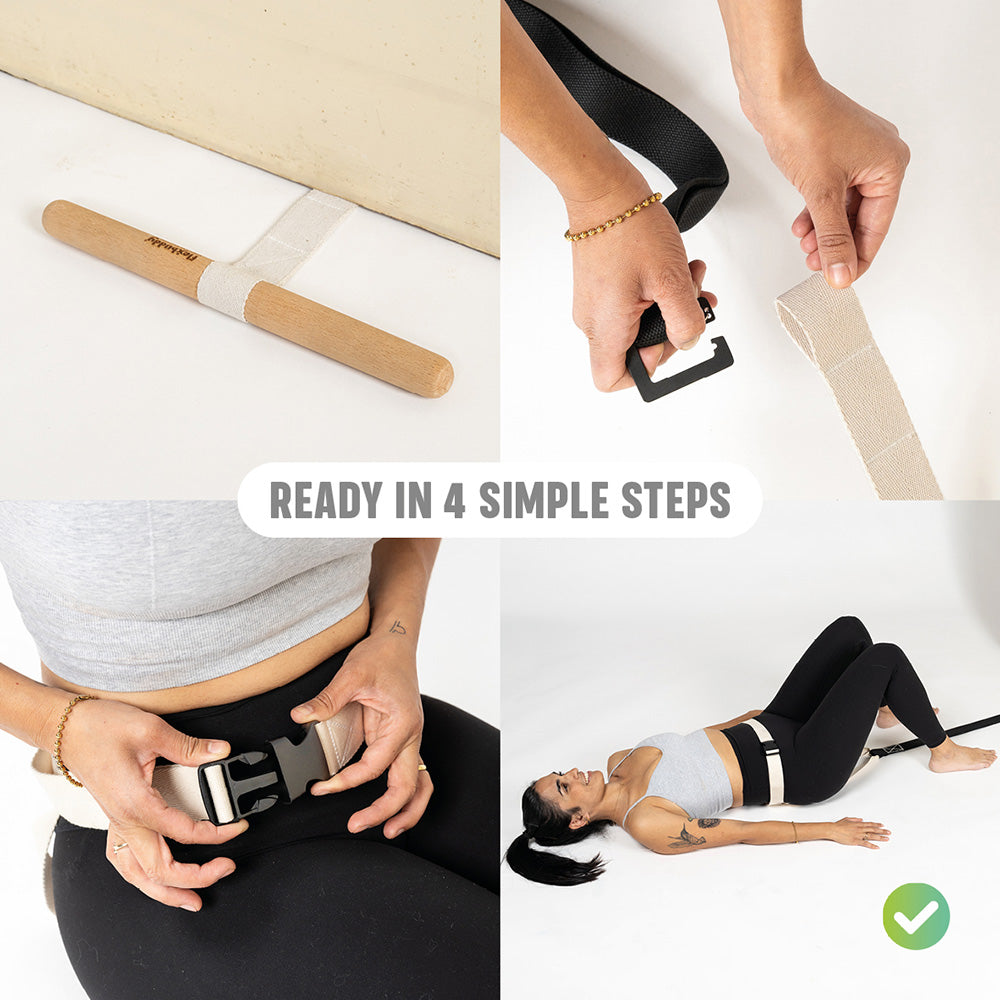
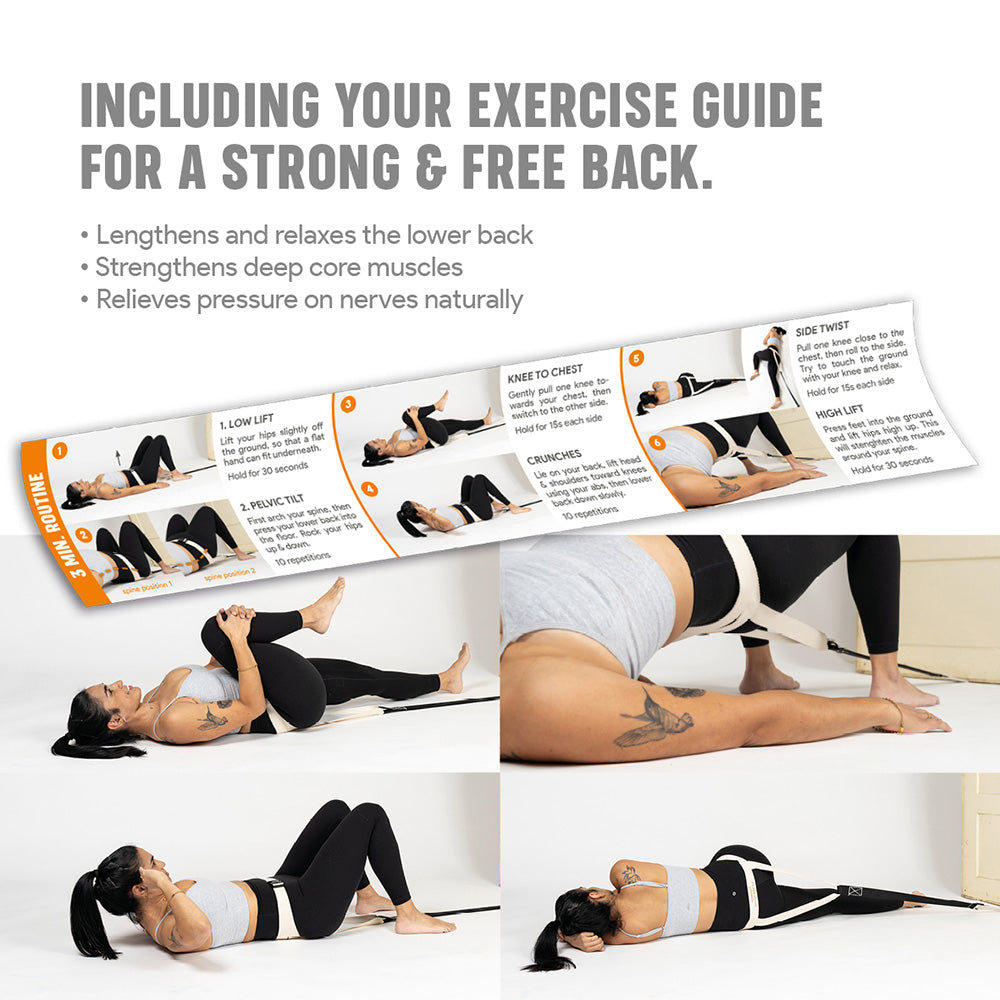
- Lie on your back on a mat or in bed. Bend the other leg and put that foot flat; this keeps the lower back settled.
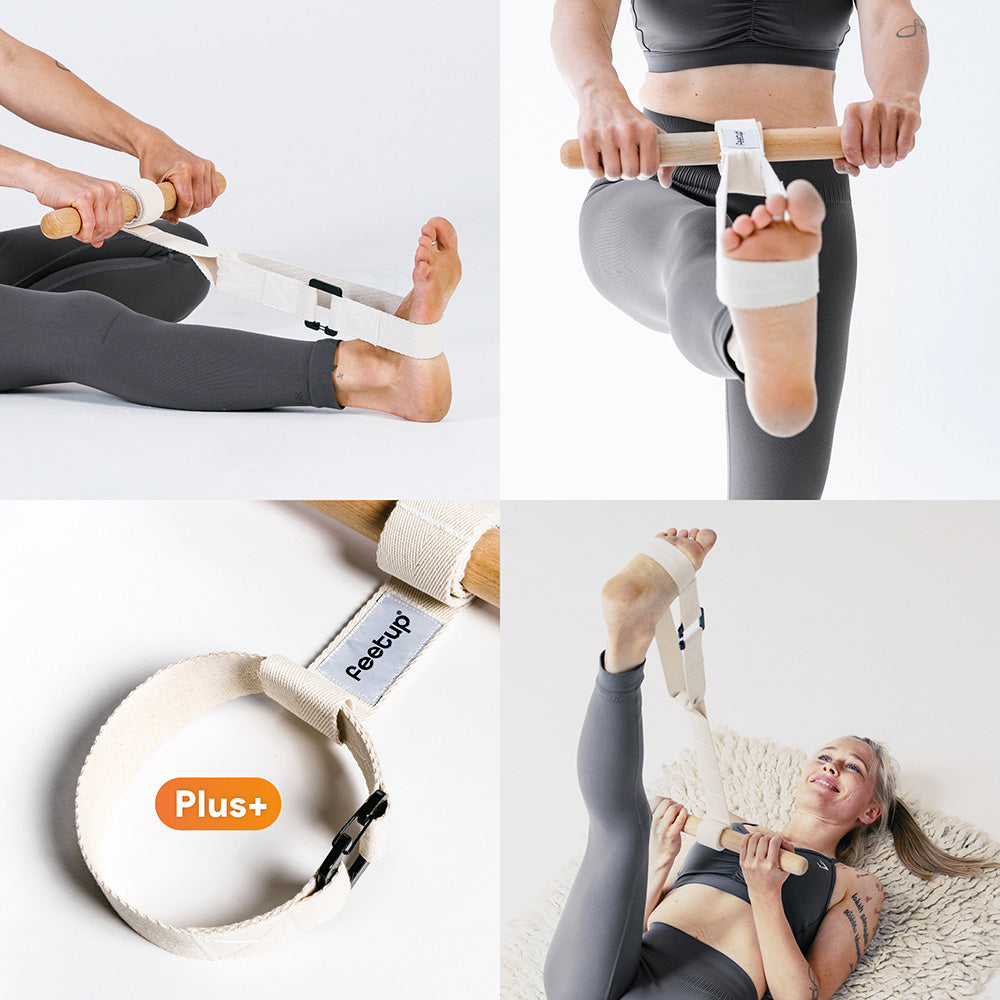
- Put the FlexBuddy foot bar under the sole of one foot, or loop a towel or strap round it just below the toes, and hold on with both arms long. Shoulders and head stay down.
- Raise the straight leg until you feel a clear pull in the back of the thigh. The knee stays straight or very slightly soft.
- Check the back: lower back on the floor, tailbone down. If the hips lift or roll, you have gone too high.
- Hold for about 30 seconds, breathing slowly; ten slow breaths is a good clock [3]. Lower, rest, repeat two or three times, then change legs.
Stop at mild tightness, never pain. A muscle being hurt contracts against you. Stay gentle and by the last breaths the leg softens and drifts a little higher.
A step up: contract-relax
Once the plain hold is easy, add a contract-relax cycle, the technique physiotherapists call PNF: at the top of the stretch, push the foot gently down into the strap without letting it move for about six seconds, then relax and take the leg a little higher [12]. You do not have to push hard: contractions at 20 to 60 per cent of maximum work about as well as all-out effort [12][13]. Strong ones can cause soreness, so keep this for after exercise and use it with care if you are older [12].
How to do the seated hamstring stretch properly
This is the version that changes how you move. Sitting tall and folding from the hips is exactly what tight hamstrings stop you doing in daily life, and it is the stretch FlexBuddy was designed for: the strap carries the reach, so your back stays long.
- Sit on the floor with both legs straight. If you cannot sit upright like that, sit on a folded blanket; raising the hips tips the pelvis forward.
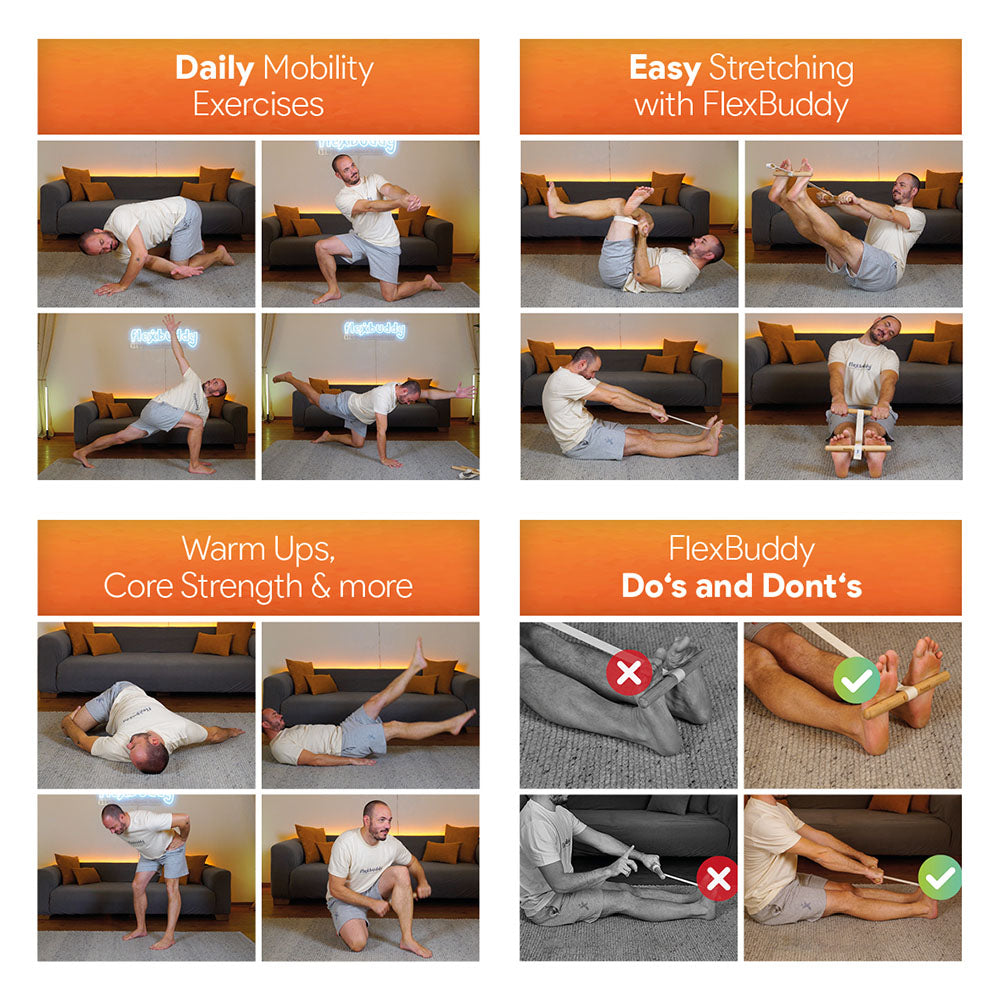
- Put the FlexBuddy foot bar under the soles of both feet and take the other bar in both hands, or loop a towel or strap round your feet. Keep the arms straight. Do not pull with bent elbows.
- Lift the chest, draw the shoulders down, look ahead. Now lean the whole trunk back against the strap and tilt the hips forward, as if pointing your sitting bones at the wall behind you. That tilt is the stretch; you may feel it with the body still almost upright, and that is correct.
- Hold for about 30 seconds, ten slow breaths [3]. If the lower back complains, you have rounded: come up, re-lengthen, settle for a smaller angle.
- Rest 30 seconds and repeat, three holds in total. Shorten the strap only when a setting feels calm. With FlexBuddy that is one small roll of the hand bar.
Measure progress by how short the strap can be with a long back, not by how close your nose gets to your knees. Every notch shorter is a win you can see. Seated and standing stretches gave equal gains in the trial that compared them [2], so if the floor is difficult the same rules apply to a heel on a low step.
Hold times, repetitions and how often
You need less time than you think. In adults with short hamstrings stretching five days a week for six weeks, a 30-second hold improved knee extension as much as a 60-second hold, and once a day was as good as three times a day [3]. The American College of Sports Medicine recommends about 60 seconds per exercise for each major muscle-tendon group on at least two days a week [4], usually summarised as two to three days a week; 60 seconds can be 15 seconds four times or 20 seconds three times [5]. A clinical review adds that people over 65 gained more from 60-second holds in one study, and that static stretching immediately before explosive sport can reduce strength and jump performance, so long holds belong after training [13].
You will notice the change quickly. Gains after programmes of three to eight weeks are mostly a change in sensation: the position that pulled hard last week feels easy, so you go further [14]. That is why a short daily habit beats an occasional long session. Leave FlexBuddy where you will see it, by the sofa or beside the bed, and two minutes a day becomes the easiest promise you keep. More in how long to hold a stretch.
Towel and strap mistakes, and the fix for each
- Pulling the foot towards you instead of leaning away. Pulling bends the elbows, hunches the shoulders and rounds the back. Keep the arms straight and let the trunk lean back. The lean is the stretch.
- Looping it round the heel. Start with the strap round the ball of the foot, where it holds the ankle bent and stretches calf and hamstring as one chain. If the calf pulls before the thigh does, slide it back towards the arch. Round the heel it slides off.
- Letting the knee bend to reach. A bent knee hides that you have gone too far. Slightly soft is fine; bent means take the strap longer.
- Rounding when the hands tire. When the grip gives, the body saves the position by curling the spine. The fix is handles that are easy to hold and a strap that carries the pull, which is what FlexBuddy gives you.
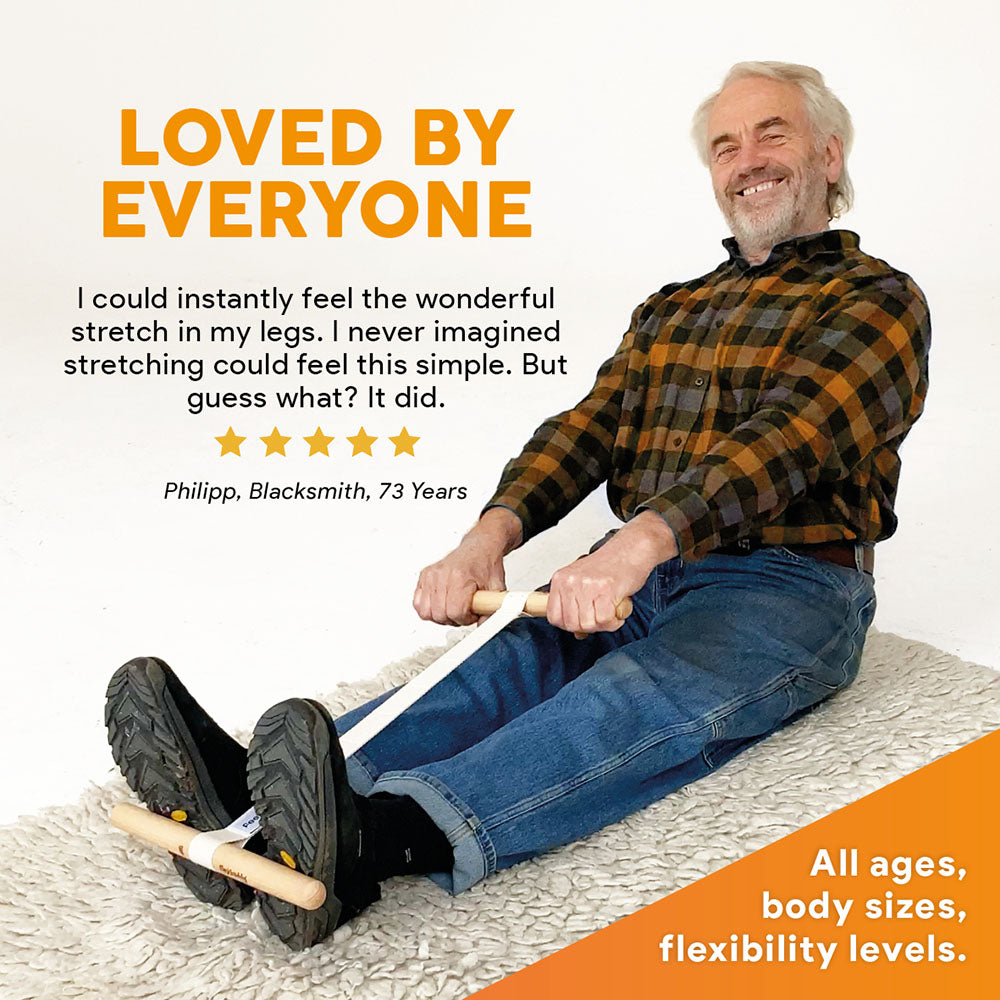
- Chasing the toes. Progress is a shorter strap with a long back, not a nose nearer the knee. Stay with it and the toes come to you. One buyer wrote: "It has changed my life! I can now bend 15 cm more than before in the space of 6 months."
When a hamstring stretching device is worth it
A device earns its place the moment one of three things is true.
Your back rounds. You know the position, you cannot hold it, and the towel is not stopping you. FlexBuddy holds it for you. You want to see progress. You want to repeat yesterday's setting and go one notch shorter, not guess every day. Comfort decides whether you do it at all. A strap that cuts into the fingers stays in the drawer; wooden handles you like holding come out every evening. The tool that wins is the one you still pick up in week six.
Start tonight with the best hamstring stretches for beginners and a bath towel, and give it two weeks. If the stretch keeps landing in your back, that is your answer, and FlexBuddy is the fix. One caution: tightness that burns down the leg or came on suddenly is a nerve or an injury, not a short muscle, and the right first step is a physiotherapy appointment. The hamstrings and lower back guide covers how to tell the two apart.

Get the stretch right with FlexBuddy
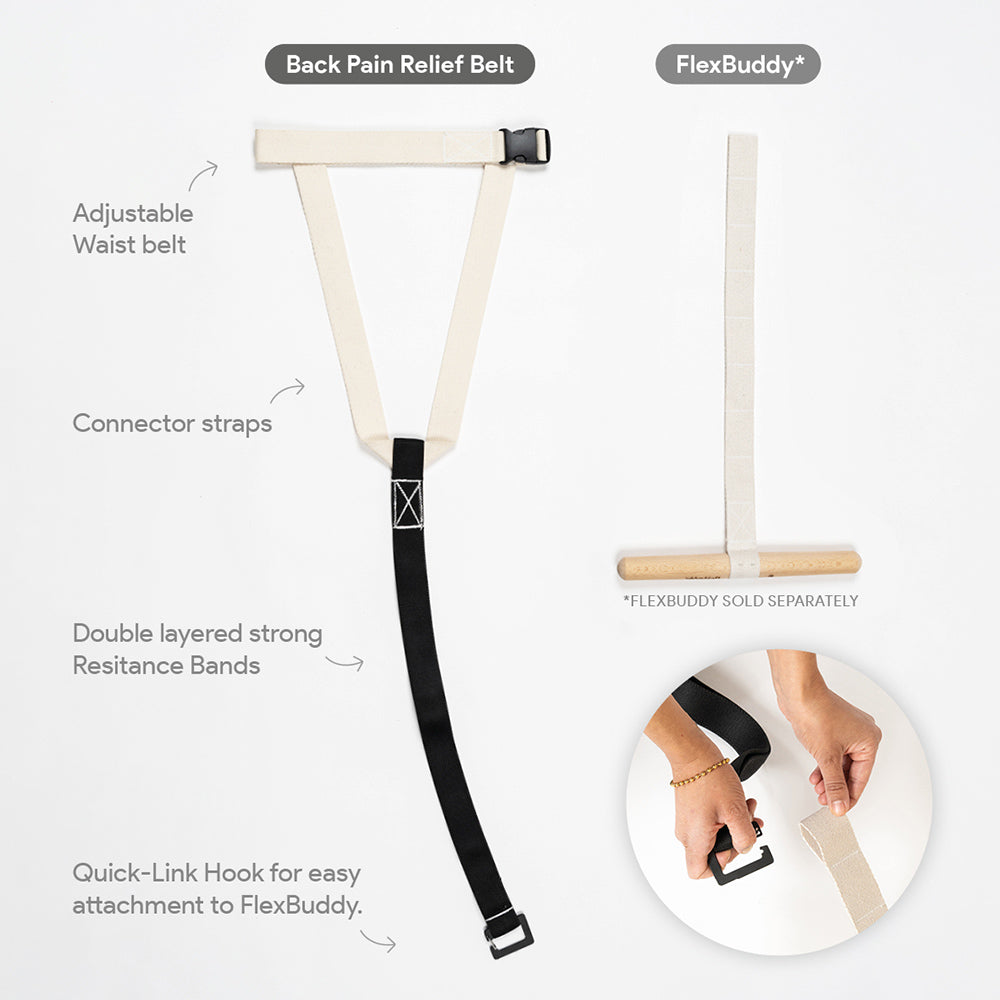
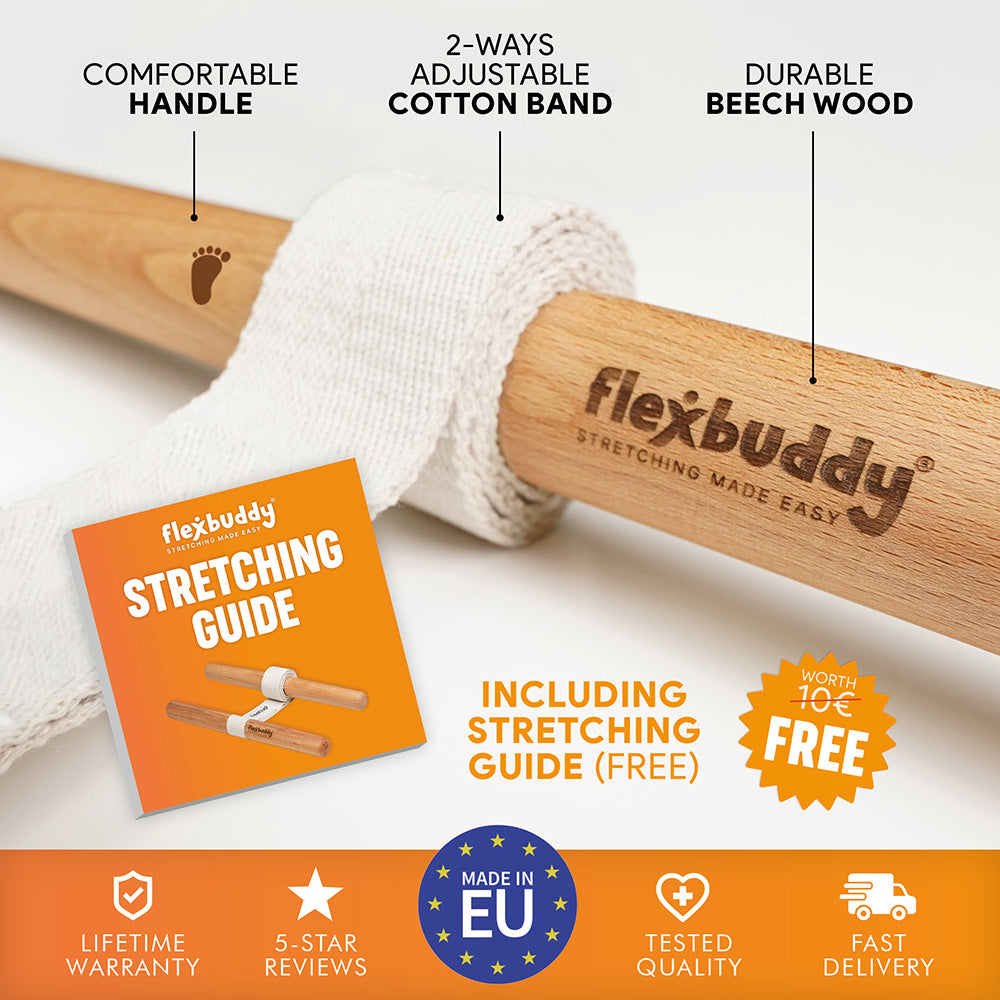
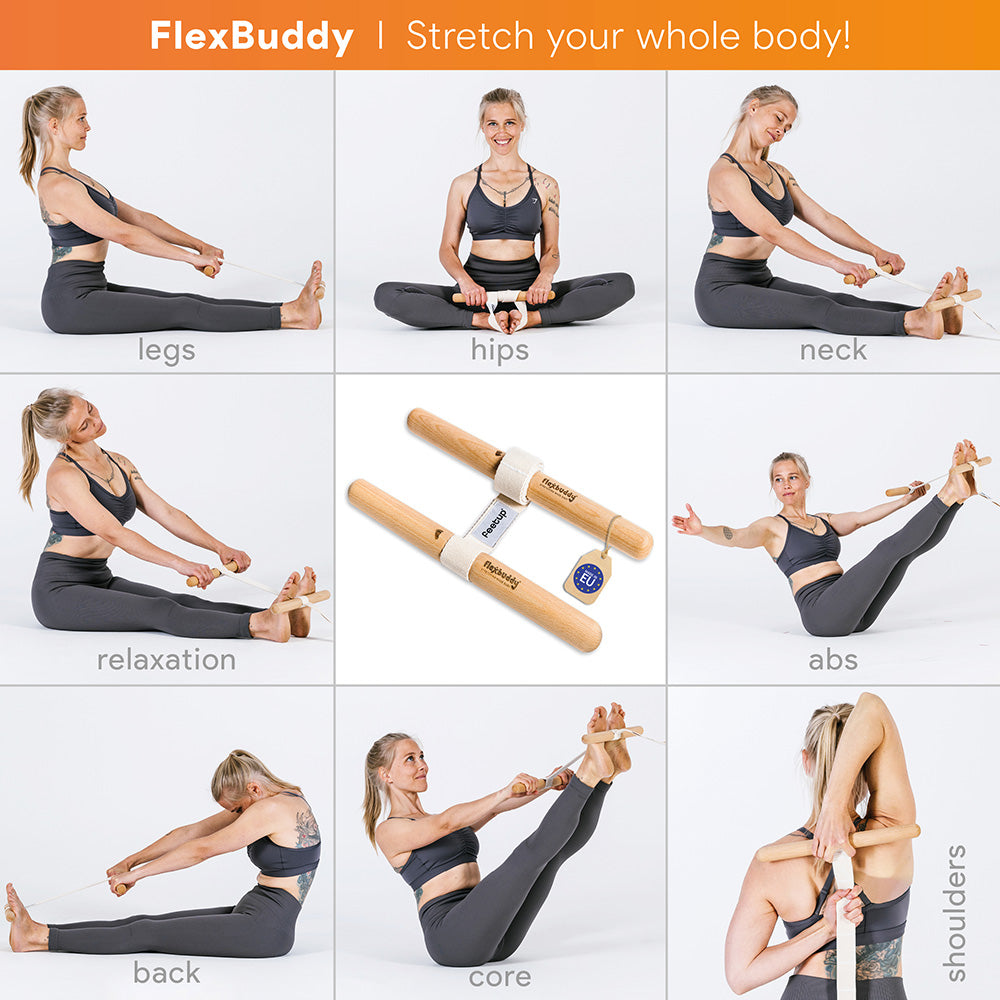
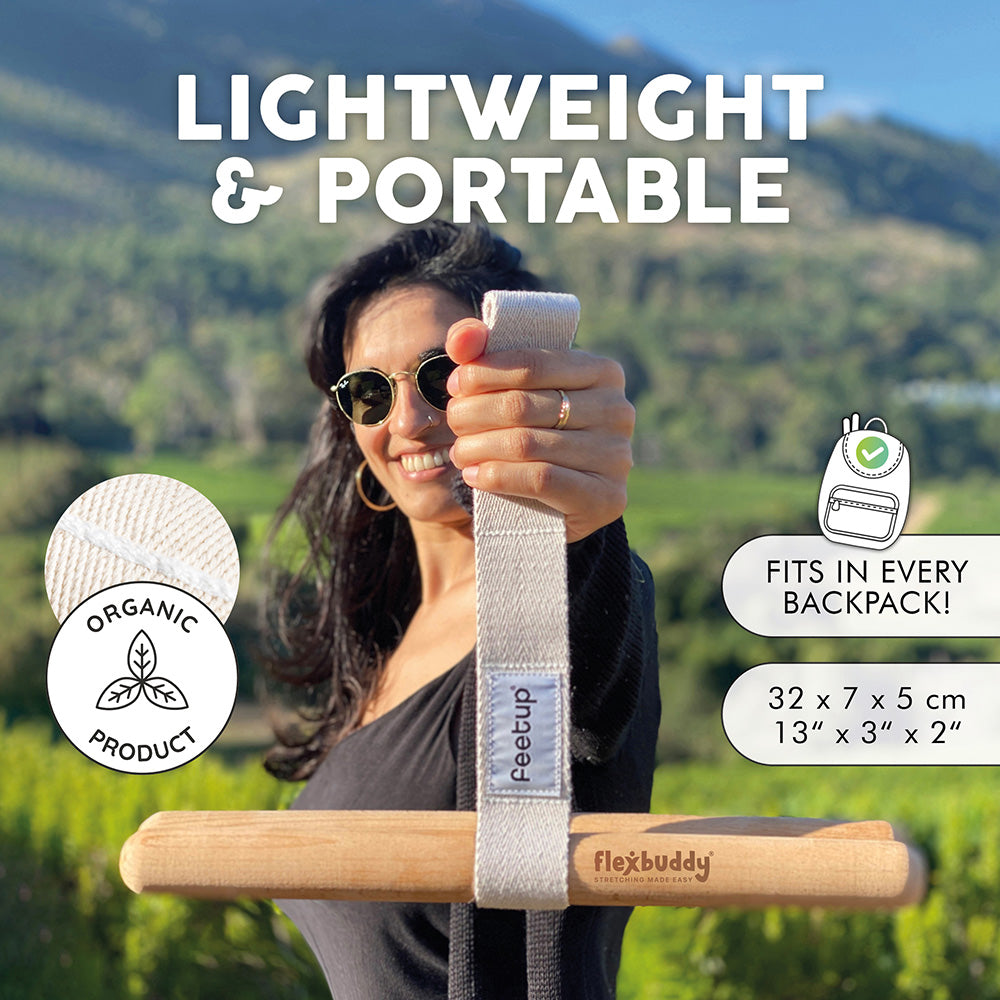
Every method here comes down to one posture: spine long, pelvis tipped forward, legs straight. FlexBuddy® puts you in it. It is a patented stretching device made of two beech-wood bars joined by an adjustable natural-cotton strap, about 32 by 7 by 5 cm, so it fits in a bag. One bar goes under the soles of both feet, the other in both hands. Shorten the strap to your current flexibility, sit straight, lean back and tilt the hips forward, shoulders down, chest lifted, arms straight. The strap carries the pull, so your back never has to round to reach, and your hamstrings and calves stretch together.
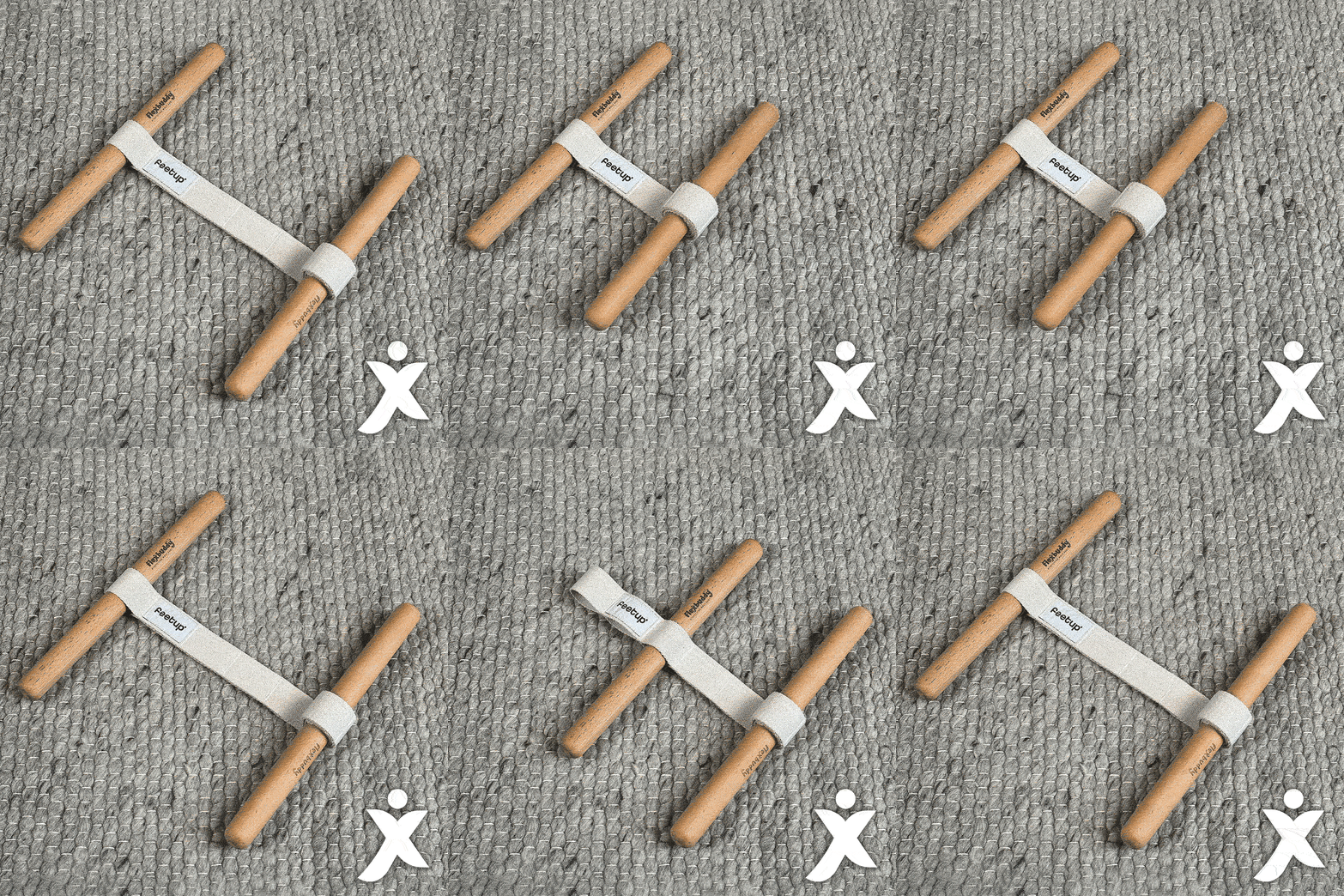
Big changes of length come from moving the foot bar to another loop, fine changes from rolling the strap round the hand bar. The wooden handles are comfortable to hold, with no rope burn. The brand's routine is ten deep breaths, a 30-second pause, three times, and one size fits heights from 142 to 198 cm. A verified buyer wrote: "I am 64 and have never touched my toes. FlexBuddy changed that in a week!" It is rated 4.5 by verified buyers and comes with a 30-day money-back guarantee and a lifetime warranty, so you can try it without risk. Get your FlexBuddy, read how to use it, or take the quiz to see where you start.
Frequently asked questions
How do I do a hamstring stretch with a strap?
You will feel it straight away. Lie on your back, loop the strap round the ball of one foot, keep the other knee bent, and raise the straight leg with long arms until the back of the thigh pulls. Lower back on the floor, hold about 30 seconds, two or three times per leg [3]. Seated, sit tall, lean back against the strap and tilt the hips forward instead of pulling.
Does a towel hamstring stretch work as well as a strap?
For the lying stretch, yes: the towel holds the foot while the spine stays long, and that is what makes the stretch work. In the trial that tested it, the position of the pelvis mattered more than the stretching method [1]. A strap adds a length you can repeat, and handles are far kinder to the hands.
Stretching strap vs towel: which should I buy?
Start tonight with the towel you own: you will feel the stretch at once. Choose a strap for a length you can repeat. Choose FlexBuddy if you want the seated stretch to work every time: it has wooden handles, adjusts in small steps and keeps your back long while you lean.
Do hamstring stretch machines work?
For side splits, yes: machines sold as leg stretchers are mostly split trainers that push the legs apart. For bending forward freely you need far less. In a review of 28 trials, every study reported better hamstring range of motion from simple stretches in a variety of positions [9]. With any crank, go slowly, because the mechanism sets the angle.
Can I do a lying hamstring stretch with a band?
Yes. Pick one that does not stretch: an elastic band gives as you pull, so the leg is never held still. A non-stretch strap, a towel or a bar-and-strap device keeps the leg in place for a static hold, which is what the 30-second holds in the research used [3][10].
Can I do the hamstring stretch with a towel lying on my bed?
Yes, and it is a lovely way to end the day. With a sore back it is the best place to start, because the mattress supports the spine. Follow the lying steps and keep the hips on the bed; a firm mattress is better than one that lets the pelvis sink and tuck.
This article is general information, not medical advice. Tight muscles usually respond well to regular stretching. If your pain is sharp, radiates down a leg, comes with numbness, weakness, fever, bladder or bowel changes, follows an injury, or keeps getting worse, see a doctor or physiotherapist before you stretch.
References
- Sullivan MK, Dejulia JJ, Worrell TW. Effect of pelvic position and stretching method on hamstring muscle flexibility. Med Sci Sports Exerc. 1992;24(12):1383–1389. PMID 1470022.
- Borman NP, Trudelle-Jackson E, Smith SS. Effect of stretch positions on hamstring muscle length, lumbar flexion range of motion, and lumbar curvature in healthy adults. Physiother Theory Pract. 2011;27(2):146–154. doi:10.3109/09593981003703030. PMID 20690869.
- Bandy WD, Irion JM, Briggler M. The effect of time and frequency of static stretching on flexibility of the hamstring muscles. Phys Ther. 1997;77(10):1090–1096. doi:10.1093/ptj/77.10.1090. PMID 9327823.
- Garber CE, Blissmer B, Deschenes MR, et al.; American College of Sports Medicine. Position stand: quantity and quality of exercise for developing and maintaining cardiorespiratory, musculoskeletal, and neuromotor fitness in apparently healthy adults. Med Sci Sports Exerc. 2011;43(7):1334–1359. doi:10.1249/MSS.0b013e318213fefb. PMID 21694556.
- Harvard Health Publishing. The ideal stretching routine. Harvard Medical School, 16 Mar 2026 (reviewed by H. E. LeWine, MD). https://www.health.harvard.edu/staying-healthy/the-ideal-stretching-routine (accessed 4 Nov 2026).
- Esola MA, McClure PW, Fitzgerald GK, Siegler S. Analysis of lumbar spine and hip motion during forward bending in subjects with and without a history of low back pain. Spine. 1996;21(1):71–78. doi:10.1097/00007632-199601010-00017. PMID 9122766.
- Muyor JM, Vaquero-Cristóbal R, Alacid F, López-Miñarro PA. Criterion-related validity of sit-and-reach and toe-touch tests as a measure of hamstring extensibility in athletes. J Strength Cond Res. 2014;28(2):546–555. doi:10.1519/JSC.0b013e31829b54fb. PMID 24476746.
- López-Miñarro PA, Muyor JM, Belmonte F, Alacid F. Acute effects of hamstring stretching on sagittal spinal curvatures and pelvic tilt. J Hum Kinet. 2012;31:69–78. doi:10.2478/v10078-012-0007-7. PMID 23486214; PMC3588653.
- Decoster LC, Cleland J, Altieri C, Russell P. The effects of hamstring stretching on range of motion: a systematic literature review. J Orthop Sports Phys Ther. 2005;35(6):377–387. doi:10.2519/jospt.2005.35.6.377. PMID 16001909.
- Bandy WD, Irion JM, Briggler M. The effect of static stretch and dynamic range of motion training on the flexibility of the hamstring muscles. J Orthop Sports Phys Ther. 1998;27(4):295–300. doi:10.2519/jospt.1998.27.4.295. PMID 9549713.
- Davis DS, Ashby PE, McCale KL, McQuain JA, Wine JM. The effectiveness of 3 stretching techniques on hamstring flexibility using consistent stretching parameters. J Strength Cond Res. 2005;19(1):27–32. doi:10.1519/14273.1. PMID 15705041.
- Hindle KB, Whitcomb TJ, Briggs WO, Hong J. Proprioceptive neuromuscular facilitation (PNF): its mechanisms and effects on range of motion and muscular function. J Hum Kinet. 2012;31:105–113. doi:10.2478/v10078-012-0011-y. PMID 23487249; PMC3588663. https://pmc.ncbi.nlm.nih.gov/articles/PMC3588663/ (accessed 4 Nov 2026).
- Page P. Current concepts in muscle stretching for exercise and rehabilitation. Int J Sports Phys Ther. 2012;7(1):109–119. PMID 22319684; PMC3273886. https://pmc.ncbi.nlm.nih.gov/articles/PMC3273886/ (accessed 4 Nov 2026).
- Weppler CH, Magnusson SP. Increasing muscle extensibility: a matter of increasing length or modifying sensation? Phys Ther. 2010;90(3):438–449. doi:10.2522/ptj.20090012. PMID 20075147.