- Take the sting out of your first steps. Plantar fasciitis is irritation of the thick band under your foot. About one person in ten gets it, and the giveaway is pain on the first steps after sleeping or sitting that eases as you walk [1][2].
- The winning stretch takes under two minutes. In a randomised trial of people with heel pain for at least ten months, a seated stretch of the fascia itself beat the standard Achilles stretch for worst pain and for morning first-step pain at eight weeks [3].
- The dose is simple: ten holds of ten seconds, three times a day [4]. Do the first set in bed, before your foot touches the floor.
- Free your calves too. A stiff ankle is the strongest risk factor measured for plantar fasciitis [5]. In a four-month trial, calf stretching loosened the ankle, and the gain went hand in hand with less heel pain [6].
- Exercise is what pays off long term. A network meta-analysis of 31 trials points to exercise for long-term pain and function [7].
- Give it a few weeks, and know the signs. Recovery takes weeks to months [1]. See a GP if two weeks of self-care have not helped, if the pain is severe or worsening, or if the foot tingles or goes numb [2].
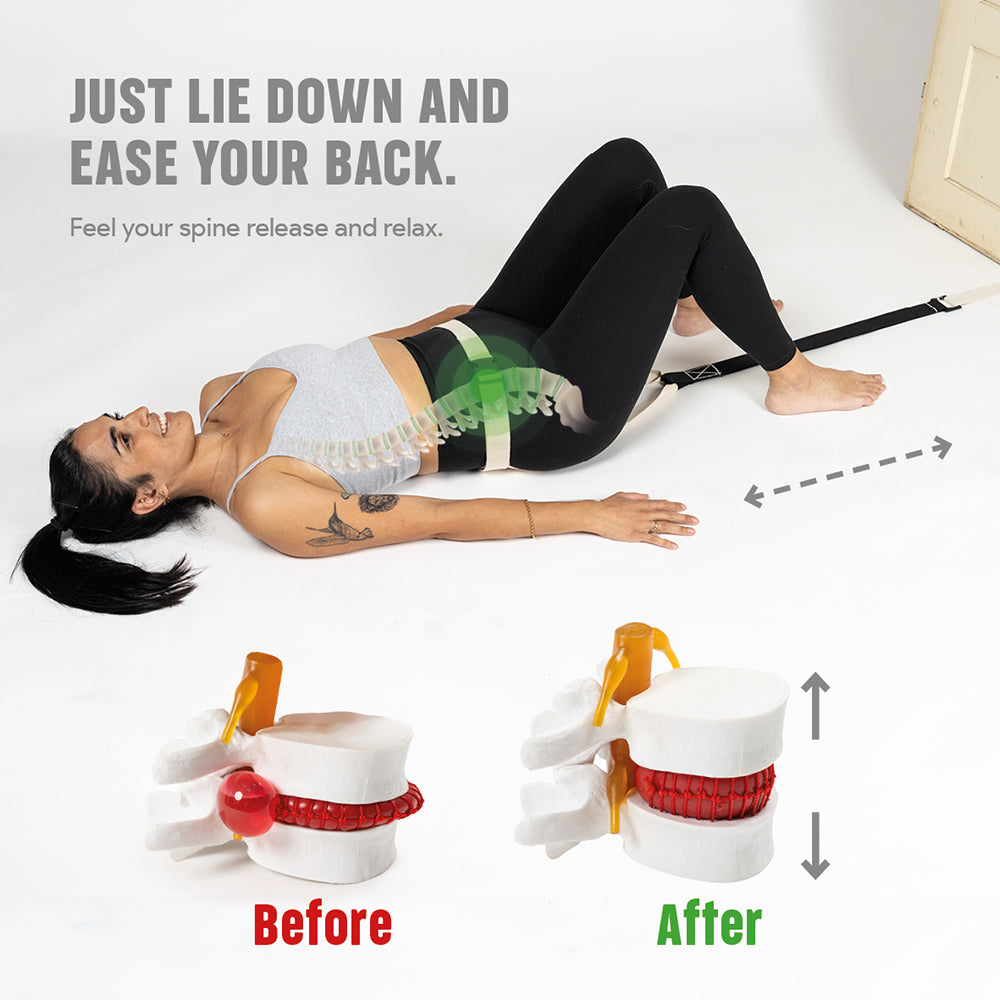
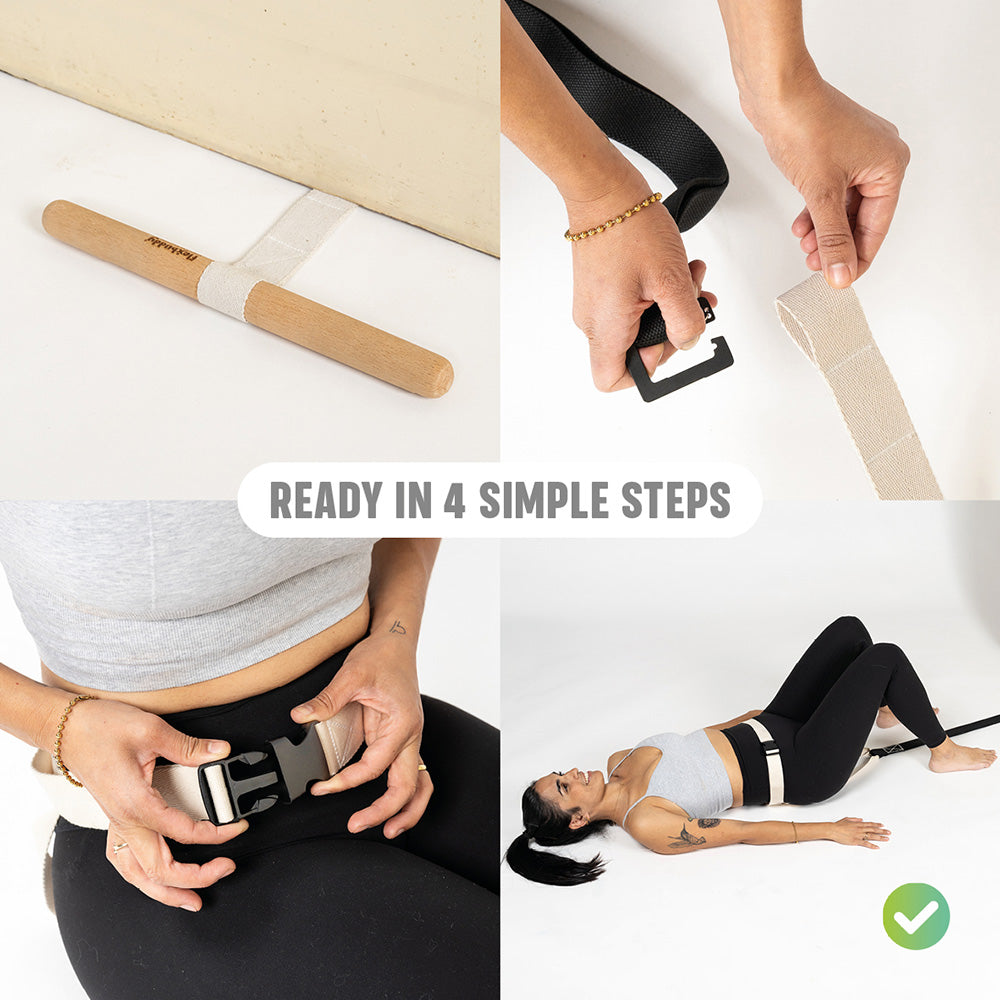
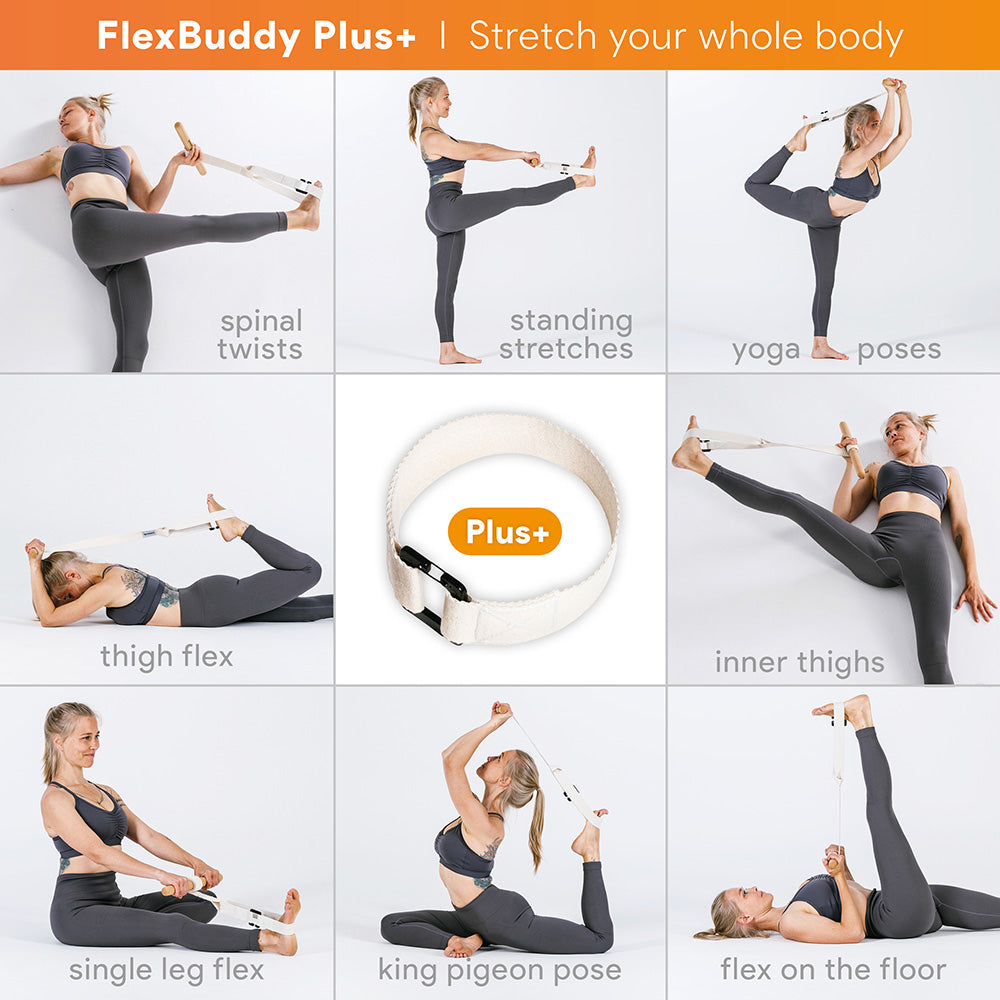
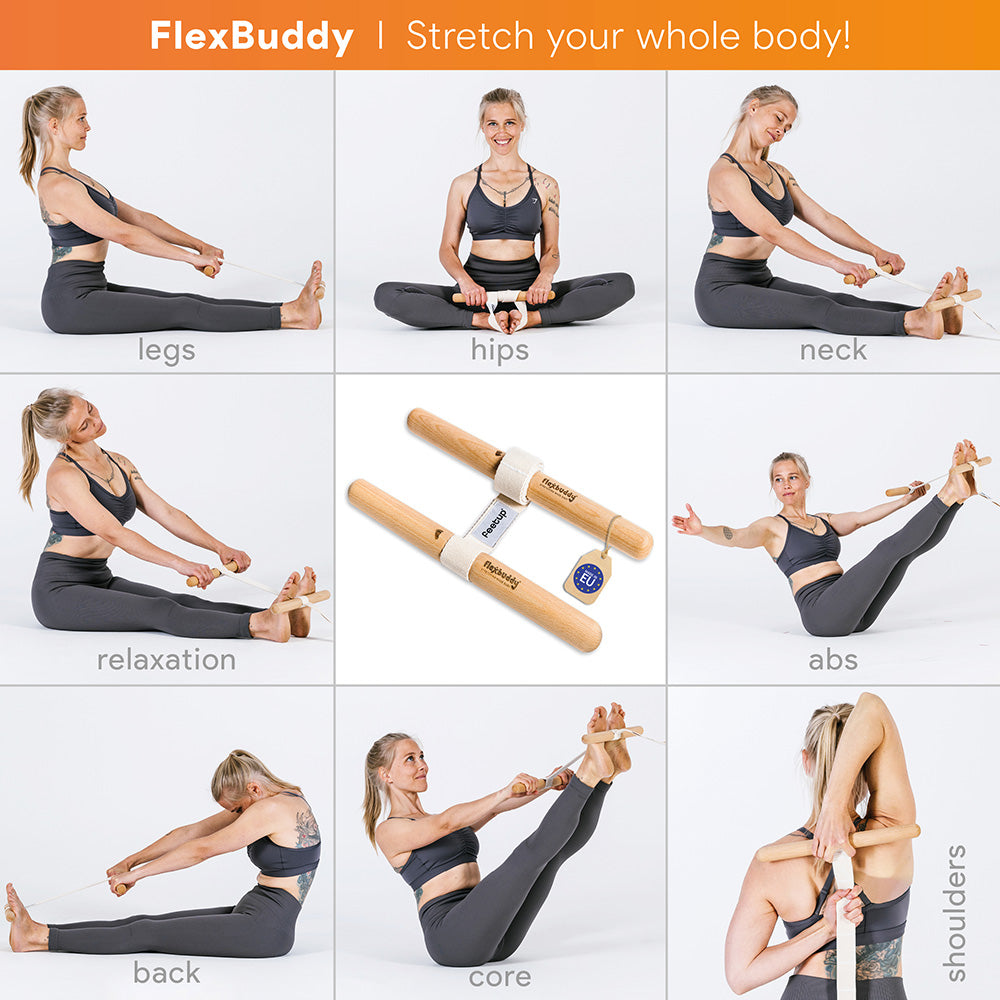
- FlexBuddy® turns the routine into one easy habit. It stretches your calf with a long spine while you are still in bed, then its foot bar rolls the sole. It lives on the bedside table.
What plantar fasciitis is, and why the first steps hurt
The plantar fascia is the band of tissue that runs under the sole from the heel bone to the base of the toes and supports the arch [8]. Plantar fasciitis is inflammation and irritation of that band, usually where it meets the heel [1][8]. You are in good company: around one in ten people develop it at some point, and more than two million a year are treated for it in the United States alone [1]. And the outlook is good. More than 90% of patients improve within ten months of starting simple treatment [8], and the simplest part starts tomorrow morning, in bed.
The usual story is long hours on the feet, exercise on hard surfaces, unsupportive shoes or barefoot time at home, high or flat arches, or weight gained quickly [1]. Underneath those sits one factor you can work on every day: a stiff ankle. In a case-control study, people whose ankle would not bend up past neutral had 23 times the odds of plantar fasciitis compared with people with more than ten degrees of movement, ahead of a body-mass index over 30 (5.6 times) and standing work (3.6 times) [5]. A review of 16 studies also links body weight, a stiff ankle and long standing to heel pain [9]. The anatomy of the two calf muscles and the knee-to-wall test that measures your own ankle are in our guide to tight calves, knee pain and plantar fasciitis. This article is the routine.
Why does the first step hurt most? Overnight, and in a long sit, the foot rests pointed down, so the calf and the fascia spend hours at their shortest. The NHS describes the signature as pain "much worse when you first start walking after sleeping or resting", easing as you move and returning after long standing or walking [2]; the Cleveland Clinic adds that it is worst on first standing and eases after a few minutes [1]. That first step loads a cold, shortened band to full length under your whole weight. So the whole plan rests on one idea: lengthen the band and the calf before they take your weight, not after. Do that and the first step changes.
Which plantar fasciitis stretches work best
The plantar fascia stretch beat the calf stretch
For years the standard advice was to stretch the Achilles against a wall. Then a randomised trial tested it against a stretch aimed at the fascia itself. Patients with heel pain for at least ten months were taught either a seated, non-weight-bearing plantar fascia stretch or the standard weight-bearing Achilles stretch; everyone also got soft insoles and a short course of an anti-inflammatory [3]. After eight weeks the fascia group was clearly ahead: significantly better for worst pain and for pain with the first steps in the morning, with greater improvement in activity limitation and satisfaction. The authors called the fascia programme superior [3]. The dose was ten repetitions of ten seconds, three times a day, pulled to the point where you feel the stretch [4].
And it lasted. Two years on, with everyone doing the fascia stretch, 94% of the patients followed up reported less pain, 92% were satisfied or satisfied with minor reservations, and 77% reported no limitation in recreational activities [10]. These were people whose heels had hurt for ten months or more before they started. Both knee positions of the calf stretch are in our calf stretches guide.
The wider research backs it. A systematic review of the stretching trials supports fascia stretching over Achilles stretching alone in the short term [4]. A 2019 network meta-analysis of 31 trials and 2,450 patients points to exercise for long-term pain and function [7]. Two minutes, no equipment, and the best-supported stretch there is. Start here.
Calf stretching frees the ankle
Static calf stretching increases ankle dorsiflexion, the upward bend of the ankle, by about two to three degrees, according to a systematic review of five randomised trials [11]. Two or three degrees sounds small until you remember that the risk study drew its lines at zero and ten degrees [5]. If your ankle is at the stiff end, a few degrees are well worth having.
Long holds or short holds: both work
A randomised trial compared two Achilles-stretching schedules over four months: a sustained three-minute stretch three times a day, against five holds of 20 seconds twice a day [6]. Both worked. Both groups gained ankle flexibility, and the gain went hand in hand with less pain [6]. So the clock is yours to choose: pick the holds you will do every day. Our article on how long to hold a stretch covers the general guideline numbers.
The in-bed morning routine: before your first step
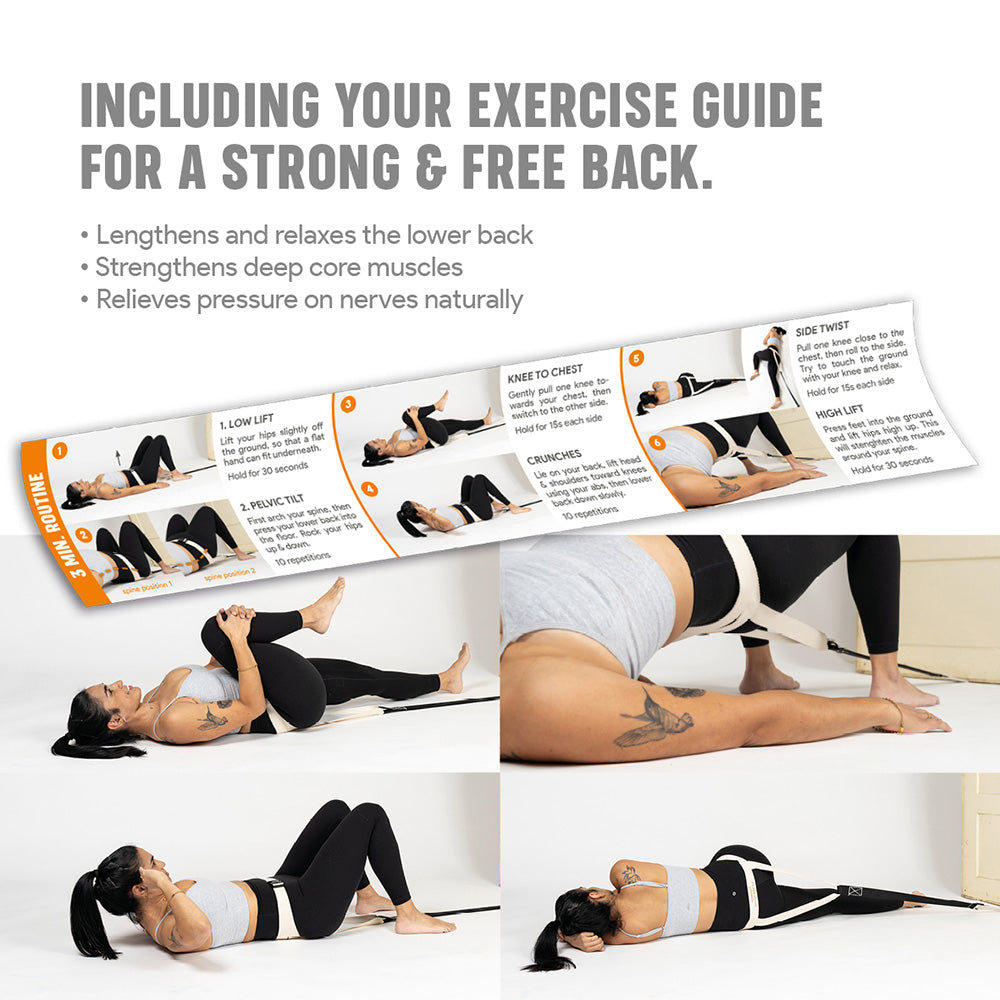
This is the routine that changes your mornings, done sitting up in bed before your foot touches the floor. Keep FlexBuddy, a strap or a towel on the bedside table. Total time: about four minutes. The in-bed stretching guide has versions of other stretches for the same moment.
| Move | How | Hold | Reps |
|---|---|---|---|
| 1. Plantar fascia stretch | Sit up, cross the sore foot over the other knee. Hold the base of the toes and pull them back towards the shin until the arch feels taut; run your thumb along the arch to check it is tight like a cord [3][4] | 10 seconds | 10 |
| 2. Lying calf stretch, knee straight | Lie back, FlexBuddy foot bar or a strap over the ball of the foot, knee straight, pull the toes towards you until the upper calf pulls | 10 slow breaths (about 30 s) | 2 |
| 3. Lying calf stretch, knee slightly bent | Same, with the knee softened a few centimetres so the pull moves lower, into the soleus | 10 slow breaths | 2 |
| 4. Ankle pumps and circles | Point and flex the foot through its full range, then draw slow circles each way | Continuous | 20 pumps, 10 circles each way |
| 5. Edge-of-bed foot roll | Sit on the edge of the bed and roll the sole slowly over the FlexBuddy foot bar, a ball or a bottle from heel to toes, pausing on tender spots | 1 minute | 1 |
Then stand up and feel the difference against yesterday's first step. The foot meets the floor already warm and long, and you will notice it on the very first morning.
Three details make this work. Pull the fascia stretch until the band is taut under your thumb; a lazy tug on the toes does nothing. Put the strap over the ball of the foot, not the arch, so the pull reaches calf and fascia together. And sit tall and tilt from the hips: round your back to reach the foot and the pull lands in the lower back instead.
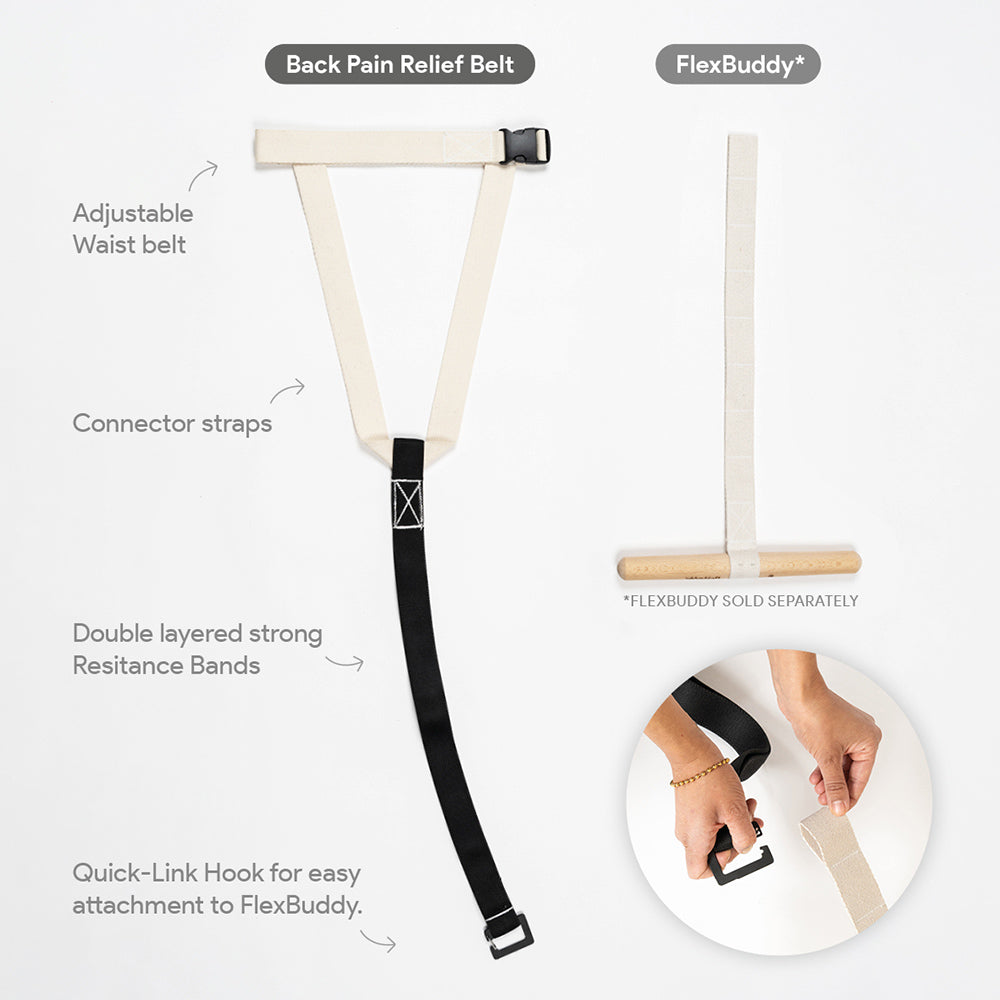
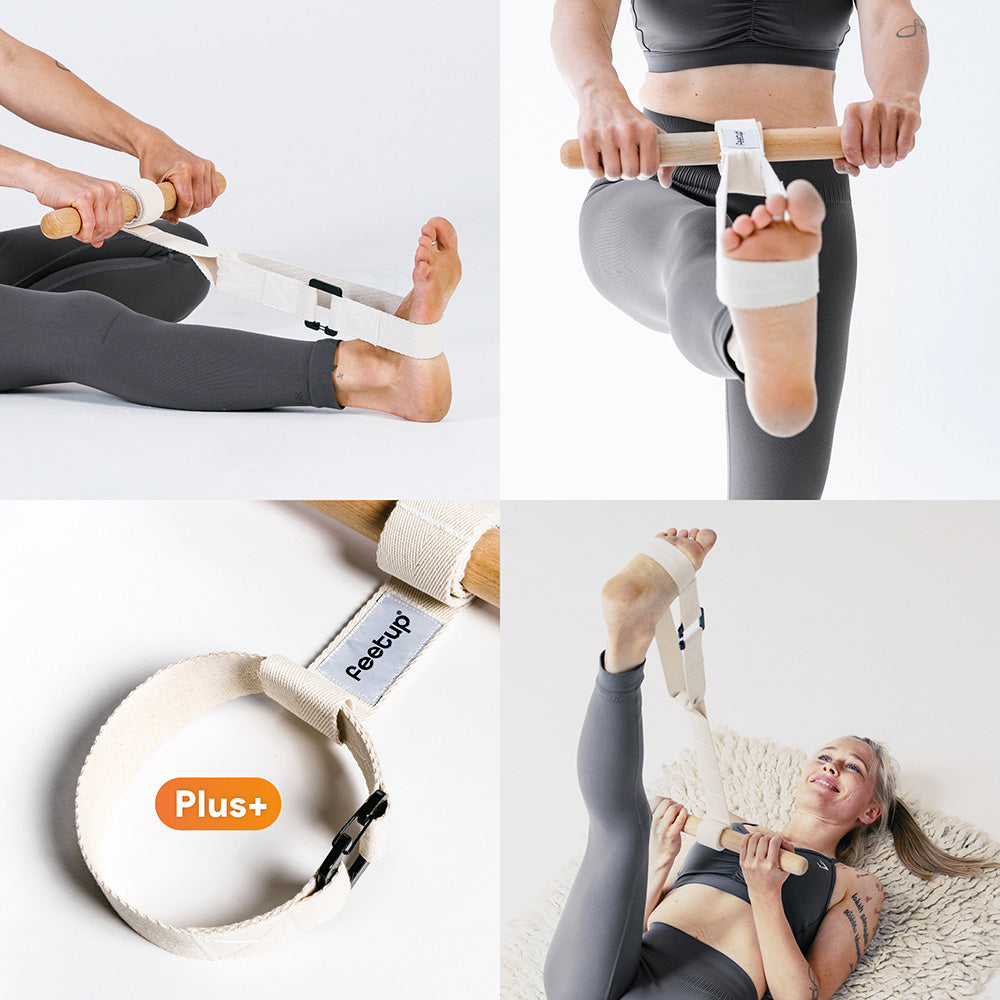
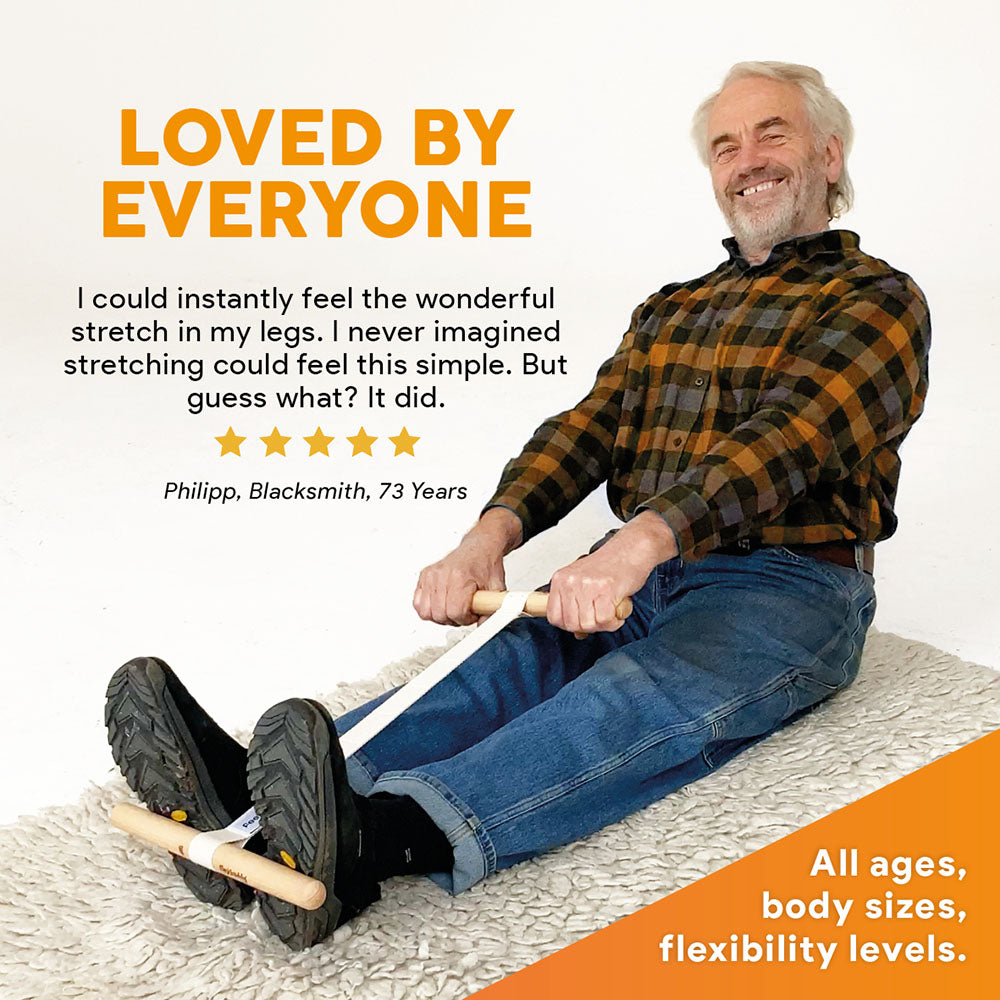
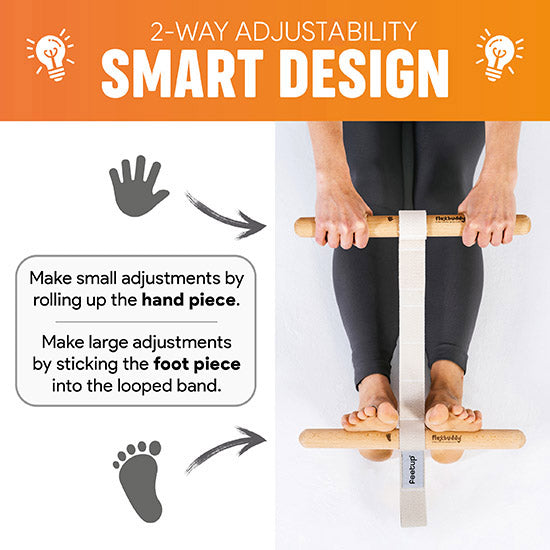
FlexBuddy makes the last two automatic. The foot bar keeps the strap centred under the forefoot, the hand bar gives you something solid to lean back against, and your spine stays long while the calf takes the pull. Then the same foot bar goes under your sole for the roll. One object, ready on the bedside table.
Repeat move 1 before you stand after any long sit. The trial behind the eight-week result had people do it three times daily [4]; first thing, after lunch and in the evening is the natural rhythm.
The daytime routine
The morning routine looks after the first step; the daytime routine looks after the ankle, where the risk lives [5]. Aim for about 60 seconds of total stretch per muscle group per session, on at least two days a week and ideally most days [12][13]; the American Academy of Orthopaedic Surgeons' version for heel pain is 10-second holds repeated 20 times per foot [8]. The calf has two muscles, one stretched with the knee straight and one with the knee bent, so give each its minute. Runners should slot this in after a run, not before; our stretching for runners guide explains the order.
| Stretch | Position | Hold | Reps | When |
|---|---|---|---|---|
| Wall calf stretch, knee straight | Hands on a wall, sore leg back, heel down, toes pointing at the wall, lean in until the upper calf pulls [8] | 20 to 30 s | 3 per leg | Morning and evening |
| Wall calf stretch, knee bent | Same stance, bend the back knee with the heel down; the pull moves low, just above the heel | 20 to 30 s | 3 per leg | Morning and evening |
| Step drop | Ball of the foot on a step, heel hanging, knee straight, lower the heel slowly until the calf pulls; hold the rail | 20 to 30 s | 2 to 3 per leg | Once a day, only if the pain is under the heel, not at the back of it |
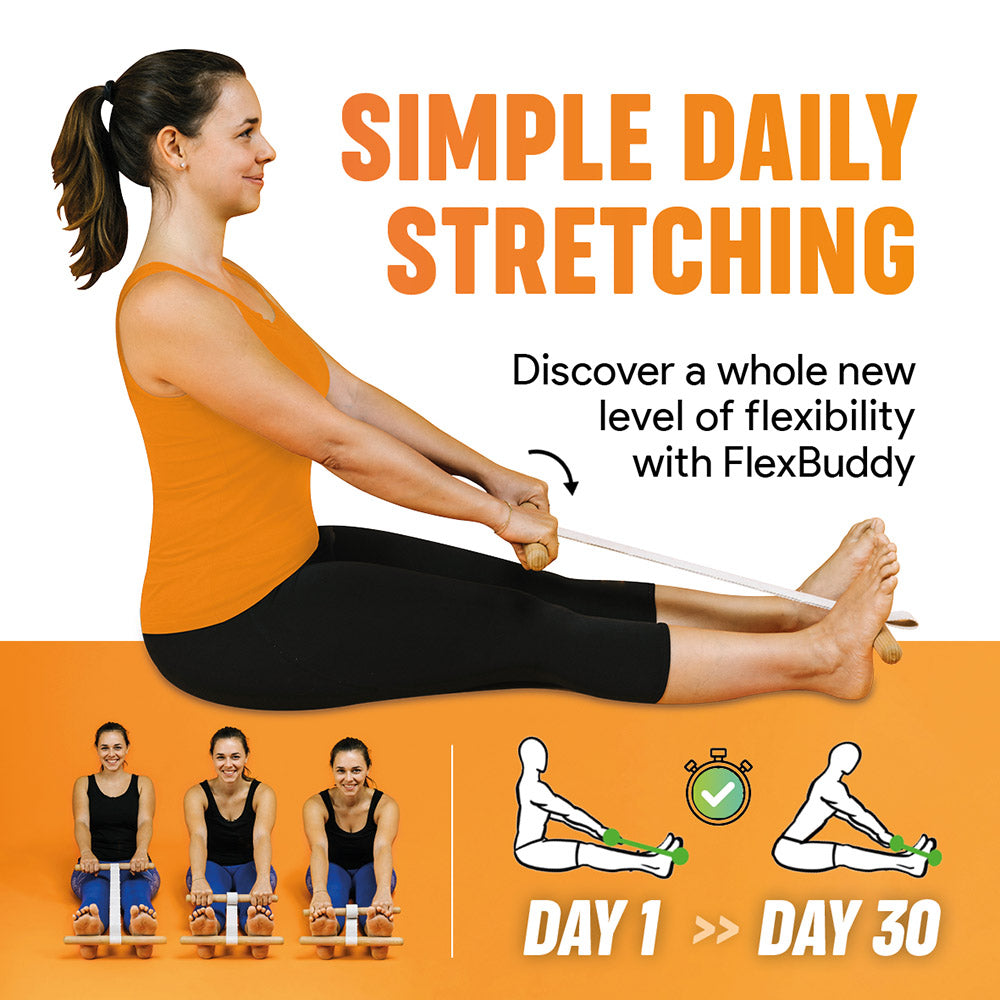
| Seated FlexBuddy, strap or towel stretch, straight spine | Leg straight, foot bar or strap over the ball of the foot, sit tall, lean back from the hips and let the strap pull the toes towards you | 10 slow breaths | 3 | Evening, before bed |
| Plantar fascia stretch | As in the morning routine, before standing after a long sit | 10 s | 10 | After lunch and in the evening [4] |
| Towel heel raises (loading) | Rolled towel under the toes, rise slowly onto the ball of the sore foot and lower slowly; add load as it gets easier [14] | Slow and controlled | 12 per set, 3 sets | Every second day |
The heel raises are not a stretch, but they are the move that worked fastest in a trial, so they belong here. Patients with ultrasound-confirmed plantar fasciitis did either insoles plus daily fascia stretching, or insoles plus high-load heel raises every second day with a towel under the toes to tension the fascia [14]. At three months the heel-raise group was 29 points ahead on the Foot Function Index; by six and twelve months the stretchers had drawn level [14]. So do both. Loading gets you there sooner, stretching gets you there too, and together they cost about five minutes.
Towel scrunches and picking up marbles with the toes are optional extras. The stretches and the heel raises are the core.
Plantar fasciitis stretches with a band or strap: how to do it
A band, a yoga strap, a towel or a dressing-gown belt all work for the calf stretches. Five details turn a vague tug into a stretch you feel exactly where you want it.
- Loop it over the ball of the foot, not the arch. Over the arch, the foot bends in the middle and the ankle barely moves. Over the ball of the foot, the toes come back, the fascia tensions and the ankle bends up, the combination the fascia-stretch trial used [3].
- Knee straight first, then softened. Straight pulls the gastrocnemius, the big calf muscle that crosses the knee; a slightly bent knee lets the stretch reach the soleus underneath. Both feed the Achilles and the heel.
- Pull with the elbows close, not the hands high. A stretchy band at arm's length makes your shoulders do the work and the stretch wobble. Shorten it until a steady pull is easy to hold.
- Sitting up: spine long, hips tilted. Reach for the foot with a rounded back and the pull lands in your lower back. Sit tall, lean back from the hips, let the strap carry the pull.
- If the band cuts into your palms, wrap it once around the hand or hold a rigid handle. Rope burn is why most people stop at 15 seconds instead of 30.
FlexBuddy builds points 1, 4 and 5 into the tool: a bar that sits under the ball of the foot, a strap you lean back against with a long spine, and smooth wooden handles you can hold for as long as you like.
Stretch to a firm pull you can breathe through, never to pain. If your pain is at the back of the heel where the Achilles attaches rather than underneath, deep ankle stretches and the step drop can aggravate it; the calves guide explains why and what to do instead.
What else helps
Shoes. Cushioned heels and good arch support, says the NHS, and no high heels, tight pointed shoes, flip-flops, backless slippers or barefoot walking on hard floors [2]. The AAOS adds that thick, cushioned soles reduce pain with standing and walking [8]. Good shoes take away the load that keeps the fascia irritated, every step of the day.
Insoles and orthotics. In both trials above, everyone wore a soft insole alongside the exercises [3][14], so add one if you like the feel. The inexpensive kind will do: across 20 trials, custom-made orthoses did no better than prefabricated insoles [15]. Cochrane has reviewed custom orthoses for foot pain as well [16]. Spend the effort on the stretches.
Night splints. These hold the foot pulled up while you sleep so the fascia does not spend the night short. The AAOS calls a night splint "very effective" for morning heel pain [8]. In one trial, adding an adjustable splint to an insole reduced pain at two and eight weeks [17], and a 2020 review of 43 studies concluded that combining night splints with insoles improves pain and function more than either alone [18]. If your first steps are the worst part of your day and you want more than the morning routine, a splint is a reasonable next step. Many people find them hard to sleep in, which is why the in-bed routine comes first.
Weight and standing time. A body-mass index over 30 and standing most of the working day each carried several times the odds of plantar fasciitis [5], and the NHS lists losing weight if you are overweight and avoiding long standing among its self-care steps [2]. Neither is quick; both lighten the load the fascia takes every hour.
Rest, ice and painkillers. The NHS suggests resting and raising the foot, an ice pack wrapped in a towel for up to 20 minutes every two to three hours, and paracetamol or ibuprofen if needed [2]; the AAOS version is rolling the foot over a cold bottle for 20 minutes, three to four times a day [8]. Rest means cutting the activity that hurts, not stopping moving; swimming and other low-impact exercise are the NHS's suggestion [2].
Clinic treatments. If stretching and loading have not moved things in a couple of months, a physiotherapist or podiatrist has more to offer. In the 2019 network meta-analysis, corticosteroid injection and shockwave therapy ranked most likely to help [7], and dry needling reduced first-step pain in a randomised trial [19]. The American Physical Therapy Association's heel-pain guideline, revised in 2014, is the document they work from [20].
What to avoid, and when to see someone
Avoid stretching into sharp pain, bouncing at the end of a stretch, hanging the heel off a step when the pain is at the back of the heel, and long barefoot spells on tiles and hardwood [2]. Avoid stopping the routine the first week the mornings feel better; the two-year results came from people who kept going [10].
See a GP if the pain is severe or stops you doing normal things, if it is getting worse or keeps coming back, if it has not improved after two weeks of self-care, if you have tingling or loss of feeling in the foot, or if you have diabetes and foot pain [2]. The Cleveland Clinic's version is heel pain lasting more than a week, not improving after two weeks of treatment, or feeling different from before [1]. A heel that is hot, swollen and red, pain after a fall or a sudden snap, pain that wakes you at night whatever the position, or numbness that spreads are not plantar fasciitis until someone has checked.
How long it takes: your timeline
Days to notice, weeks to believe it, months to be done. Most people feel the morning routine working within the first fortnight: the first step stops being an event. In the fascia-stretch trial the measured difference came at eight weeks [3], and the heel raises showed their advantage at three months [14]. The Cleveland Clinic gives "anywhere from a few weeks to a few months" [1], and the AAOS says more than 90% of patients improve within ten months of starting simple treatment [8].
So keep the routine going after the mornings go quiet. One clear marker: if two weeks of daily stretching, loading and sensible shoes have changed nothing, that is the NHS's cue to get it looked at rather than to stretch harder [2].
Make the morning routine effortless with FlexBuddy
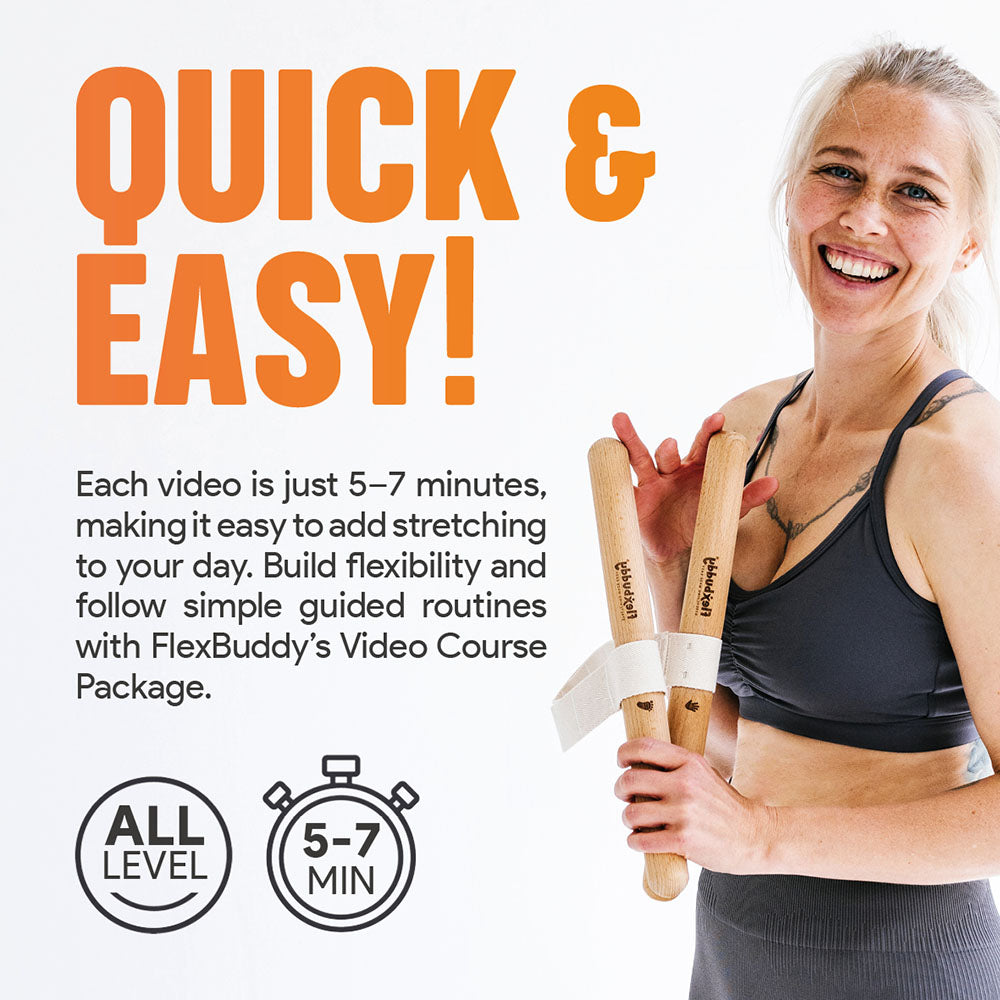
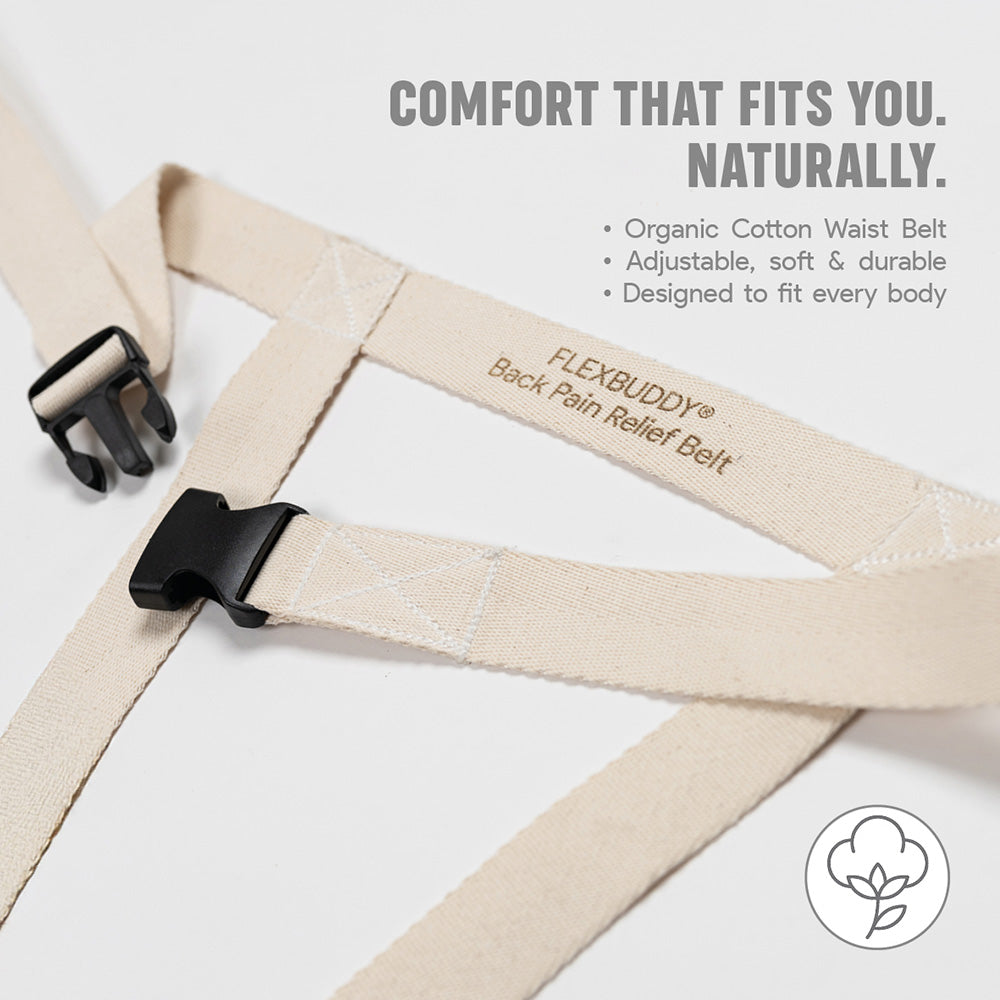
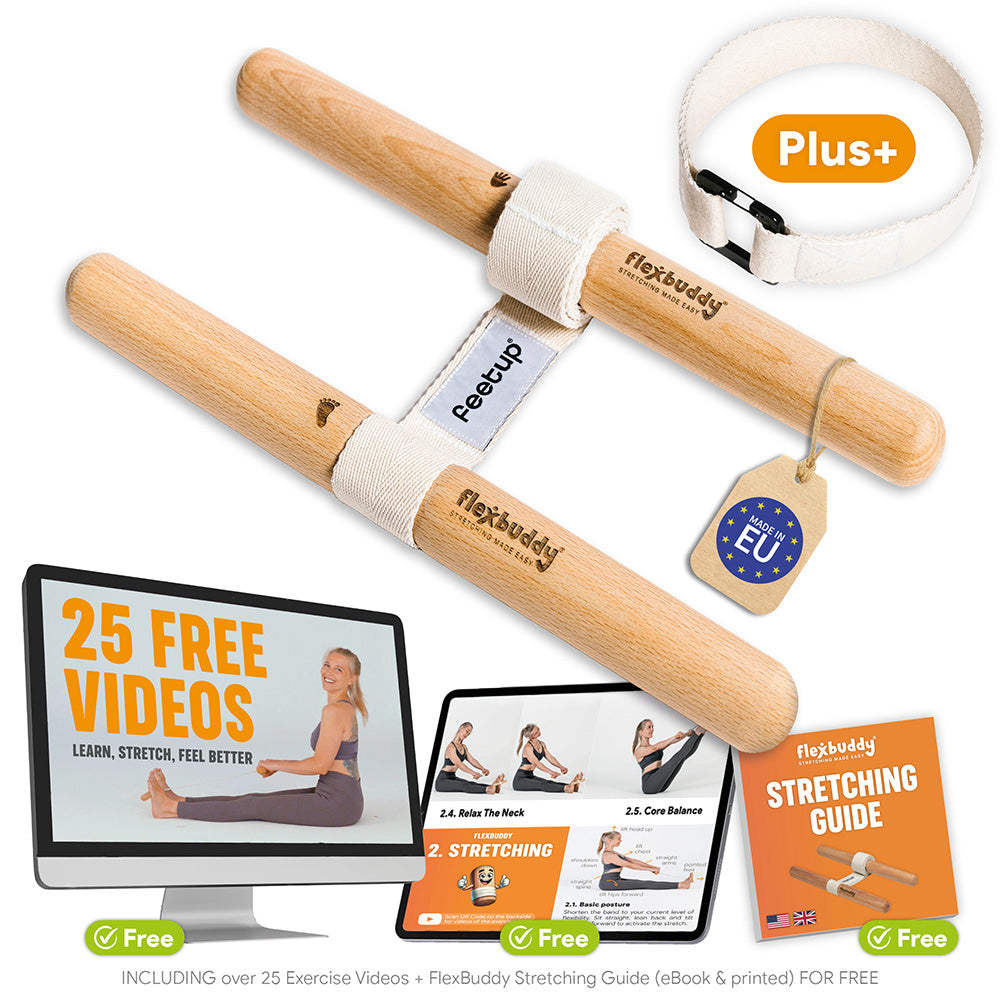
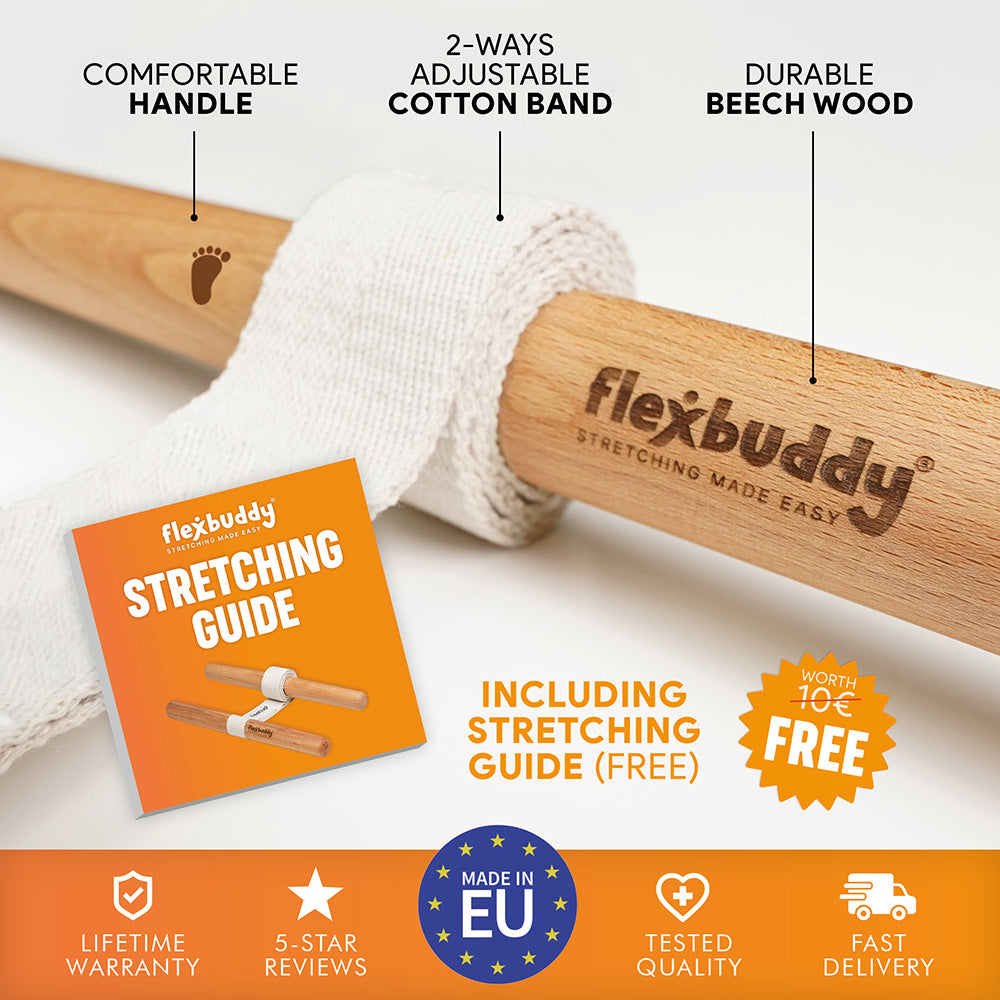
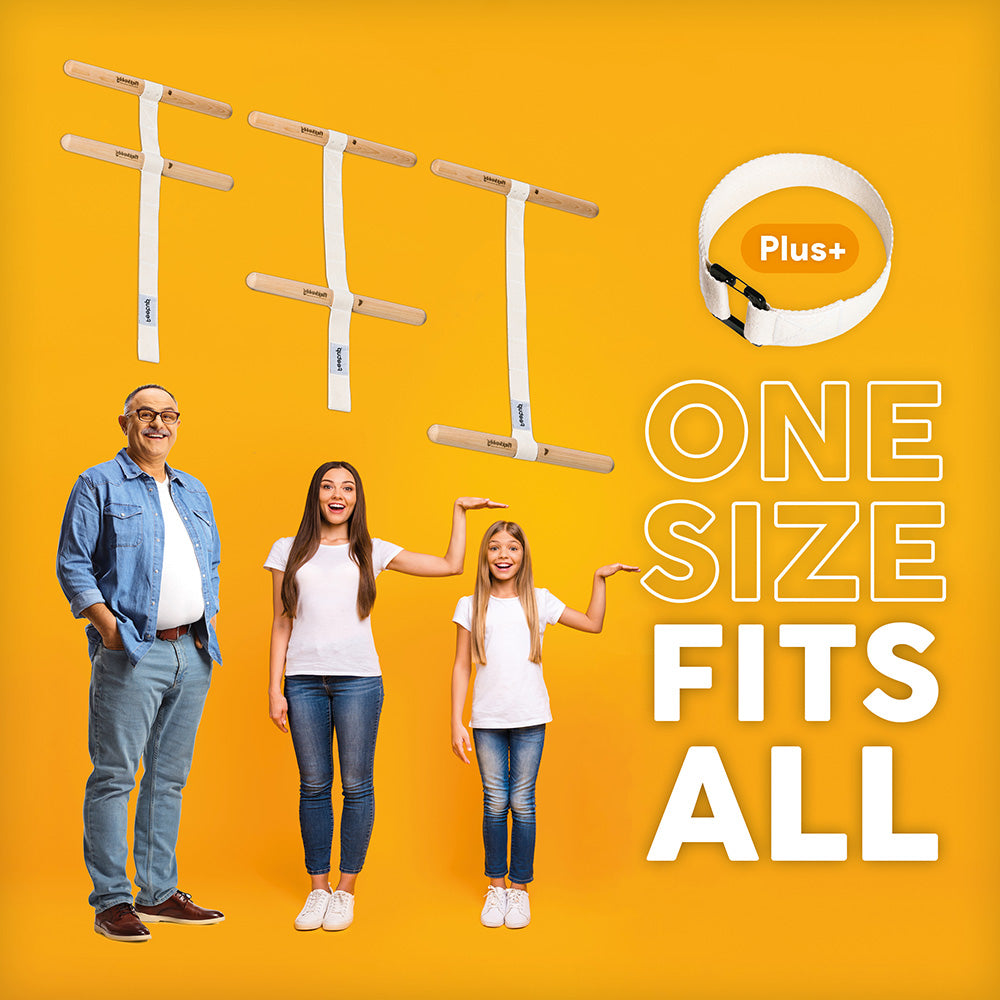
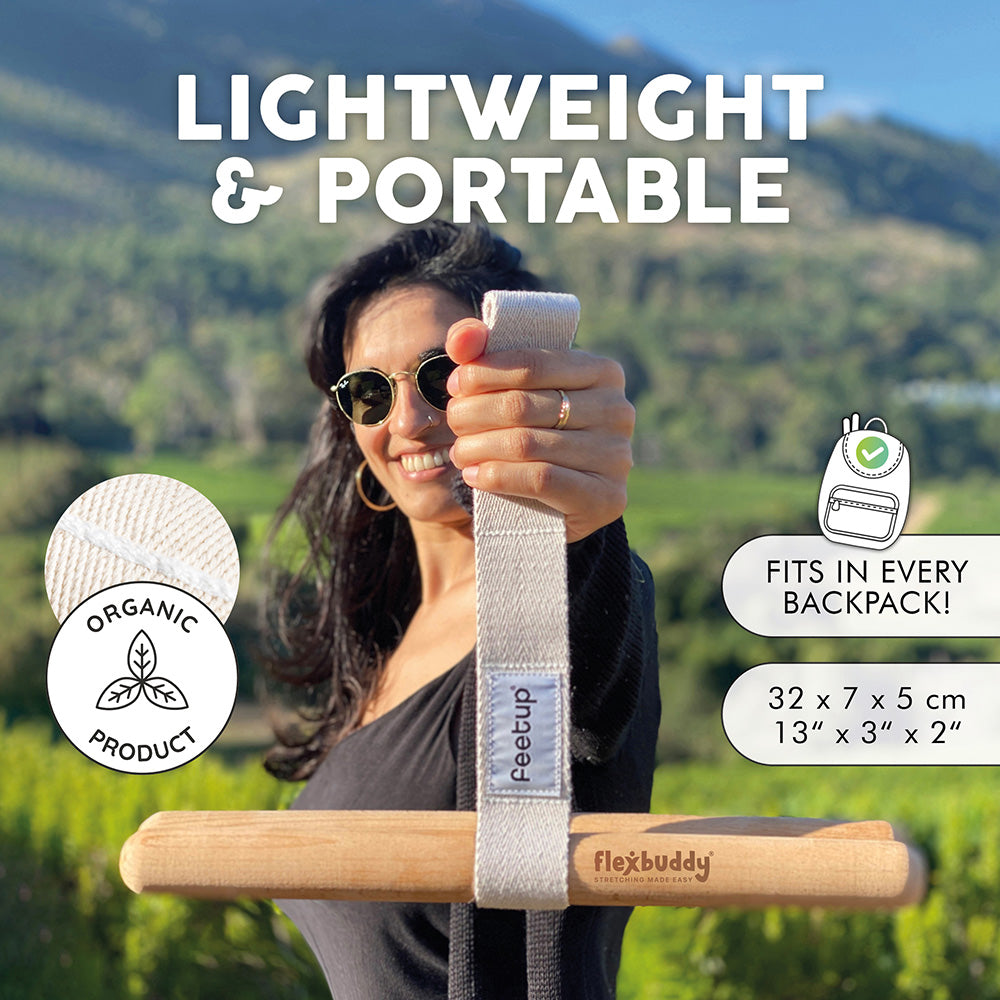
The calf stretch is where most people lose this routine: you reach for the foot, the back rounds, the strap slides into the arch, and the pull never reaches the calf. FlexBuddy® takes care of all three. It is a patented stretching device made of two beech-wood bars joined by an adjustable cotton strap. The foot bar sits under the ball of the foot, you hold the hand bar, sit tall in bed and lean back from the hips, and the strap carries the pull down into the calf while your spine stays long. Shorten it a loop as the ankle frees up, or roll the strap around the hand bar for a smaller step. The wooden handles mean no rope burn through ten slow breaths.
Then the foot bar goes under your sole for the edge-of-bed roll, so the whole morning routine is one object on the bedside table. Sara F. wrote: "I use it before I go to bed and if I don't, I can really tell a difference in the morning. I think it's helping with plantar fasciitis too." FlexBuddy is rated 4.5 by verified buyers and comes with a 30-day money-back guarantee and a lifetime warranty, so you can try it without risk. Get your FlexBuddy, or take the quiz to find the routine for your kind of stiffness.
Frequently asked questions
What plantar fasciitis stretches can I do in bed?
Five, and together they take about four minutes before your first step: the plantar fascia stretch (foot over the other knee, toes pulled back, ten holds of ten seconds [4]), a lying calf stretch with a strap or towel over the ball of the foot with the knee straight, the same with the knee slightly bent, twenty ankle pumps with ten circles each way, and a minute of rolling the sole over a bar or bottle from the edge of the bed. Your first step will feel the difference.
Is there a plantar fasciitis stretches PDF I can print?
Yes: print this page. The two tables hold the whole routine and are laid out to print. Use your browser's Print or Save as PDF and keep the sheet on the bedside table. A one-page A4 version is planned.
How do you do plantar fasciitis stretches with a band?
Loop the band or strap over the ball of the foot, not the arch, keep the knee straight and pull the toes towards the shin until the calf pulls, for about 30 seconds; then repeat with the knee slightly bent for the deeper calf muscle. Sitting up, keep the spine long and tilt from the hips rather than rounding the back to reach the foot. If the band cuts into your hands, hold a rigid handle: FlexBuddy's wooden bars are made for exactly this stretch.
Should I stretch before getting out of bed with plantar fasciitis?
Yes. It is the best moment of the day for it. The fascia and calf shorten overnight with the foot pointed, which is why the first steps hurt [2]. The plantar fascia stretch in the randomised trial was a non-weight-bearing stretch done before standing, and it beat a standard calf stretch for first-step pain at eight weeks [3]. Stretch first and your foot meets the floor ready.
How often should I stretch for plantar fasciitis?
Every day, and more than once: the fascia stretch three times a day [4] (first thing, after long sits, evening), the calf stretches once or twice a day to about 60 seconds per muscle in total [12]. Three-minute holds three times a day and five 20-second holds twice a day both worked in a trial [6], so pick the schedule you will keep.
Can stretching make plantar fasciitis worse?
Done gently, stretching is safe and it is where relief starts. It only bites back if you stretch into pain, bounce, or hang your heel off a step when the pain is at the back of the heel rather than underneath, which points to the Achilles attachment. Stretch to a firm pull, never a sharp pain, and stop and get assessed if the pain is worse the next morning after several days of stretching, if it has not improved after two weeks [2], or if there is tingling or numbness.
This article is general information, not medical advice. Tight muscles usually respond well to regular stretching. If your pain is sharp, radiates down a leg, comes with numbness, weakness, fever, bladder or bowel changes, follows an injury, or keeps getting worse, see a doctor or physiotherapist before you stretch.
References
- Cleveland Clinic. Plantar Fasciitis. Medically reviewed, last updated 4 Nov 2022. https://my.clevelandclinic.org/health/diseases/14709-plantar-fasciitis (accessed 4 Nov 2026).
- NHS. Plantar fasciitis. Last reviewed 14 Feb 2025. https://www.nhs.uk/conditions/plantar-fasciitis/ (accessed 4 Nov 2026).
- DiGiovanni BF, Nawoczenski DA, Lintal ME, et al. Tissue-specific plantar fascia-stretching exercise enhances outcomes in patients with chronic heel pain. A prospective, randomized study. J Bone Joint Surg Am. 2003;85(7):1270–1277. doi:10.2106/00004623-200307000-00013. PMID 12851352.
- Sweeting D, Parish B, Hooper L, Chester R. The effectiveness of manual stretching in the treatment of plantar heel pain: a systematic review. J Foot Ankle Res. 2011;4:19. doi:10.1186/1757-1146-4-19. PMID 21703003; PMC3150253.
- Riddle DL, Pulisic M, Pidcoe P, Johnson RE. Risk factors for plantar fasciitis: a matched case-control study. J Bone Joint Surg Am. 2003;85(5):872–877. doi:10.2106/00004623-200305000-00015. PMID 12728038.
- Porter D, Barrill E, Oneacre K, May BD. The effects of duration and frequency of Achilles tendon stretching on dorsiflexion and outcome in painful heel syndrome: a randomized, blinded, control study. Foot Ankle Int. 2002;23(7):619–624. doi:10.1177/107110070202300706. PMID 12146772.
- Babatunde OO, Legha A, Littlewood C, et al. Comparative effectiveness of treatment options for plantar heel pain: a systematic review with network meta-analysis. Br J Sports Med. 2019;53(3):182–194. doi:10.1136/bjsports-2017-098998. PMID 29954828.
- American Academy of Orthopaedic Surgeons (OrthoInfo). Plantar Fasciitis and Bone Spurs. Contributor K. M. Mayes, MD; peer reviewers A. Gianakos, DO, and J. E. Adams, MD. https://www.orthoinfo.org/en/diseases--conditions/plantar-fasciitis-and-bone-spurs/ (accessed 4 Nov 2026).
- Irving DB, Cook JL, Menz HB. Factors associated with chronic plantar heel pain: a systematic review. J Sci Med Sport. 2006;9(1-2):11–22. doi:10.1016/j.jsams.2006.02.004. PMID 16584917.
- DiGiovanni BF, Nawoczenski DA, Malay DP, et al. Plantar fascia-specific stretching exercise improves outcomes in patients with chronic plantar fasciitis. A prospective clinical trial with two-year follow-up. J Bone Joint Surg Am. 2006;88(8):1775–1781. doi:10.2106/JBJS.E.01281. PMID 16882901.
- Radford JA, Burns J, Buchbinder R, Landorf KB, Cook C. Does stretching increase ankle dorsiflexion range of motion? A systematic review. Br J Sports Med. 2006;40(10):870–875. doi:10.1136/bjsm.2006.029348. PMID 16926259; PMC2465055.
- Garber CE, Blissmer B, Deschenes MR, et al.; American College of Sports Medicine. Position stand: quantity and quality of exercise for developing and maintaining cardiorespiratory, musculoskeletal, and neuromotor fitness in apparently healthy adults. Med Sci Sports Exerc. 2011;43(7):1334–1359. doi:10.1249/MSS.0b013e318213fefb. PMID 21694556.
- Harvard Health Publishing. The ideal stretching routine. Harvard Medical School, 16 Mar 2026 (reviewed by H. E. LeWine, MD). https://www.health.harvard.edu/staying-healthy/the-ideal-stretching-routine (accessed 4 Nov 2026).
- Rathleff MS, Mølgaard CM, Fredberg U, et al. High-load strength training improves outcome in patients with plantar fasciitis: a randomized controlled trial with 12-month follow-up. Scand J Med Sci Sports. 2015;25(3):e292–e300. doi:10.1111/sms.12313. PMID 25145882.
- Rasenberg N, Riel H, Rathleff MS, Bierma-Zeinstra SMA, van Middelkoop M. Efficacy of foot orthoses for the treatment of plantar heel pain: a systematic review and meta-analysis. Br J Sports Med. 2018;52(16):1040–1046. doi:10.1136/bjsports-2017-097892. PMID 29555795.
- Hawke F, Burns J, Radford JA, du Toit V. Custom-made foot orthoses for the treatment of foot pain. Cochrane Database Syst Rev. 2008;(3):CD006801. doi:10.1002/14651858.CD006801.pub2. PMID 18646168.
- Lee WC, Wong WY, Kung E, Leung AK. Effectiveness of adjustable dorsiflexion night splint in combination with accommodative foot orthosis on plantar fasciitis. J Rehabil Res Dev. 2012;49(10):1557–1564. doi:10.1682/jrrd.2011.09.0181. PMID 23516059.
- Schuitema D, Greve C, Postema K, Dekker R, Hijmans JM. Effectiveness of mechanical treatment for plantar fasciitis: a systematic review. J Sport Rehabil. 2020;29(5):657–674. doi:10.1123/jsr.2019-0036. PMID 31629333.
- Cotchett MP, Munteanu SE, Landorf KB. Effectiveness of trigger point dry needling for plantar heel pain: a randomized controlled trial. Phys Ther. 2014;94(8):1083–1094. doi:10.2522/ptj.20130255. PMID 24700136.
- Martin RL, Davenport TE, Reischl SF, et al.; American Physical Therapy Association. Heel pain-plantar fasciitis: revision 2014. Clinical practice guidelines. J Orthop Sports Phys Ther. 2014;44(11):A1–A33. doi:10.2519/jospt.2014.0303. PMID 25361863.