- Two muscles, two stretches. "The calf" is two muscles sharing one tendon. The gastrocnemius starts above the knee, the soleus below it, and both join the Achilles tendon at the heel [1].
- Knee straight, then knee bent. Straight stretches the gastrocnemius; bent moves the stretch into the soleus. An NHS hospital exercise sheet prescribes both [2].
- You can watch yourself improve. In the knee-to-wall test, healthy young adults reach about 9.5 cm (3.7 in) from big toe to wall [3], and a gain of 2 cm is real, measurable progress [4].
- Four minutes is enough. Holds of 10 to 30 seconds (30 to 60 if you are older), about 60 seconds per muscle in total, at least two to three days a week [5].
- It works. Pooled trials in healthy adults measured up to 3 degrees of extra ankle movement [6], and a later meta-analysis found about 5 degrees [7].
- One warning. Do not stretch a calf that is swollen, throbbing or discoloured: those are warning signs of a blood clot [8].
- FlexBuddy® does it sitting down. Foot bar under the forefoot, back straight: both calf muscles and the hamstrings let go in one position.
Gastrocnemius vs soleus: why the knee decides which calf muscle you stretch
Most people only ever stretch half their calf. The bulge at the back of your lower leg is two muscles, one on top of the other. The outer one, the gastrocnemius, starts on the femur (thigh bone), just above the back of the knee. It points the foot down and helps bend the knee [1]. Underneath lies the soleus, which starts on the tibia and fibula, below the knee, and only points the foot [1]. Lower down the two merge into the Achilles tendon, which attaches to the heel bone [1].
A muscle can only be stretched across the joints it crosses. The gastrocnemius crosses the knee and the ankle, so with the knee straight it is already pulled long at the top; bring the foot up and you feel it high in the calf. Bend the knee and it goes slack. The ankle travels further, and the muscle that now takes the stretch is the soleus, felt lower down, just above the Achilles.
So "the calf stretch" is two stretches. The Royal Orthopaedic Hospital's patient sheet lists them that way: a gastrocnemius stretch "with the knee extended/straight" and a soleus stretch "with the knee flexed/bent" [2].
For what short calves do to the heel and the knee, read tight calves, knee pain and plantar fasciitis.
Test first: the knee-to-wall test
Get your starting number first. The movement a tight calf limits is ankle dorsiflexion: the shin tipping forward over a flat foot. Physiotherapists measure it with the weight-bearing lunge test, and it works just as well at home: in the original study, raters with varying experience agreed almost perfectly (reliability coefficients of 0.97 to 0.99) [9].
- Barefoot, face a wall. Place one foot flat with the big toe 10 cm (4 in) from the wall and the knee in line with the second toe [3].
- Keeping the heel down, lunge until the knee touches the wall.
- If it touches, move the foot back 1 cm and repeat. If the heel lifts, move closer [3].
- Your score is the greatest toe-to-wall distance at which the knee still touches with the heel down [3]. Test both legs.
In healthy adults with a mean age of 24, the average was 9.5 cm, and each centimetre is worth roughly 3.6 degrees of ankle movement [3]. A systematic review of 12 studies found that the test reliably detects changes of 1.6 to 1.9 cm [4]. So when your score moves by 2 cm, that is real progress.
A pull at the back of the leg is muscle. A pinch at the front of the ankle points to the joint; our guide to ankle mobility covers that side.
The five calf stretches at a glance
| Stretch | Muscle | Position | Hold | Reps | Best for |
|---|---|---|---|---|---|
| Wall, knee straight | Gastrocnemius | Hands on a wall, back leg straight, heel down, foot pointing at the wall; lean in | 20–30 s | 2–3 per leg | Everyone |
| Wall, knee bent | Soleus | Same stance; bend the back knee and sink, heel down | 20–30 s | 2–3 per leg | A short knee-to-wall score |
| Step drop | Both | Ball of the foot on a step, hand on a rail; let the heel sink | 20–30 s | 2 per leg | After a run; not with pain at the heel |
| Seated, with FlexBuddy, a strap or a towel | Both, by knee position | Sit tall, leg out, foot bar or strap under the ball of the foot; draw the toes towards you | 10 breaths (~30 s) | 2–3 per leg | Evenings, unsteady balance |
| In bed | Both, by knee position | On your back, FlexBuddy, a strap or a dressing-gown belt round the ball of the foot | 20–30 s | 2–3 per leg | Mornings, night cramps |
Wall calf stretch, knee straight (gastrocnemius)
Face a wall with both hands on it and step one leg back. Point the back foot straight at the wall and tighten the thigh so the knee stays fully straight. Lean in slowly by bending your elbows, heel on the floor throughout. Stop just before the heel wants to lift and hold there; the NHS sheet uses 30 seconds [2]. You will feel it in the upper calf.
Wall calf stretch, knee bent (soleus)
Same stance, foot pointing straight ahead, heel down. Bend the back knee and let your hips sink back and down [2]. The stretch drops lower, towards the Achilles, and feels duller and deeper. Hold for the same time. If you feel nothing, bring the back foot closer to the wall and bend the knee further.
Step drop
Stand with the balls of both feet on the edge of a step and a hand on a rail. Let one heel sink below the step, knee straight. Hold, come up, then repeat with the knee slightly bent. Body weight does the work, so this is the strongest of the five and the easiest to overdo. Skip it if your balance is unreliable or the back of your heel hurts.
Seated calf stretch with FlexBuddy, a strap or a towel
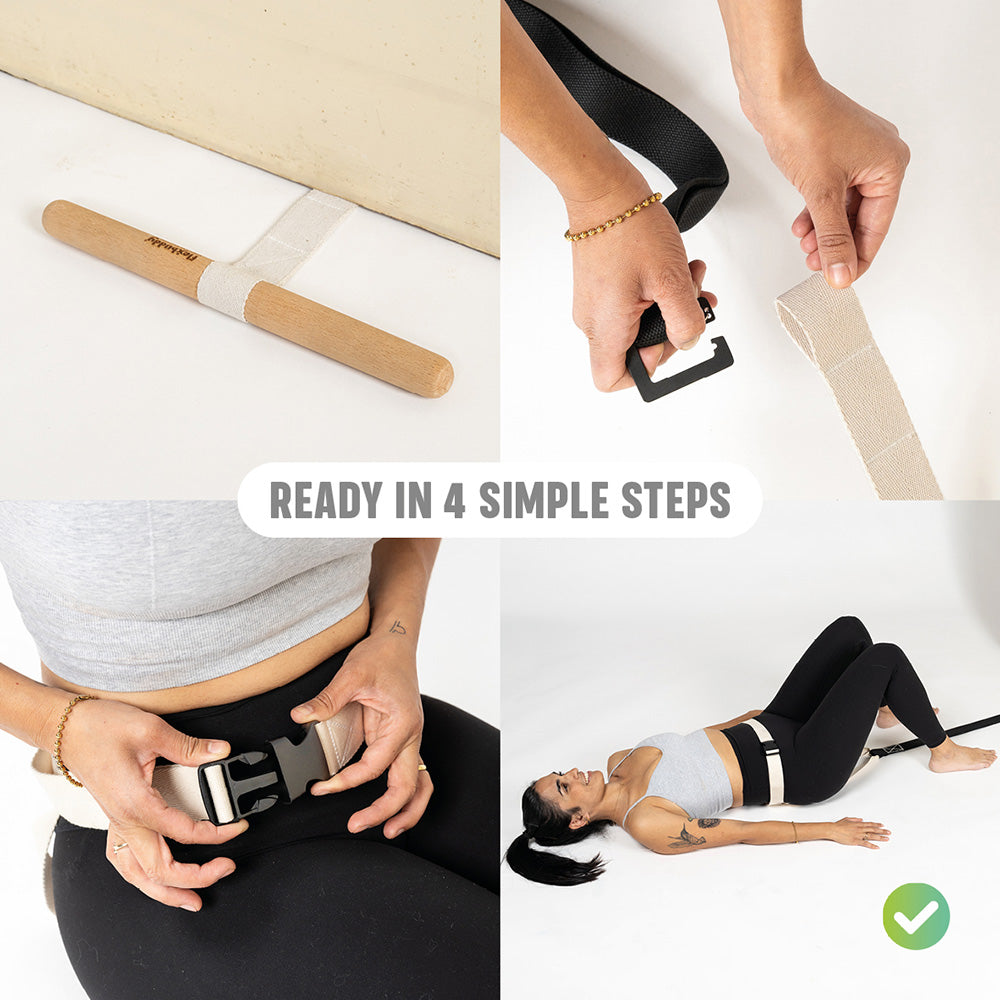
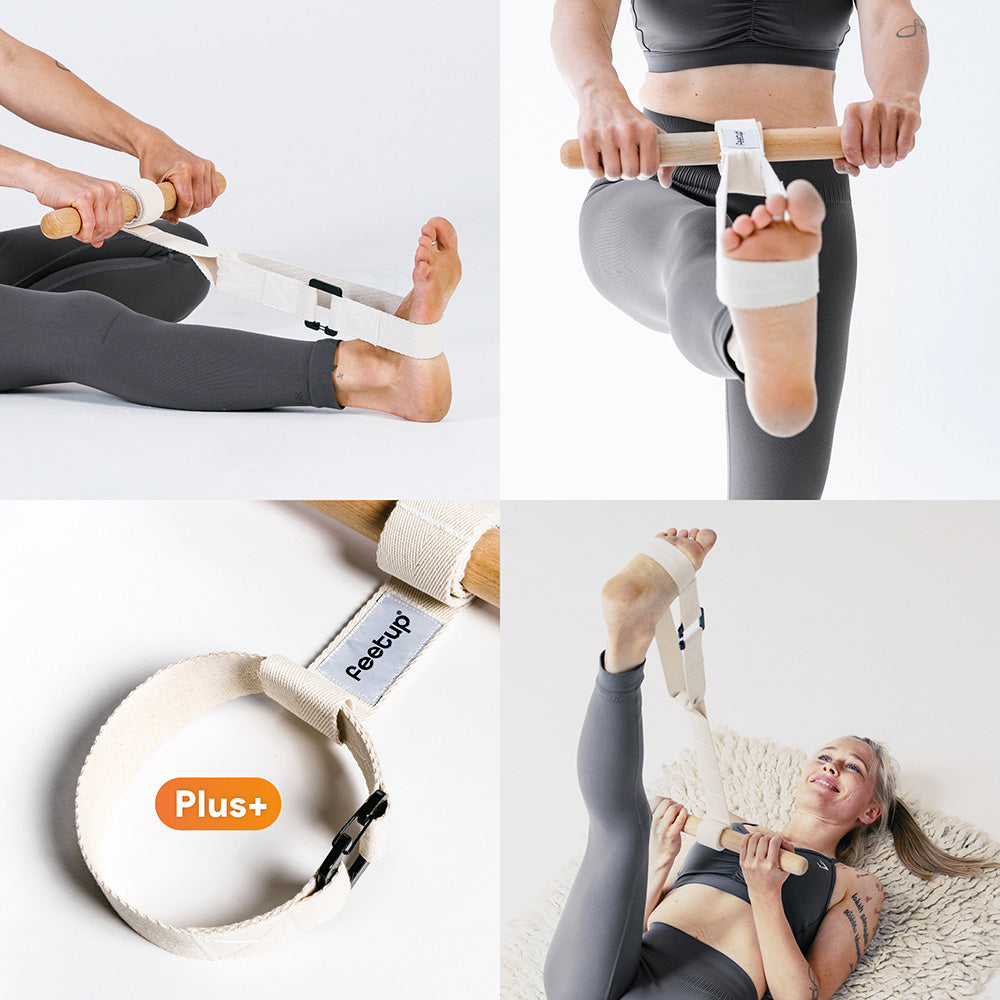
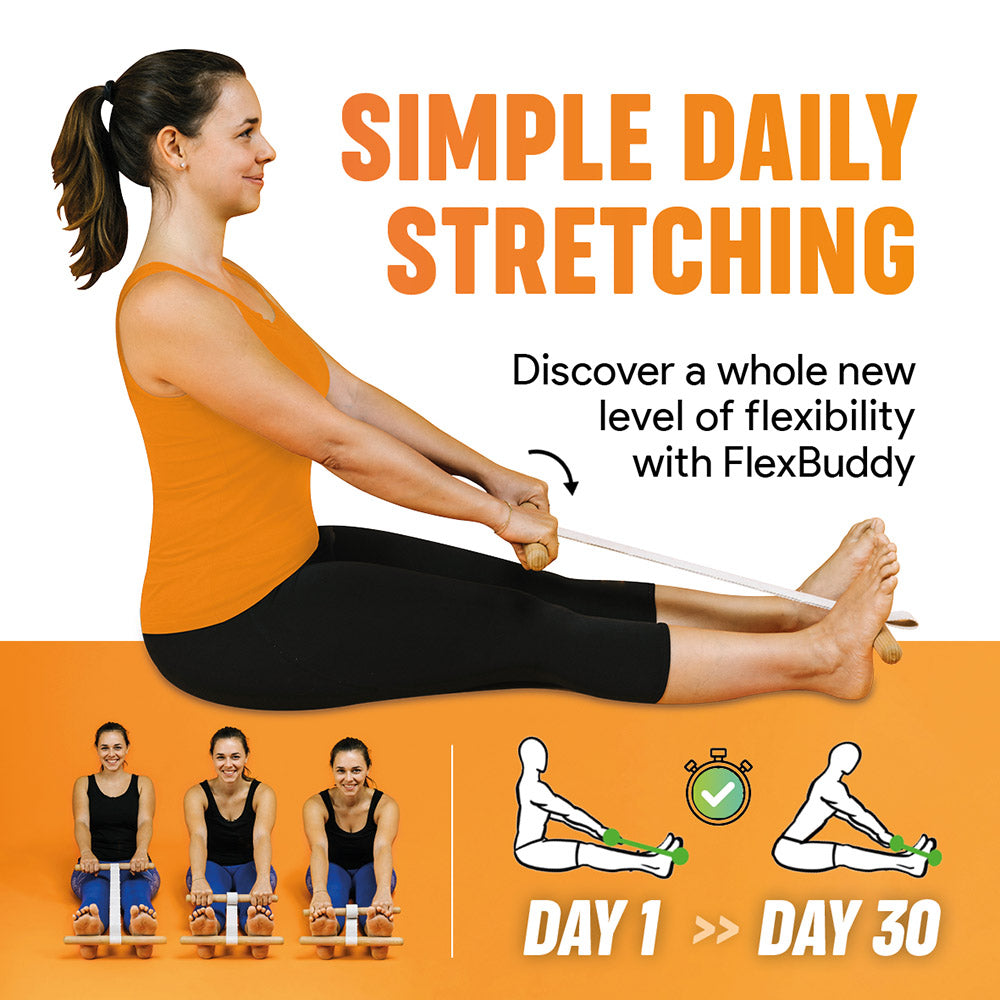
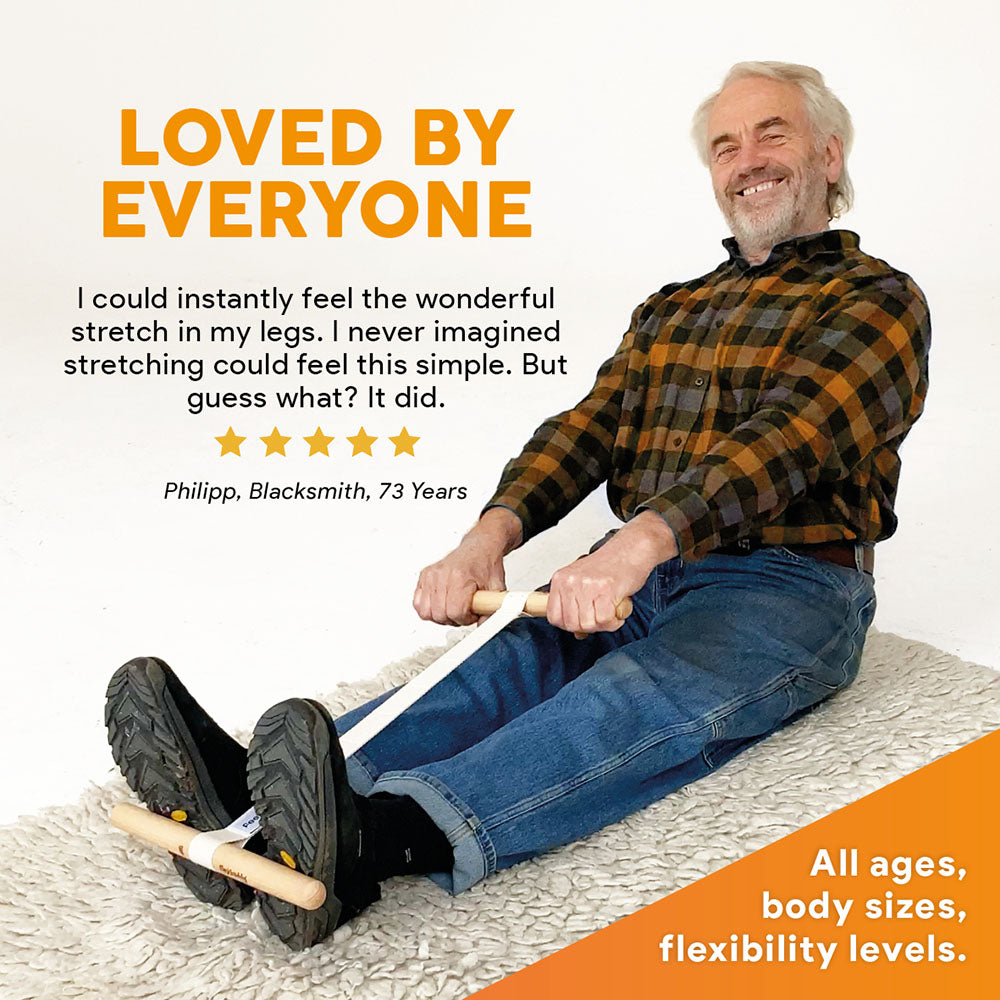
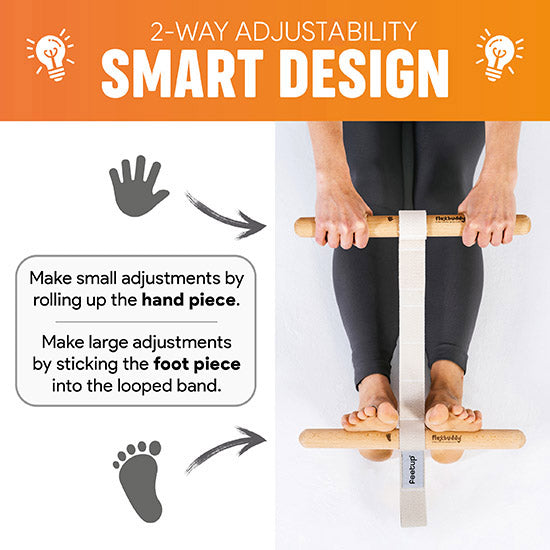
Sit on the floor with one leg out straight. Put the FlexBuddy foot bar under the ball of the foot, not the toes and not the arch, and hold the other bar in both hands (or loop a strap or towel round it). Sit tall, lean back a little and tilt the hips forward, then draw the forefoot towards you until the calf pulls. Keep the chest up: the strap does the reaching, so your back stays straight and the stretch stays in the calf. After ten slow breaths, bend the knee a few centimetres and repeat for the soleus. To go deeper, roll the strap round the hand bar.
Calf stretches in bed
Lie on your back with FlexBuddy, a strap or a dressing-gown belt round the ball of one foot. Lift the leg, as straight as your hamstrings allow, and pull the toes towards your shin; then bend the knee and repeat. It suits mornings, before your feet touch the floor, and night cramps: the NHS points to stretching the muscle to ease a cramp, and to regular calf stretching to reduce them [10]. More lying-down options are in stretches you can do in bed.
How long should you hold a calf stretch, and how much will you gain?
The dose: four minutes
The American College of Sports Medicine recommends flexibility exercise for each major muscle group at least two to three days a week, daily for the largest gains. Hold a static stretch for 10 to 30 seconds, or 30 to 60 seconds if you are older, at the point of tightness or slight discomfort, and repeat until the muscle has had about 60 seconds [5]. The calf is two muscles, so that means two 30-second holds with the knee straight and two with it bent, per leg: about four minutes for both legs.
And that is enough: a meta-analysis of 77 studies found that extra volume and extra intensity did not significantly change how much range people gained [11]. Keep FlexBuddy next to the sofa or the bed and the four minutes happen on their own.
The gains, in degrees
Calf stretching works, and the trials have measured it. One systematic review pooled randomised trials in healthy volunteers and found a statistically significant gain in dorsiflexion: 3.0 degrees for 15 to 30 minutes of total stretching [6]. A 2018 meta-analysis of 20 controlled trials found more: static stretching gained 5.2 degrees on average and contract-relax (PNF) stretching 4.3 degrees [7].
Make every degree count: keep the arch of your foot gently lifted when you stretch and when you test. With the foot rolled inwards, dorsiflexion reads up to 10 degrees higher, because the midfoot moves as well as the ankle [12].
Those averages come from young, healthy people with little to gain. Women aged 76 to 91 who stretched five days a week for six weeks gained a mean of 12.3 degrees [13]. The stiffer you start, the more there is to win.
The gains come quickly. A review points to the reason: after programmes of three to eight weeks, the extra range comes mostly from your body allowing more stretch [14]. Keep the habit and you keep the range.
Calf stretches for runners: before or after?
Both, in different forms. Before a run, movement wins: in a systematic review, dynamic stretching gave a small performance gain of 1.3%. Long static holds belong afterwards: held for 60 seconds or more just before testing they reduced performance by 4.6%, and when dynamic activity followed the static stretch, no clear performance effect remained [15].
So warm the calves with movement: rock the knee over the toes, add easy calf raises, jog the first minutes slowly. One short hold on a tight calf is fine if you move afterwards. Keep longer holds for after the run, when the muscle is warm. The NHS post-exercise routine includes a straight-leg calf stretch held for 15 to 20 seconds [16]; add the bent-knee version so the soleus gets its share.
The post-run stretch is for range: calves that feel long again instead of bunched. Next-day soreness is a separate question, covered by a Cochrane review of 12 studies [17]. The full sequence is in stretching for runners.
Calf stretches for seniors
Supple ankles go with steady walking. Limited dorsiflexion in older adults is associated with gait abnormalities and a higher risk of falls [13], and in healthy women aged 64 to 87, those with more ankle movement scored better on balance and gait tests [18]. Three adjustments help:
- Hold something. The wall version gives both hands a support. Leave out the step drop unless your balance is solid.
- Hold longer. The guideline range for older adults is 30 to 60 seconds [5]. A hamstring trial shows why: in adults aged 65 to 97, 60-second holds improved range about four times faster than 15-second holds, and the gains lasted longer [19].
- Sit or lie down when in doubt. The seated and in-bed versions need no balance at all, and FlexBuddy brings the foot to you.
Calf stretches for plantar fasciitis
Stiff ankles and heel pain go together. In a case-control study, people whose ankle would not bend past neutral had about 23 times the odds of plantar fasciitis compared with people who had more than 10 degrees of dorsiflexion [20].
Calf stretching builds ankle range. In a randomised trial of people with painful heels, three-minute holds three times a day and five 20-second holds twice a day both increased flexibility, and more flexibility went with less pain; the short schedule did as well as the long one [21]. Two things to add. In patients with long-standing heel pain, a stretch aimed at the plantar fascia itself did better than a standard Achilles stretch for worst pain and first-step pain at eight weeks [22]. And single-leg heel raises with a towel under the toes beat stretching at three months [23].
The practical order: the in-bed calf stretch and a fascia stretch before your first steps, wall stretches during the day, heel raises every second day. Keep FlexBuddy by the bed and the first one is done before you stand up. See plantar fasciitis stretches.
Four mistakes that waste a calf stretch, and the fix for each
Letting the heel lift
The heel on the floor is what makes the stretch. The hospital instruction is precise: stop just before the heel lifts, and hold there [2].
Turning the foot out
Point the back foot straight at the wall [2]. A foot turned outwards invites the next mistake.
Letting the arch collapse
Measured with the foot rolled inwards (pronated), dorsiflexion reads up to 10 degrees higher than with the foot held neutral, because standard measures pick up movement in the midfoot as well as the ankle [12]. Keep the arch gently lifted and the calf does all the lengthening.
Bouncing
Static holds are what won when the trials were pooled [7], and the hospital sheet agrees: "no bouncing motions" [2]. Ease in, stay still, breathe.
Strength matters too: calf raises
Strength work gains range as well. A meta-analysis of 11 randomised trials found no significant difference between strength training and stretching in the range of motion gained [24]. Do both.
The calf version is the heel raise. Stand on the edge of a step, holding a rail. Rise onto the balls of both feet, pause, then lower slowly until the heels are just below the step. Use straight knees for the gastrocnemius and slightly bent knees for the soleus [1]. When two legs are easy, lower on one. Guidelines suggest strengthening each major muscle group on two to three days a week [5].
When not to stretch your calves
A swollen, throbbing calf. The NHS lists throbbing pain in one leg, usually in the calf or thigh, swelling in one leg, red, blue or darkened skin around the painful area, and swollen veins as symptoms of deep vein thrombosis, a blood clot. Do not stretch it. Ask for an urgent GP appointment or contact NHS 111, and call 999 if you also feel short of breath or have chest pain [8].
A sudden pop. A pop at the back of the calf or heel may be a torn Achilles tendon and needs a doctor immediately [25].
Pain in the Achilles tendon. Tight calves put extra stress on the Achilles, but the orthopaedic advice is to stretch only until you feel the calf, without pain in the tendon, and to use heel drops off a step for pain in the middle of the tendon only, never for pain at the heel attachment [25]. Our guide to Achilles tendon stretches covers both types.
Cramps that keep coming back. See a GP if cramps disturb your sleep, last longer than 10 minutes, or come with numbness or swelling in the legs [10].

Both calf muscles, back straight, with FlexBuddy
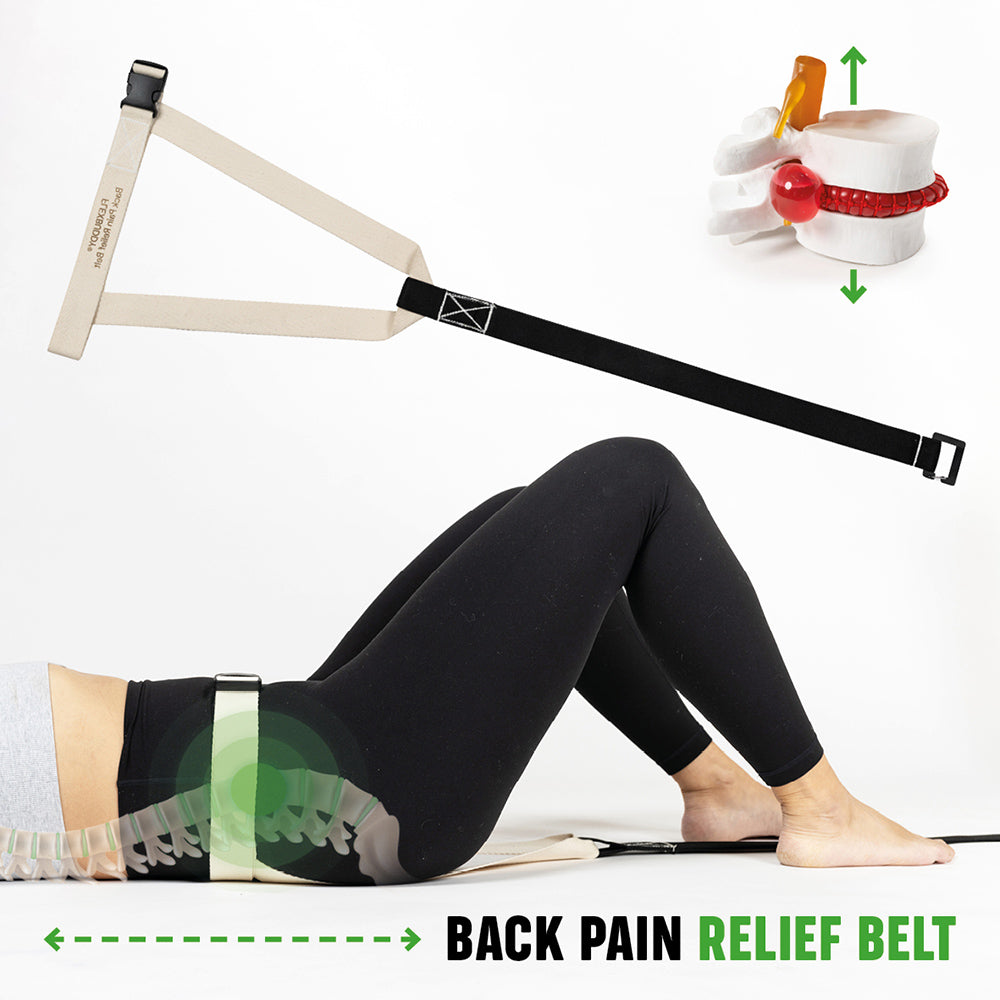
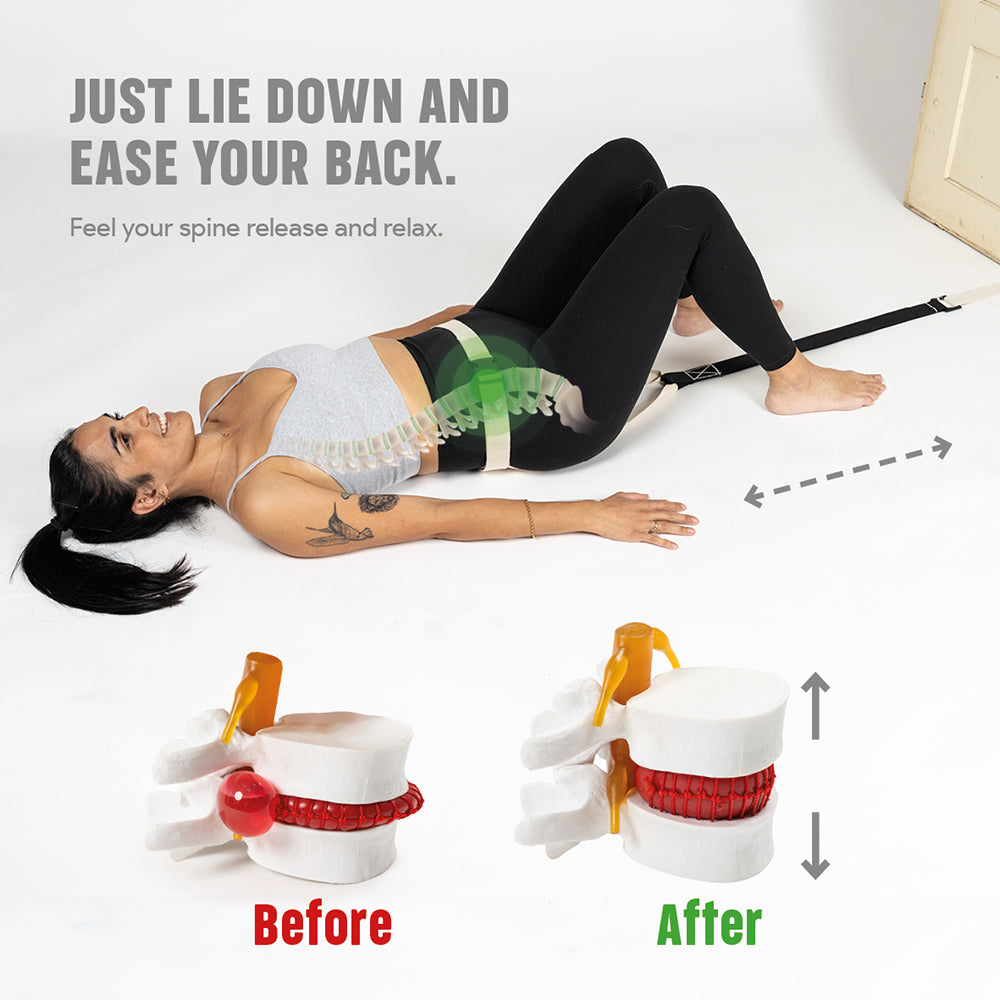
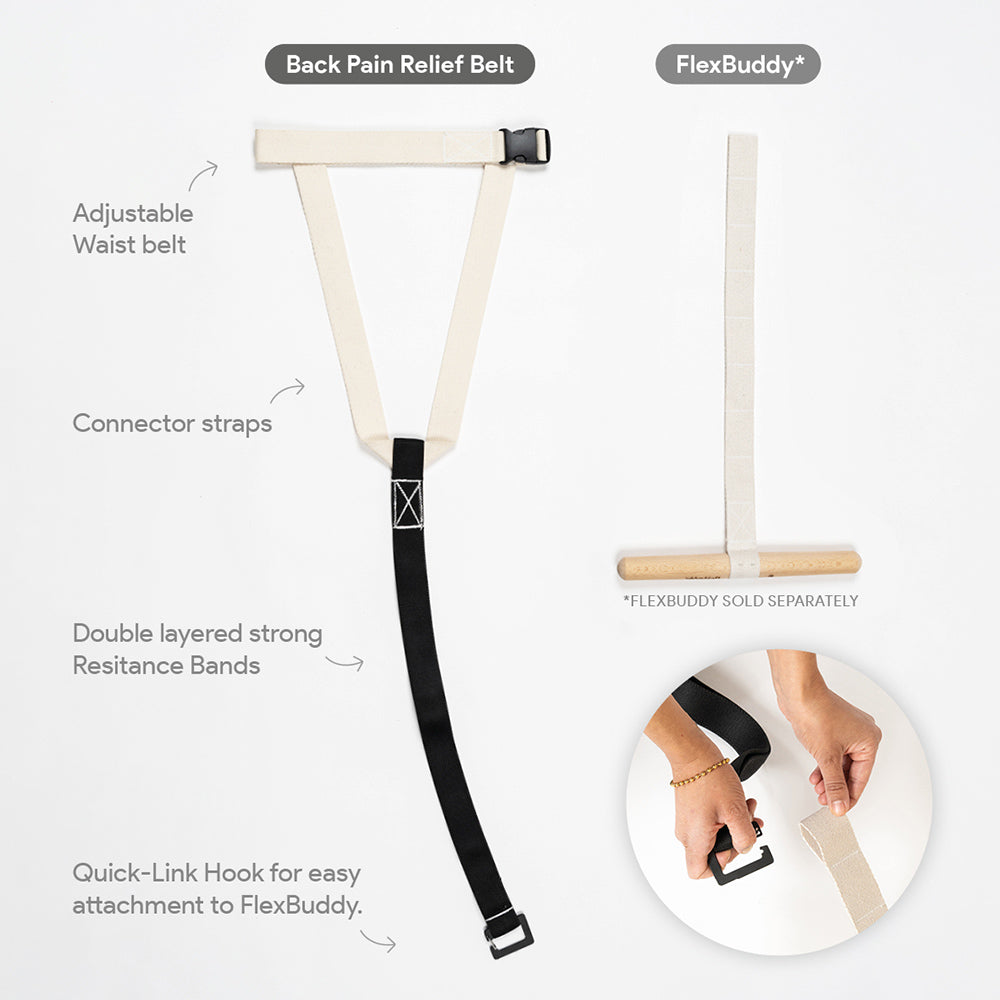
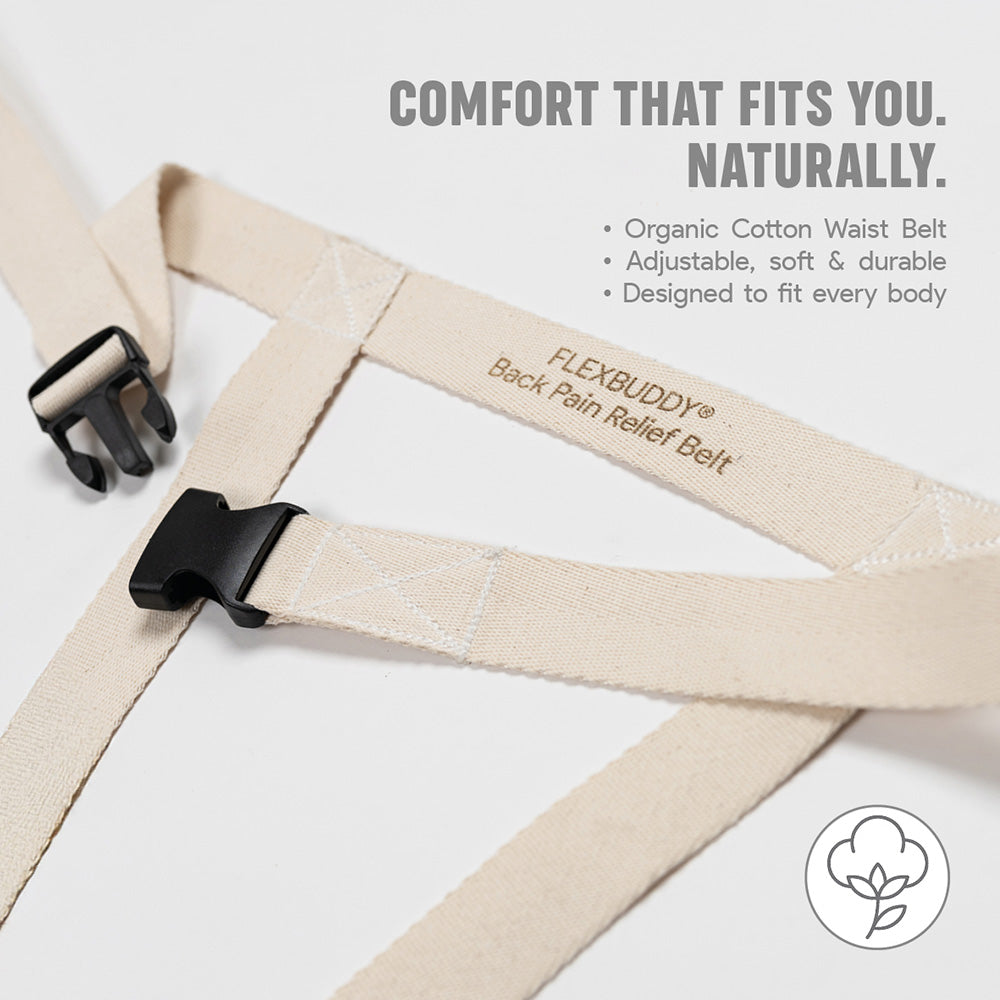
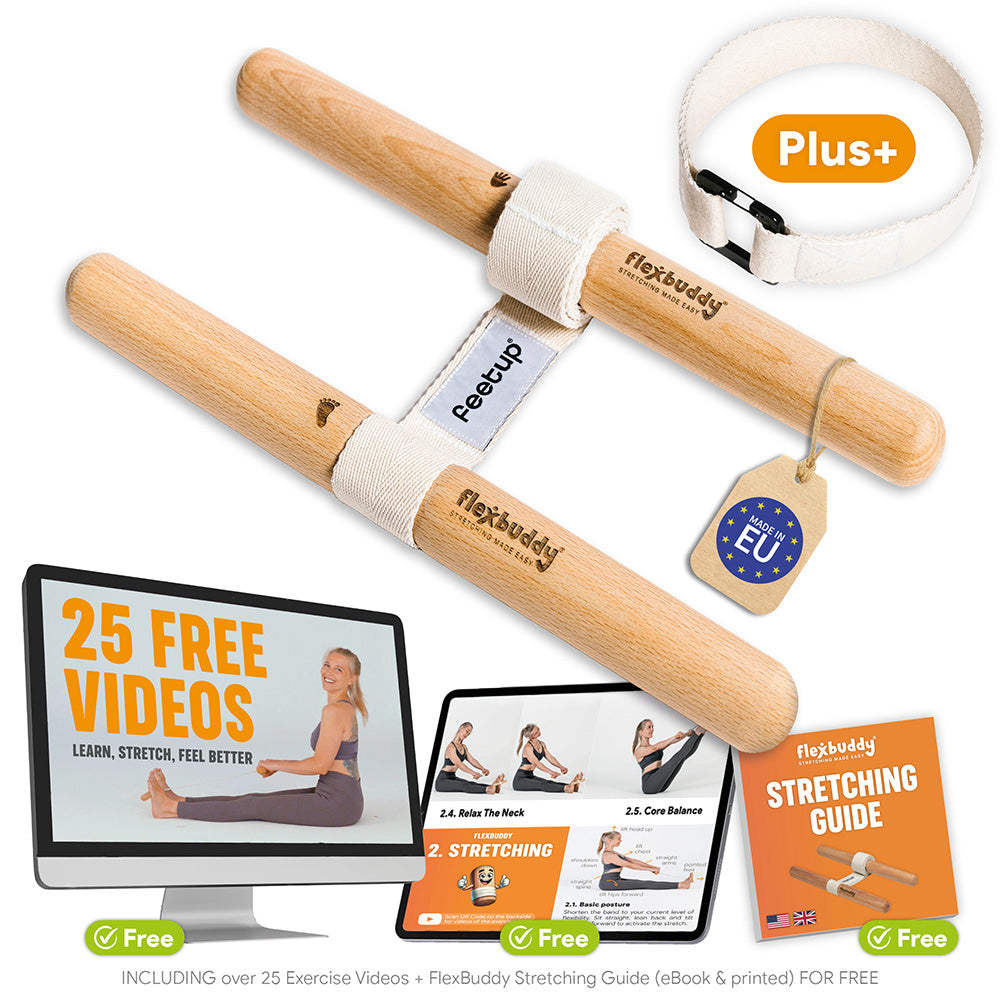
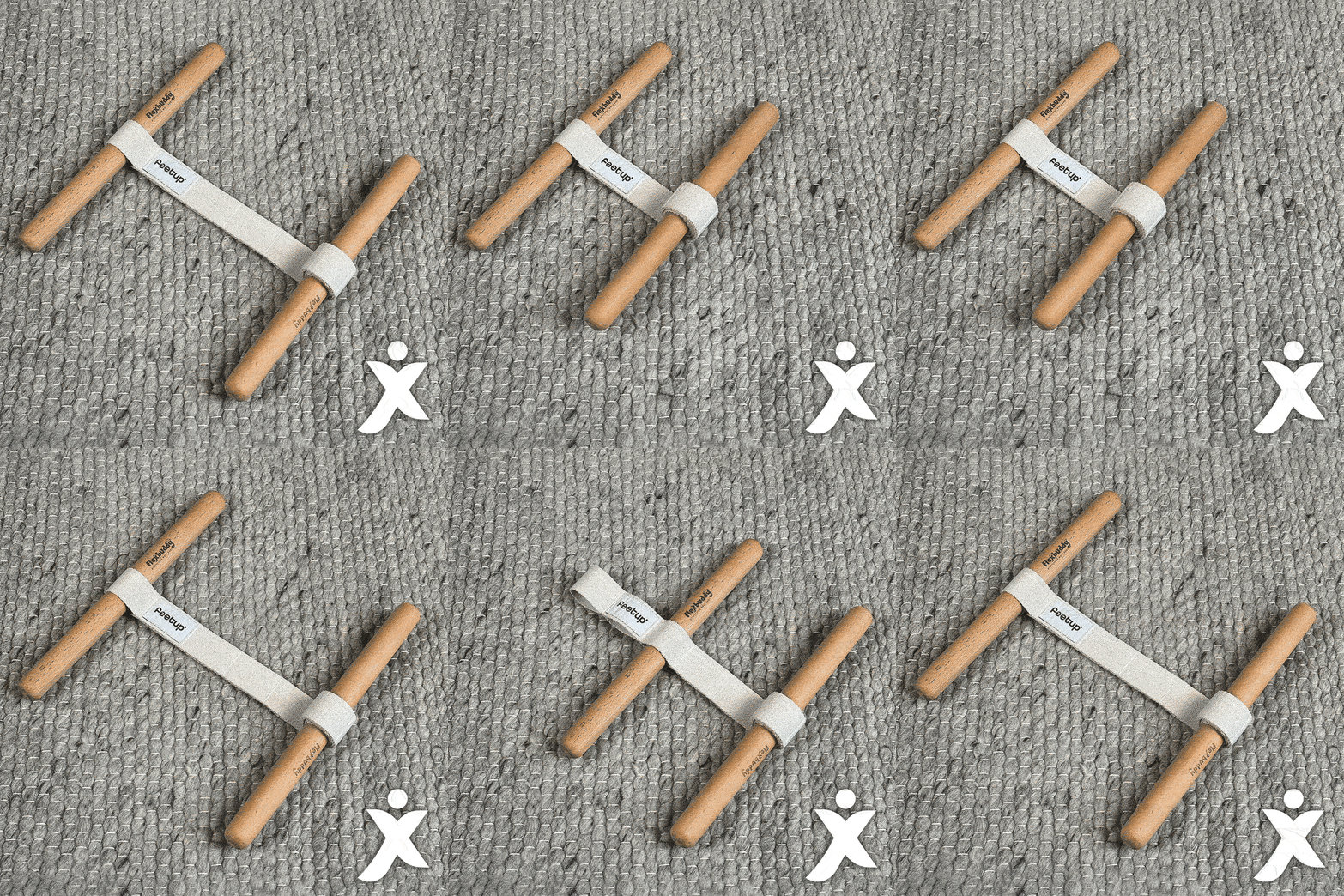
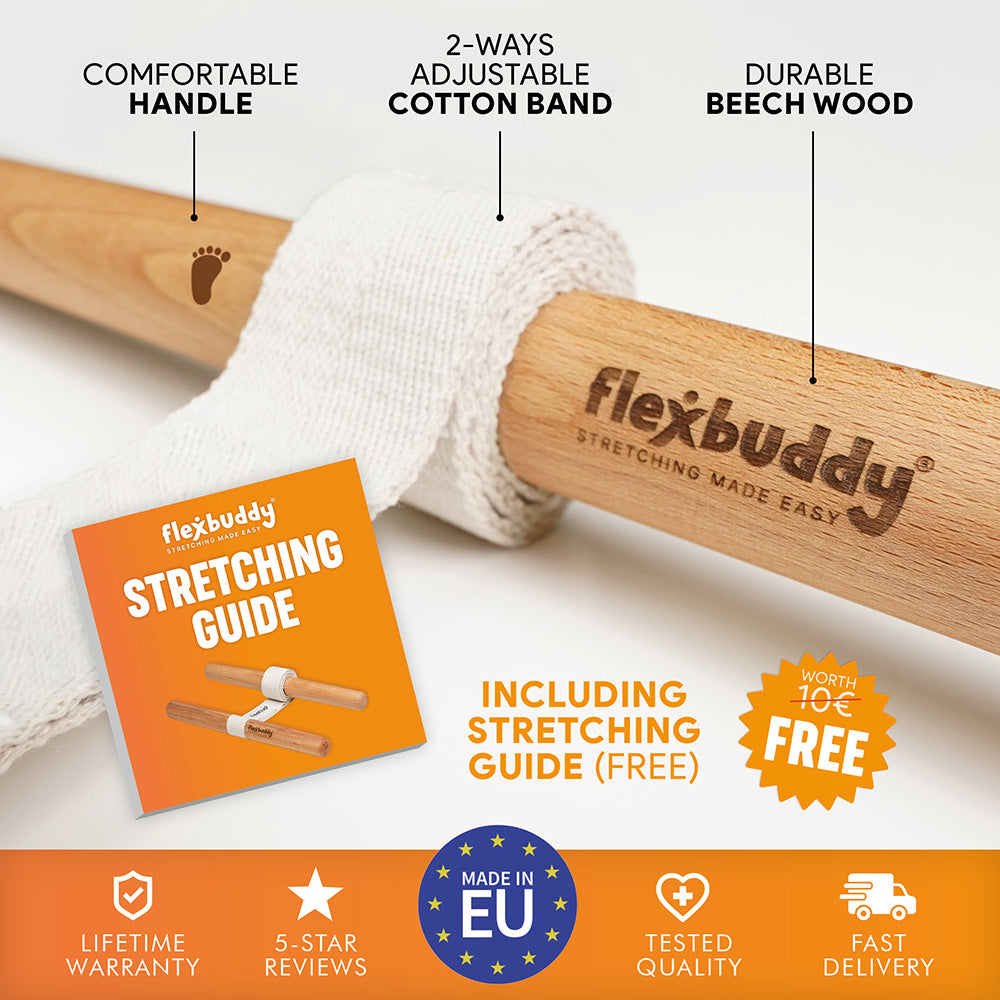
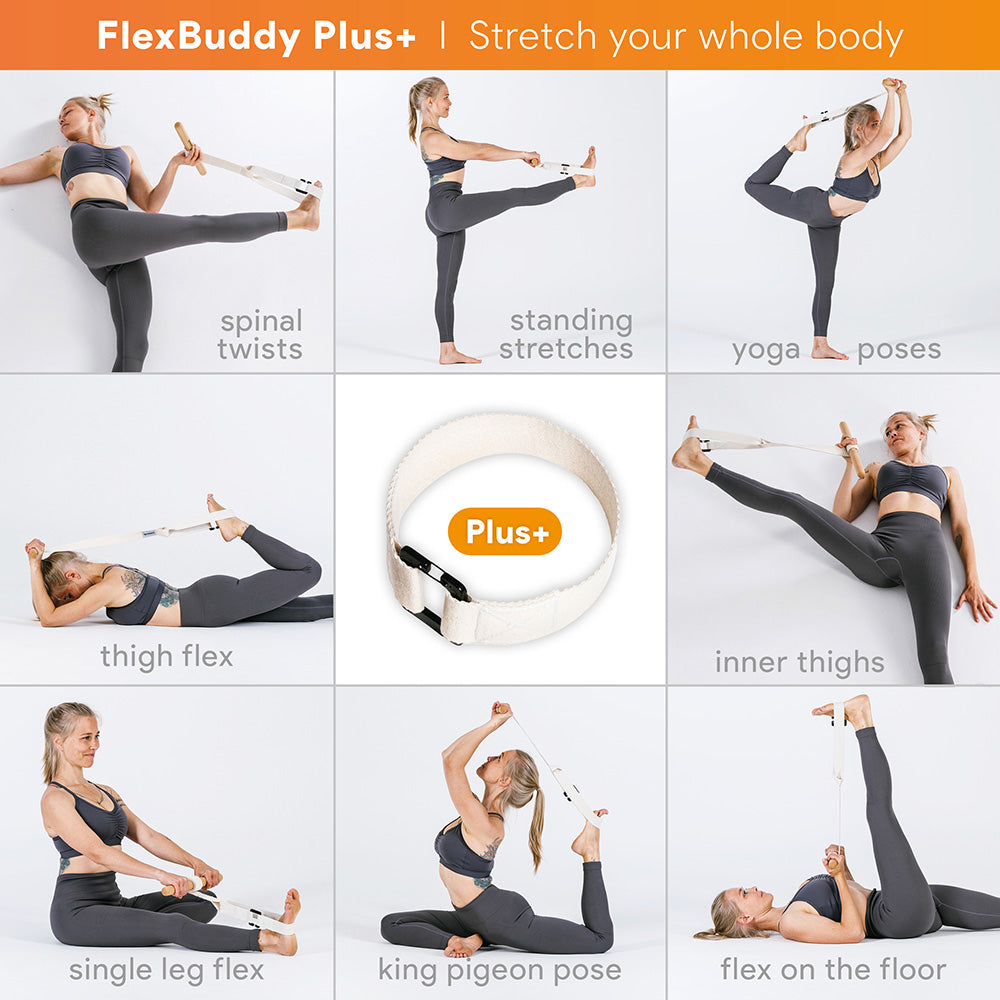
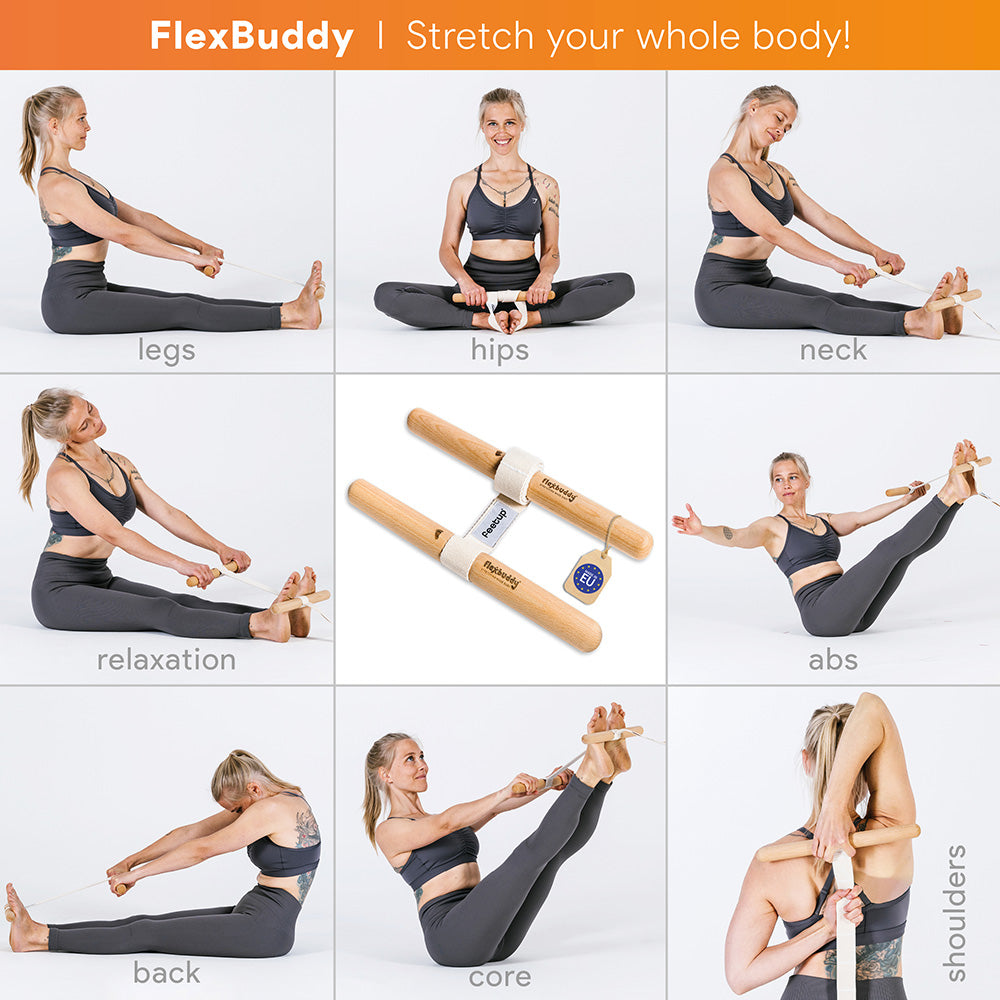
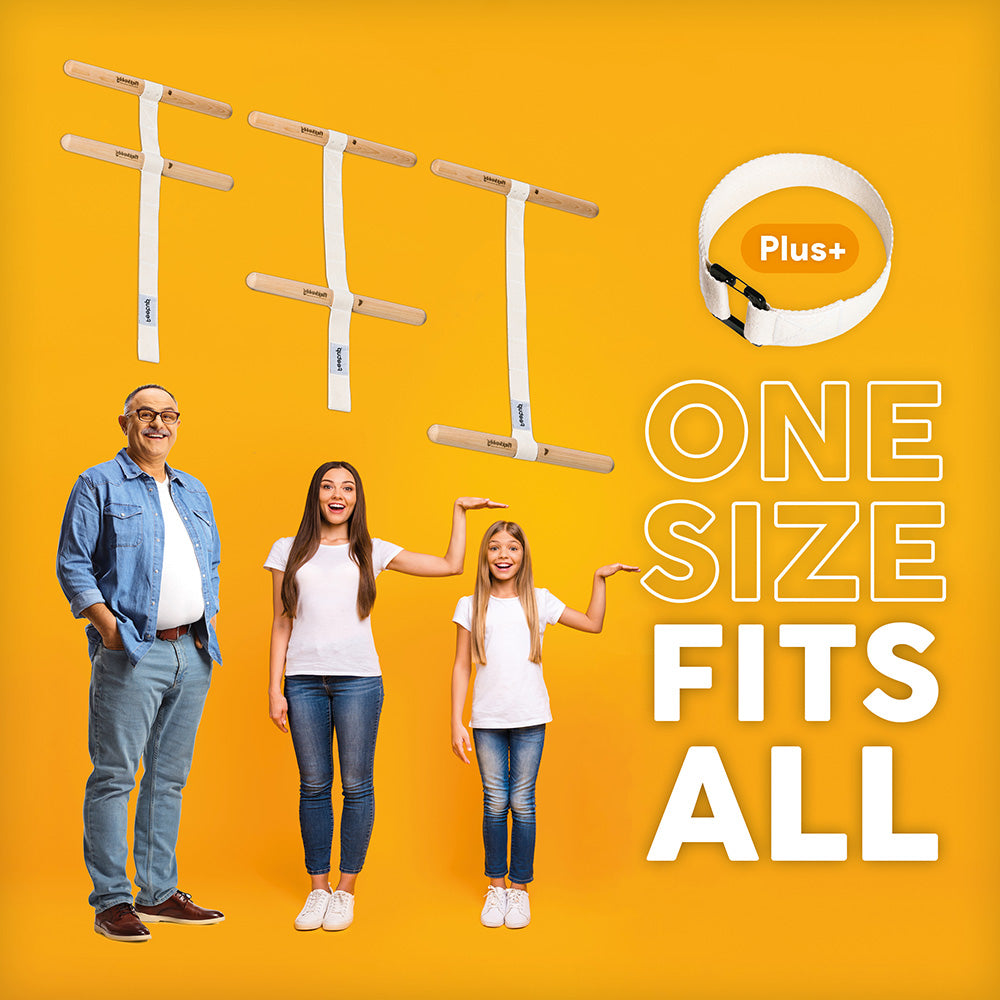
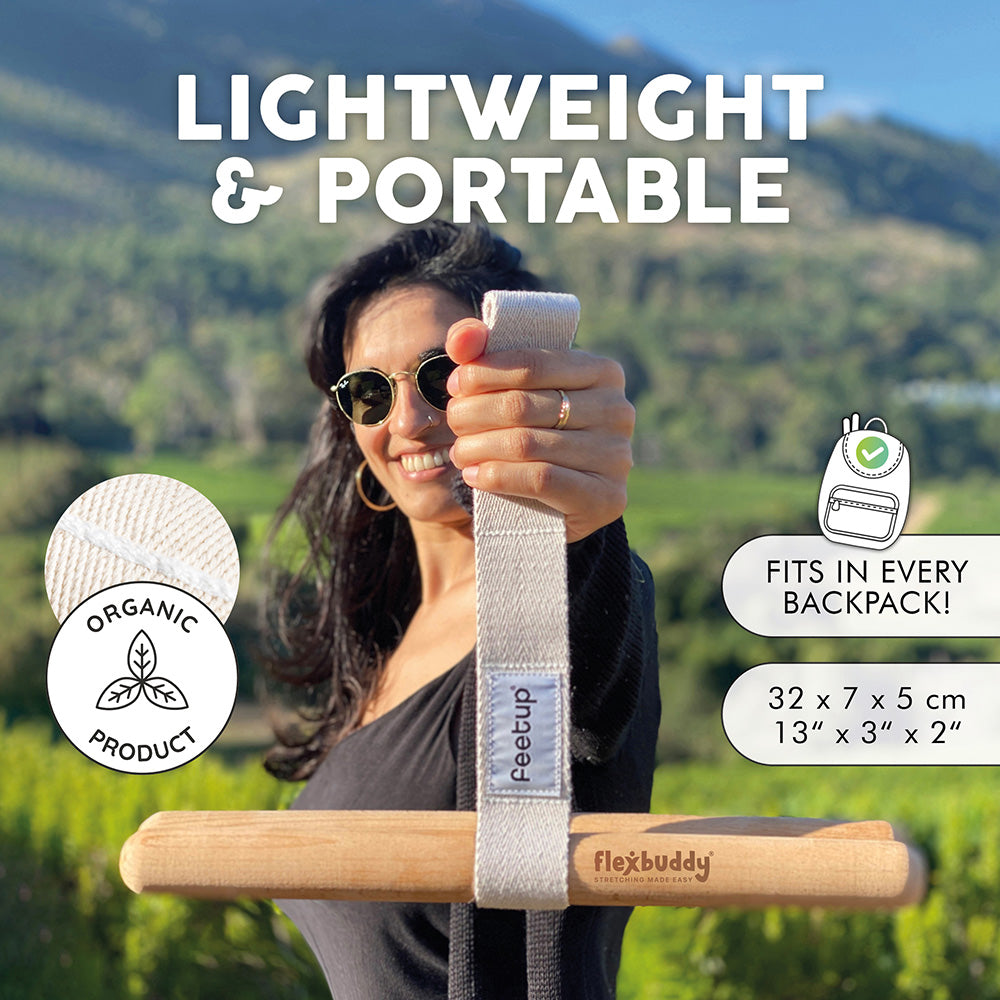
In a seated calf stretch most people round the back to reach the foot, and the stretch ends up in the spine. FlexBuddy® solves that. It is a patented stretching device made of two beech-wood bars joined by an adjustable cotton strap. The foot bar sits under your forefoot; the other bar stays in your hands. You sit tall, lean back and tilt the hips forward, and the strap draws your toes towards you while your back stays straight. Knee straight for the gastrocnemius, a little bent for the soleus, and the hamstrings let go in the same position. Wooden handles mean no rope burn, and afterwards the foot bar doubles as a roller under the sole.
Sara F. wrote: "I use it before I go to bed and if I don't, I can really tell a difference in the morning. I think it's helping with plantar fasciitis too." Two minutes a day can improve your flexibility and posture. FlexBuddy is rated 4.5 by verified buyers and comes with a 30-day money-back guarantee and a lifetime warranty, so you can try it without risk. Get your FlexBuddy, or take the quiz to find your routine.
Frequently asked questions
What is the best stretch for tight calves?
A pair that reaches the whole calf: the wall stretch with the back knee straight for the gastrocnemius, then with the knee bent for the soleus, heel down in both [2]. For a seated version, use FlexBuddy with the foot bar under the ball of the foot.
How long should you hold a calf stretch?
Ten to 30 seconds per hold for most adults and 30 to 60 seconds for older adults, repeated until each muscle has had about 60 seconds [5]. About four minutes covers both legs.
Why are my calves always tight?
Because they work all day and almost never get lengthened: walking, running and standing load them hard, and raised heels hold them short. Women who habitually wore high heels had shorter gastrocnemius fibre bundles (about 50 mm against 56 mm) and stiffer Achilles tendons than women who did not [26]. Sometimes it is not the muscle: night cramps have many causes [10], and a swollen, throbbing calf needs urgent medical advice [8].
How do I stretch my soleus?
Bend the knee. That takes the gastrocnemius off tension, because it starts above the knee, and puts the stretch into the soleus, which starts below it [1]. Use the bent-knee wall stretch, or the seated stretch with the knee slightly bent.
Should I stretch my calves every day?
Yes, if you can: daily stretching gives the largest gains, and the guideline minimum is two to three days a week [5]. Keep it short: extra volume did not add range in a large meta-analysis [11].
This article is general information, not medical advice. Tight muscles usually respond well to regular stretching. If your pain is sharp, radiates down a leg, comes with numbness, weakness, fever, bladder or bowel changes, follows an injury, or keeps getting worse, see a doctor or physiotherapist before you stretch. A calf that is suddenly swollen, throbbing or discoloured, or a sudden pop at the back of the heel, needs medical attention the same day.
References
- Jones O. Muscles in the Posterior Compartment of the Leg. TeachMeAnatomy. https://teachmeanatomy.info/lower-limb/muscles/leg/posterior-compartment/ (accessed 10 Nov 2026).
- Royal Orthopaedic Hospital NHS Foundation Trust. Calf stretching (Foot and Ankle patient information). https://roh.nhs.uk/services-information/foot-and-ankle/calf-stretching (accessed 10 Nov 2026).
- Konor MM, Morton S, Eckerson JM, Grindstaff TL. Reliability of three measures of ankle dorsiflexion range of motion. Int J Sports Phys Ther. 2012;7(3):279–287. PMID 22666642; PMC3362988. https://pmc.ncbi.nlm.nih.gov/articles/PMC3362988/ (accessed 10 Nov 2026).
- Powden CJ, Hoch JM, Hoch MC. Reliability and minimal detectable change of the weight-bearing lunge test: a systematic review. Man Ther. 2015;20(4):524–532. doi:10.1016/j.math.2015.01.004. PMID 25704110.
- Garber CE, Blissmer B, Deschenes MR, et al.; American College of Sports Medicine. Position stand: quantity and quality of exercise for developing and maintaining cardiorespiratory, musculoskeletal, and neuromotor fitness in apparently healthy adults. Med Sci Sports Exerc. 2011;43(7):1334–1359. doi:10.1249/MSS.0b013e318213fefb. PMID 21694556.
- Radford JA, Burns J, Buchbinder R, Landorf KB, Cook C. Does stretching increase ankle dorsiflexion range of motion? A systematic review. Br J Sports Med. 2006;40(10):870–875. doi:10.1136/bjsm.2006.029348. PMID 16926259; PMC2465055.
- Medeiros DM, Martini TF. Chronic effect of different types of stretching on ankle dorsiflexion range of motion: systematic review and meta-analysis. Foot (Edinb). 2018;34:28–35. doi:10.1016/j.foot.2017.09.006. PMID 29223884.
- NHS. DVT (deep vein thrombosis). Last reviewed 30 Apr 2026. https://www.nhs.uk/conditions/deep-vein-thrombosis-dvt/ (accessed 10 Nov 2026).
- Bennell KL, Talbot RC, Wajswelner H, Techovanich W, Kelly DH, Hall AJ. Intra-rater and inter-rater reliability of a weight-bearing lunge measure of ankle dorsiflexion. Aust J Physiother. 1998;44(3):175–180. doi:10.1016/s0004-9514(14)60377-9. PMID 11676731.
- NHS. Leg cramps. Last reviewed 1 Dec 2023. https://www.nhs.uk/conditions/leg-cramps/ (accessed 10 Nov 2026).
- Konrad A, Alizadeh S, Daneshjoo A, et al. Chronic effects of stretching on range of motion with consideration of potential moderating variables: a systematic review with meta-analysis. J Sport Health Sci. 2024;13(2):186–194. doi:10.1016/j.jshs.2023.06.002. PMID 37301370; PMC10980866.
- Young R, Nix S, Wholohan A, Bradhurst R, Reed L. Interventions for increasing ankle joint dorsiflexion: a systematic review and meta-analysis. J Foot Ankle Res. 2013;6(1):46. doi:10.1186/1757-1146-6-46. PMID 24225348; PMC4176290.
- Johnson E, Bradley B, Witkowski K, et al. Effect of a static calf muscle-tendon unit stretching program on ankle dorsiflexion range of motion of older women. J Geriatr Phys Ther. 2007;30(2):49–52. doi:10.1519/00139143-200708000-00003. PMID 18171487.
- Weppler CH, Magnusson SP. Increasing muscle extensibility: a matter of increasing length or modifying sensation? Phys Ther. 2010;90(3):438–449. doi:10.2522/ptj.20090012. PMID 20075147.
- Behm DG, Blazevich AJ, Kay AD, McHugh M. Acute effects of muscle stretching on physical performance, range of motion, and injury incidence in healthy active individuals: a systematic review. Appl Physiol Nutr Metab. 2016;41(1):1–11. doi:10.1139/apnm-2015-0235. PMID 26642915.
- NHS. How to stretch after exercising. Last reviewed 16 Mar 2026. https://www.nhs.uk/live-well/exercise/how-to-stretch-after-exercising/ (accessed 10 Nov 2026).
- Herbert RD, de Noronha M, Kamper SJ. Stretching to prevent or reduce muscle soreness after exercise. Cochrane Database Syst Rev. 2011;(7):CD004577. doi:10.1002/14651858.CD004577.pub3. PMID 21735398.
- Mecagni C, Smith JP, Roberts KE, O'Sullivan SB. Balance and ankle range of motion in community-dwelling women aged 64 to 87 years: a correlational study. Phys Ther. 2000;80(10):1004–1011. PMID 11002436.
- Feland JB, Myrer JW, Schulthies SS, Fellingham GW, Measom GW. The effect of duration of stretching of the hamstring muscle group for increasing range of motion in people aged 65 years or older. Phys Ther. 2001;81(5):1110–1117. PMID 11319936.
- Riddle DL, Pulisic M, Pidcoe P, Johnson RE. Risk factors for plantar fasciitis: a matched case-control study. J Bone Joint Surg Am. 2003;85(5):872–877. doi:10.2106/00004623-200305000-00015. PMID 12728038.
- Porter D, Barrill E, Oneacre K, May BD. The effects of duration and frequency of Achilles tendon stretching on dorsiflexion and outcome in painful heel syndrome: a randomized, blinded, control study. Foot Ankle Int. 2002;23(7):619–624. doi:10.1177/107110070202300706. PMID 12146772.
- DiGiovanni BF, Nawoczenski DA, Lintal ME, et al. Tissue-specific plantar fascia-stretching exercise enhances outcomes in patients with chronic heel pain. A prospective, randomized study. J Bone Joint Surg Am. 2003;85(7):1270–1277. doi:10.2106/00004623-200307000-00013. PMID 12851352.
- Rathleff MS, Mølgaard CM, Fredberg U, et al. High-load strength training improves outcome in patients with plantar fasciitis: a randomized controlled trial with 12-month follow-up. Scand J Med Sci Sports. 2015;25(3):e292–e300. doi:10.1111/sms.12313. PMID 25145882.
- Afonso J, Ramirez-Campillo R, Moscão J, et al. Strength training versus stretching for improving range of motion: a systematic review and meta-analysis. Healthcare (Basel). 2021;9(4):427. doi:10.3390/healthcare9040427. PMID 33917036; PMC8067745.
- American Academy of Orthopaedic Surgeons (OrthoInfo). Achilles Tendinitis. Contributor D. M. Walton, MD; peer reviewer M. K. Mulcahey, MD. https://www.orthoinfo.org/en/diseases--conditions/achilles-tendinitis/ (accessed 10 Nov 2026).
- Csapo R, Maganaris CN, Seynnes OR, Narici MV. On muscle, tendon and high heels. J Exp Biol. 2010;213(15):2582–2588. doi:10.1242/jeb.044271. PMID 20639419.